Why Earth Is the Perfect Distance From the Sun for Life
What makes Earth's spot in the solar system special?
On this page
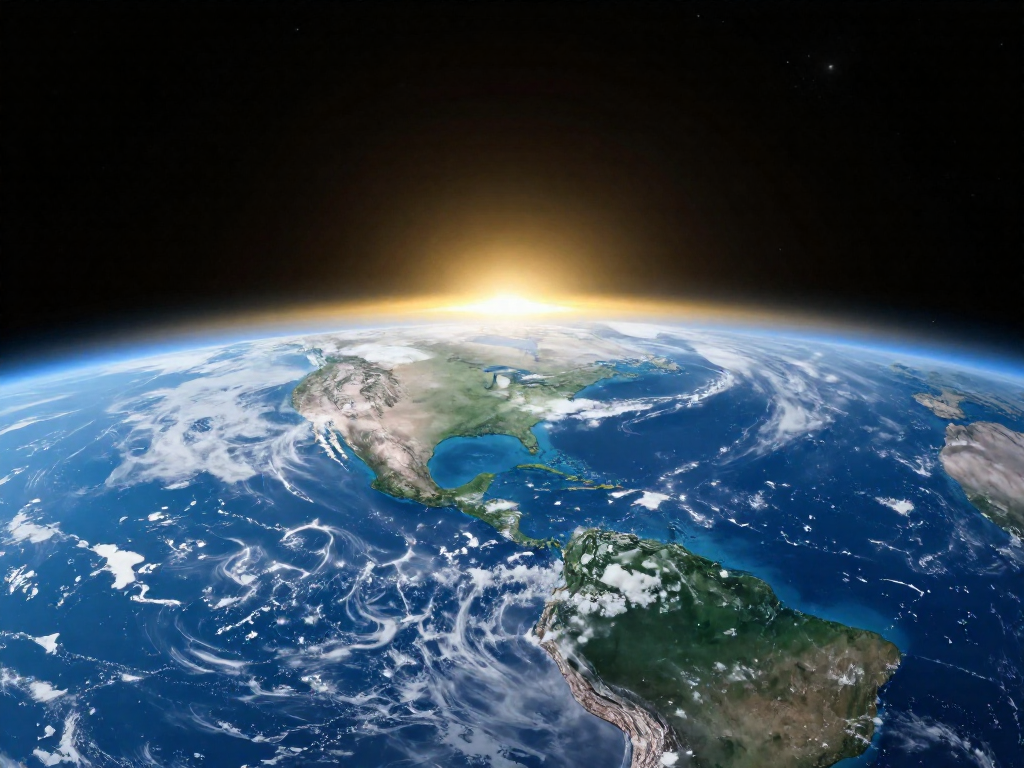
The Goldilocks Spot: Not Too Hot, Not Too Cold
Remember the story of Goldilocks, who tasted three bowls of porridge and picked the one that was "just right"? Earth sits in the cosmic version of that perfect bowl. It orbits the Sun at a distance that keeps our planet from being scorched into a desert or frozen into a lifeless ball of ice. Scientists actually borrowed the fairy tale and call this comfortable zone the Goldilocks zone (also known as the habitable zone) — the region around a star where conditions are mild enough for life as we know it.
So how far away is "just right"? Earth orbits about 93 million miles from the Sun. Astronomers find that number so handy that they gave it a nickname: 1 AU, short for astronomical unit. Think of an AU as a cosmic measuring stick — one Earth-to-Sun trip — that makes the huge distances in space easier to talk about.
Here's the part that makes this distance so special: it keeps Earth's surface in a temperature sweet spot where water can stay liquid — not boiled away as steam, not locked up as ice. And as you'll see next, liquid water is the secret ingredient that makes everything else possible.
Quick takeaway: Earth's spot — about 93 million miles (1 AU) from the Sun — is "just right" for liquid water, which is why we call it the Goldilocks zone.
Source: NASA, "The Habitable Zone."
What Is the Habitable Zone?
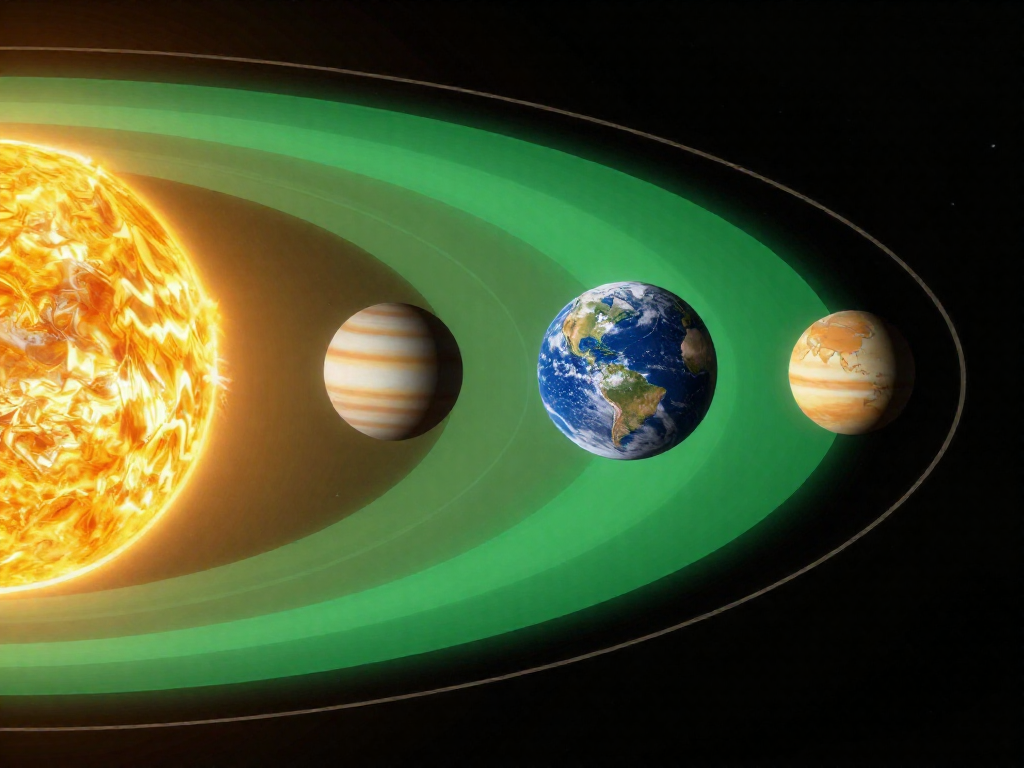
Imagine standing around a campfire on a cold night. Stand too close and you're scorched; back away too far and you're shivering. Somewhere in between is that sweet spot where the warmth feels just right. Stars work the same way, and astronomers call that comfortable ring of space the habitable zone — the band of distances around a star where the temperature is right for liquid water to exist on a planet's surface.
Why does water matter so much? Every living thing we know of needs it. Get too close to the star and any water boils away into vapor. Drift too far and it freezes solid into ice. Only in that in-between ring can water stay liquid — and where there's liquid water, there's at least a chance for life.
Because the zone is all about finding conditions that are "just right," scientists nicknamed it the Goldilocks zone, after the fairy tale where the porridge had to be not too hot and not too cold. It's a playful name for a serious idea: life as we know it depends on a narrow range of conditions.
So where does our planet fit in? Earth sits comfortably inside the Sun's habitable zone — not at the scorched edge, not at the frozen edge, but in a stable spot where oceans have stayed liquid for billions of years.
One important detail: the habitable zone isn't in the same place for every star. A bright, hot star pushes its warm ring farther out, while a cooler, dimmer star keeps it tucked in close. According to NASA, this is why scientists hunting for potentially life-friendly planets first ask how bright and hot the host star is, then look for worlds orbiting at just the right distance.
Quick takeaway: The habitable zone is the "just right" ring around a star where water can stay liquid — and Earth happens to live right inside the Sun's.
Why Liquid Water Is the Big Deal
Here's the secret behind Earth's lucky address: it sits at just the right distance for water to stay liquid. That might sound modest, but it's the whole ballgame for life as we know it.
Water is picky. Get too hot and it boils away into vapor; get too cold and it locks up as ice. The narrow temperature window where it can stay liquid—roughly between freezing and boiling—is exactly the window Earth's distance from the Sun creates. Move us closer or farther, and that window slams shut.
Our neighbors show what happens at the edges:
- Venus (too close) — A runaway furnace where surface temperatures top 460°C (about 870°F), hot enough to melt lead. Any water it once had boiled off long ago (NASA).
- Mars (too far) — A frozen desert averaging around –60°C (–80°F). Water there is mostly locked in ice, not flowing freely (NASA).
Earth threads the needle right between these extremes.
Why does liquid water matter so much? Think of it as nature's mixing bowl. Liquid water is a solvent—a substance that dissolves other things and lets them move around and bump into each other. In that watery soup, the chemistry of life can happen: molecules meet, combine, and build the complex structures living things are made of. Frozen or boiled-away water can't do that job.
Quick takeaway: Earth's distance from the Sun keeps water liquid—and liquid water is the stage where life's chemistry plays out. Too close, it boils; too far, it freezes. We landed in the perfect spot.
Earth's Neighbors Show Us the Difference
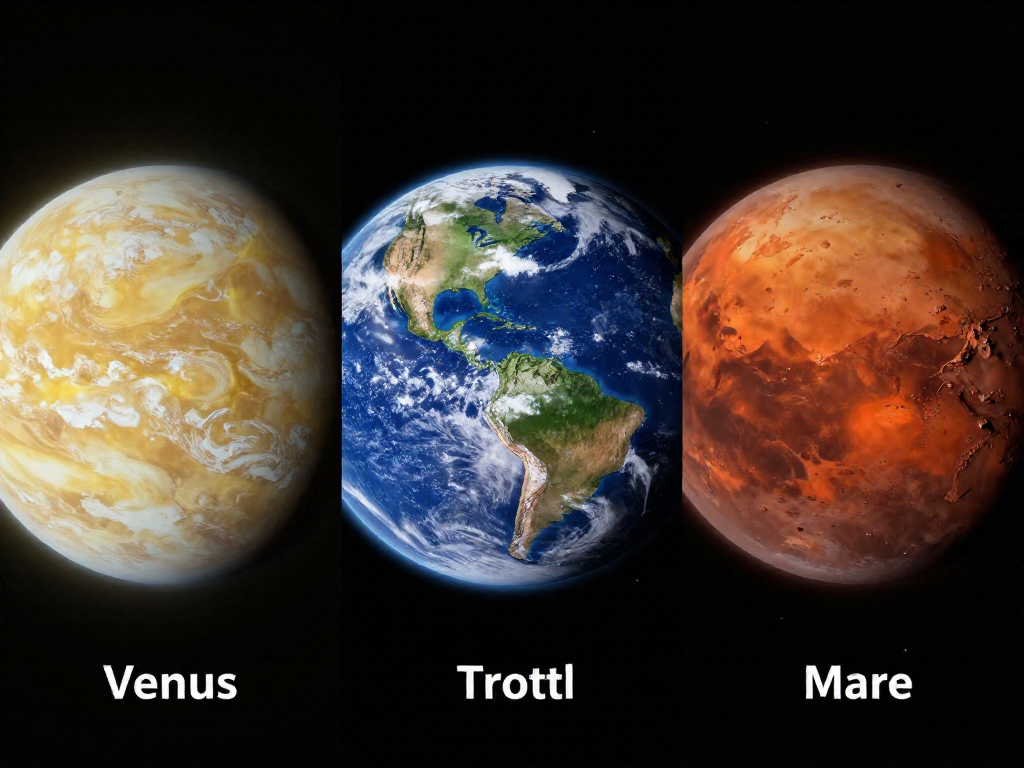
The best way to see why Earth's spot is so special? Look next door. Our two closest planetary neighbors, Venus and Mars, sit just inside and just outside the "habitable zone"—the band around the Sun where temperatures allow liquid water to exist. The results are dramatic.
Venus: too close, too hot. Venus orbits a bit nearer the Sun than we do, and its thick blanket of carbon dioxide traps heat like a sealed greenhouse on a summer day. Surface temperatures hover around 465°C (about 870°F)—hot enough to melt lead. There's no liquid water, just crushing pressure and clouds of acid. According to NASA, it's the hottest planet in our solar system, even hotter than Mercury.
Mars: too far, too cold. Mars sits farther out, and with a thin atmosphere that holds almost no warmth, it freezes. Average temperatures sit around -60°C (-80°F). Any water there is locked up as ice or vapor, not the flowing liquid life seems to need.
Earth: just right. Right in the middle, our planet stays mild enough for oceans, rivers, and rain.
| World | Distance from Sun | Average temp | Liquid water? |
|---|---|---|---|
| Venus | Closer | ~465°C | No |
| Earth | "Just right" | ~15°C | Yes |
| Mars | Farther | ~-60°C | No (frozen) |
Same Sun, three very different fates—and Earth landed in the sweet spot.
Distance Isn't the Only Thing That Saves Us
Here's the twist: parking Earth at the right distance from the Sun is only the opening move. If our planet had nothing else going for it, life would still be in trouble. A few quiet teammates finish the job.
1. A blanket that holds the right amount of heat. Earth's atmosphere acts like a thin blanket, trapping some of the Sun's warmth so it doesn't all escape back into space. This is the greenhouse effect—the same process that keeps a parked car warm on a sunny day. Too little, and we'd freeze; too much (like on Venus), and we'd roast. Earth's mix is just right.
2. An invisible shield against the Sun's harsh rays. Deep inside, Earth's molten metal core generates a magnetic field—think of an invisible force bubble wrapped around the planet. It deflects most of the dangerous particles the Sun constantly flings our way, which would otherwise strip away our air over time. NASA credits this shield as a key reason our atmosphere has survived for billions of years.
3. A steady, nearly circular orbit. Earth's path around the Sun is almost a perfect circle, so our distance barely changes through the year. That keeps temperatures from swinging to wild extremes.
Quick takeaway: Distance sets the stage—but our atmosphere, magnetic field, and stable orbit are what actually make Earth livable.
What This Means for Finding Life Beyond Earth
Here's where things get exciting. If Earth's distance from the Sun is part of what makes life possible, then finding other planets at just the right distance from their stars is a natural place to start the search.
That's exactly what scientists do. They hunt for planets sitting in their star's habitable zone — the not-too-hot, not-too-cold band where liquid water could exist on the surface. When a newly discovered world orbits at an "Earth-like distance," it doesn't prove life is there, but it's a promising clue worth a closer look.
And the numbers are staggering. NASA estimates our galaxy holds billions of stars, and many may have their own potential "Goldilocks worlds" tucked into their habitable zones. We haven't confirmed life on any of them yet — that part is still an open question, not settled science — but the possibilities are vast.
Quick takeaway: Earth's perfect spot isn't just our story. It's the template astronomers use to search the galaxy for other worlds that might, just maybe, be home to life too.
Step back and it's almost dizzying: out of countless worlds, ours landed in exactly the right place. Rare, lucky, and quietly extraordinary.
See also
- A beginner's guide to the planets of the solar system
- Why Venus is the hottest planet (even though it's not closest to the Sun)
- Could humans ever live on Mars?
- What is an astronomical unit (AU) and why astronomers use it
Related articles
Why Does Uranus Spin on Its Side?
Uranus is tilted a wild 98 degrees, rolling around the Sun like a ball. Discover the ancient collision that likely knocked it onto its side.
Jun 29, 2026 · 6 min read
Quick Facts About Every Planet, at a Glance
Key stats for all 8 planets in one scannable place: size, distance from the Sun, day length, moons, and what makes each world weird.
Jun 29, 2026 · 6 min read
How Big Is the Solar System Really? A Sense of Scale
The distances between planets are mind-bending. Use simple shrink-it-down analogies to finally grasp how vast our solar system truly is.
Jun 29, 2026 · 7 min read