Is Pluto a Planet or Not? The Demotion, Plainly Explained
Why is Pluto no longer called a planet?
On this page
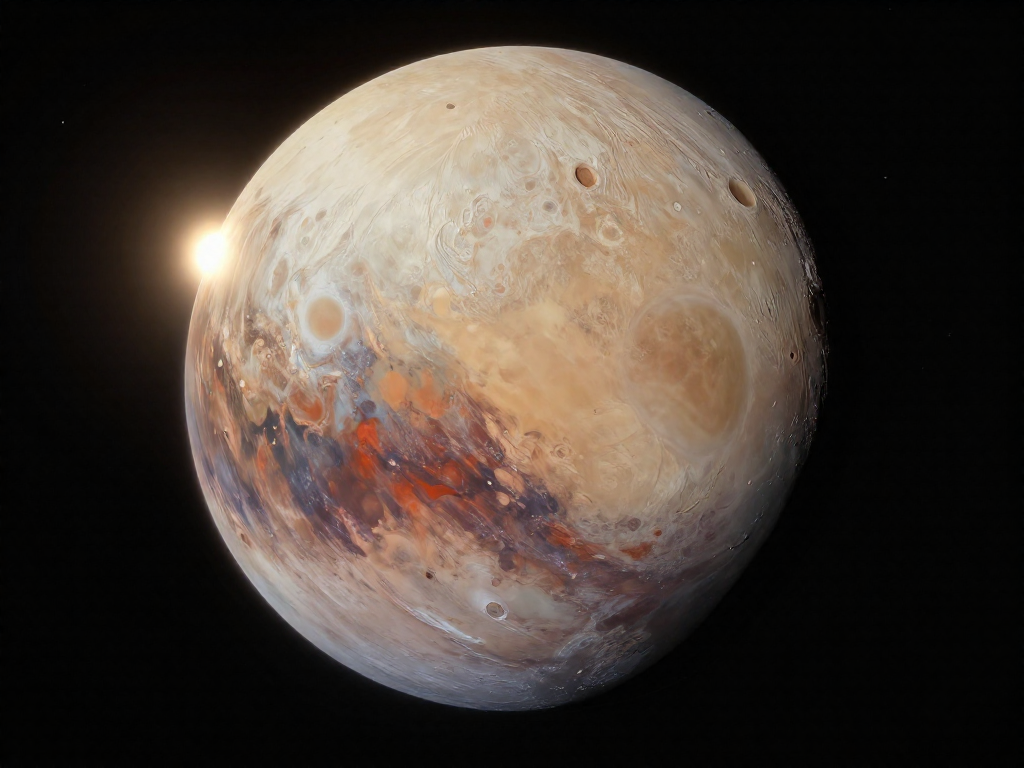
The Short Answer: Pluto Is a Dwarf Planet
If you came here for a quick answer, here it is: Pluto is a "dwarf planet"—not one of the eight major planets. A dwarf planet is simply a smaller, planet-like world that didn't quite earn full "planet" status under the official rules (more on those rules later).
This change came in 2006, when the International Astronomical Union (the IAU—basically the global club of astronomers who agree on space naming and definitions) voted on a new, stricter definition of the word "planet." Pluto didn't make the cut.
Here's the key thing to understand: nothing about Pluto itself changed. It didn't move, shrink, or break apart. The only thing that changed was the label we use for it—like reclassifying a sport-utility vehicle as a "crossover" without touching the car.
Quick takeaway: Pluto was never deleted from the solar system. It was simply reclassified from "planet" to "dwarf planet" by the IAU in 2006.
What Happened in 2006?
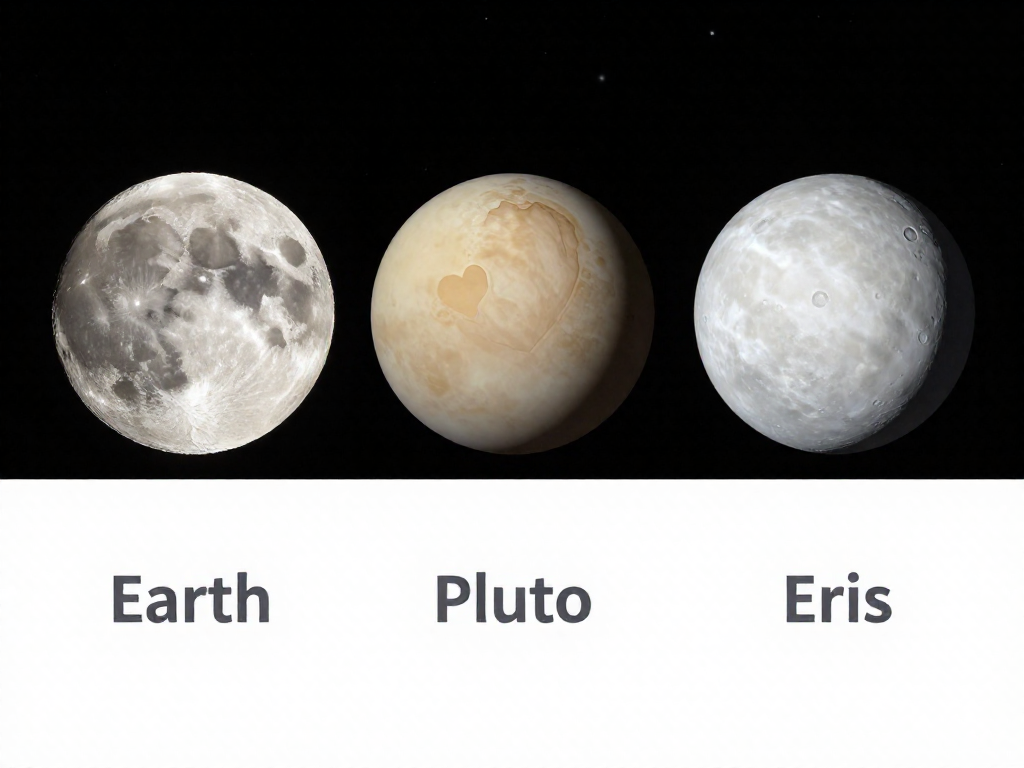
For most of the 20th century, Pluto sat comfortably on the list of planets. Then, in the early 2000s, telescopes got better, and astronomers started spotting other icy worlds drifting in the same distant, frozen region beyond Neptune.
The turning point came in 2005, when a team discovered Eris — a far-off object roughly the same size as Pluto. Suddenly there was a problem. If Pluto counted as a planet, why not Eris? And what about the next Pluto-sized object, and the one after that? Scientists realized they might have to welcome dozens of new "planets" into the family.
That left a simple but tricky choice: keep adding planets every time someone found another small icy world, or step back and finally agree on what the word planet actually means.
The decision fell to the International Astronomical Union (IAU) — think of them as the official referees of space, the group responsible for naming and classifying objects in the sky. In August 2006, astronomers from around the world gathered and voted on a brand-new, official definition of "planet."
The result reshaped the solar system as we knew it (NASA).
Quick takeaway: New discoveries like Eris forced astronomers to define "planet" clearly — and in 2006, the IAU did exactly that.
The 3 Rules for Being a Planet
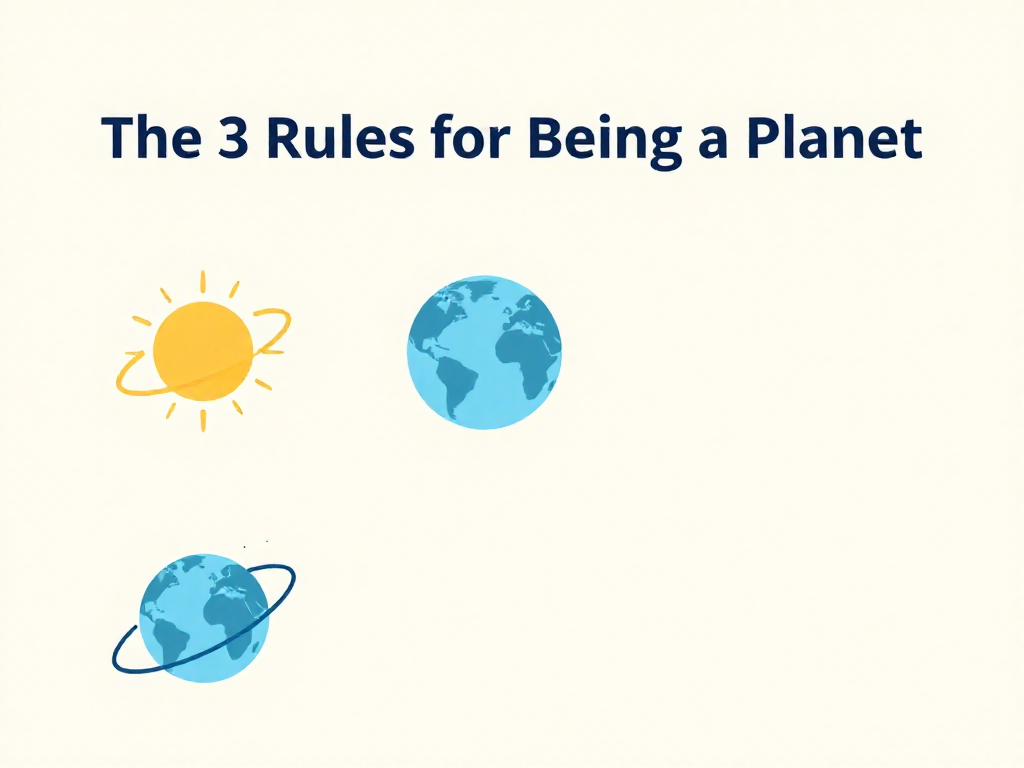
So what exactly does it take to earn the title "planet"? In 2006, the International Astronomical Union (the global group of astronomers who agree on official space definitions) settled on a simple checklist. To be a planet, a world has to pass all three tests.
Rule 1: It must orbit the Sun. This one is straightforward. The object has to loop around our Sun, not around another planet. (Moons, for example, orbit planets—so they're out.) Pluto sails around the Sun on a long, slow path, so it passes easily.
Rule 2: It must be round. More precisely, it needs enough gravity to pull itself into a ball. Small space rocks are lumpy and potato-shaped because their gravity is too weak to round them off. But once an object gets big enough, gravity squeezes it evenly from all sides until it becomes a sphere. Pluto is round, so it passes again.
Rule 3: It must have "cleared its neighborhood." Here's the rule that tripped Pluto up. "Clearing the neighborhood" means a planet has become the gravitational boss of its orbit—it has either swept up, flung away, or captured most of the other objects sharing its path. Think of it like a snowplow clearing a lane until it's the only big thing left on the road. Earth has done this. So has Jupiter. Pluto has not.
The verdict: Pluto checks off rules 1 and 2 without trouble. But it orbits inside the Kuiper Belt—a crowded ring of icy bodies beyond Neptune—surrounded by plenty of similar-sized objects. It never became the boss of its lane, so it fails rule 3.
Quick takeaway: Two out of three isn't enough. Failing the "clear your neighborhood" rule is the single reason Pluto lost its planet status. (Source: NASA; International Astronomical Union.)
Why Pluto Failed the Third Rule
Pluto checks the first two boxes for being a planet: it orbits the Sun, and it's round. But it stumbles on the third rule, which is the one that actually got it demoted.
That third rule is called "clearing its orbital neighborhood." In plain English, it means a real planet is the boss of its lane around the Sun. Over billions of years, its gravity has either swept up, flung away, or taken control of nearly everything else sharing its path.
Pluto can't make that claim. It lives in a crowded zone called the Kuiper Belt, a vast ring of icy objects beyond Neptune. Out there, Pluto is just one chunk of ice among countless others, none of which it has cleared away.
Here's an easy way to picture it:
- A real planet is like the only big kid on a playground. The space is unmistakably theirs.
- Pluto is more like one kid in a packed playground full of others its own size, sharing the room with everyone.
That single failure is the entire reason for the change. Pluto isn't too small to be interesting or too far to matter, it simply never became the dominant object in its orbit.
Quick takeaway: Pluto orbits the Sun and is round, but it shares its space with many other icy objects instead of ruling its orbit, so it's classified as a dwarf planet.
Source: NASA, "What Is a Dwarf Planet?"
What Is a Dwarf Planet, Exactly?
So if Pluto isn't a planet, what is it? It's a dwarf planet—and that's a real, official category, not a consolation prize.
A dwarf planet has to check two boxes: it has to be round (big enough that its own gravity has pulled it into a ball), and it has to orbit the Sun. But it fails the one rule full-fledged planets pass—it hasn't "cleared its neighborhood." In plain terms, a planet is the gravitational boss of its lane around the Sun, having swept up or flung away the leftover debris. Dwarf planets still share their orbital space with lots of other rocks and icy chunks.
Pluto isn't alone in this club. Its companions include:
- Eris — slightly more massive than Pluto, and the discovery that sparked the whole debate
- Ceres — the round giant of the asteroid belt
- Haumea — an oddly egg-shaped, fast-spinning world
- Makemake — a distant, icy neighbor of Pluto
Most dwarf planets live in one of two crowded places: the asteroid belt between Mars and Jupiter, or the Kuiper Belt, a vast ring of icy bodies far beyond Neptune (NASA).
Quick takeaway: A dwarf planet is round and orbits the Sun, but shares its lane with other debris—a legitimate category, not a downgrade.
Pluto Is Still Amazing
Here's the thing about the 2006 reclassification: it changed Pluto's label, not Pluto itself. This tiny, faraway world is just as remarkable as ever.
In 2015, NASA's New Horizons spacecraft became the first mission to fly past Pluto, sending back the closest, sharpest images we've ever had (NASA). What it revealed was breathtaking:
- A giant, heart-shaped plain of frozen nitrogen ice, nicknamed Tombaugh Regio
- Towering mountains made of water ice, hard as rock in Pluto's deep cold
- Possibly a hidden ocean sloshing beneath the icy surface — though this is still a hypothesis scientists are testing, not settled fact
Pluto also has five moons, the largest being Charon — so big that Pluto and Charon almost orbit each other like a tiny double world.
Quick takeaway: A change in how we categorize Pluto doesn't make it any less wonderful. It's still a frozen, surprising place worth marveling at.
See also
- The 8 Planets of the Solar System, Simplified
- What Is the Kuiper Belt? A Beginner's Guide
- Dwarf Planets Explained: Meet Eris, Ceres, and More
- What Is the Asteroid Belt?
- NASA's New Horizons Mission, Plainly Explained
Related articles
Why Does Uranus Spin on Its Side?
Uranus is tilted a wild 98 degrees, rolling around the Sun like a ball. Discover the ancient collision that likely knocked it onto its side.
Jun 29, 2026 · 6 min read
Quick Facts About Every Planet, at a Glance
Key stats for all 8 planets in one scannable place: size, distance from the Sun, day length, moons, and what makes each world weird.
Jun 29, 2026 · 6 min read
How Big Is the Solar System Really? A Sense of Scale
The distances between planets are mind-bending. Use simple shrink-it-down analogies to finally grasp how vast our solar system truly is.
Jun 29, 2026 · 7 min read