How to Find the North Star (and Why It Matters)
How do I locate Polaris in the night sky?
On this page
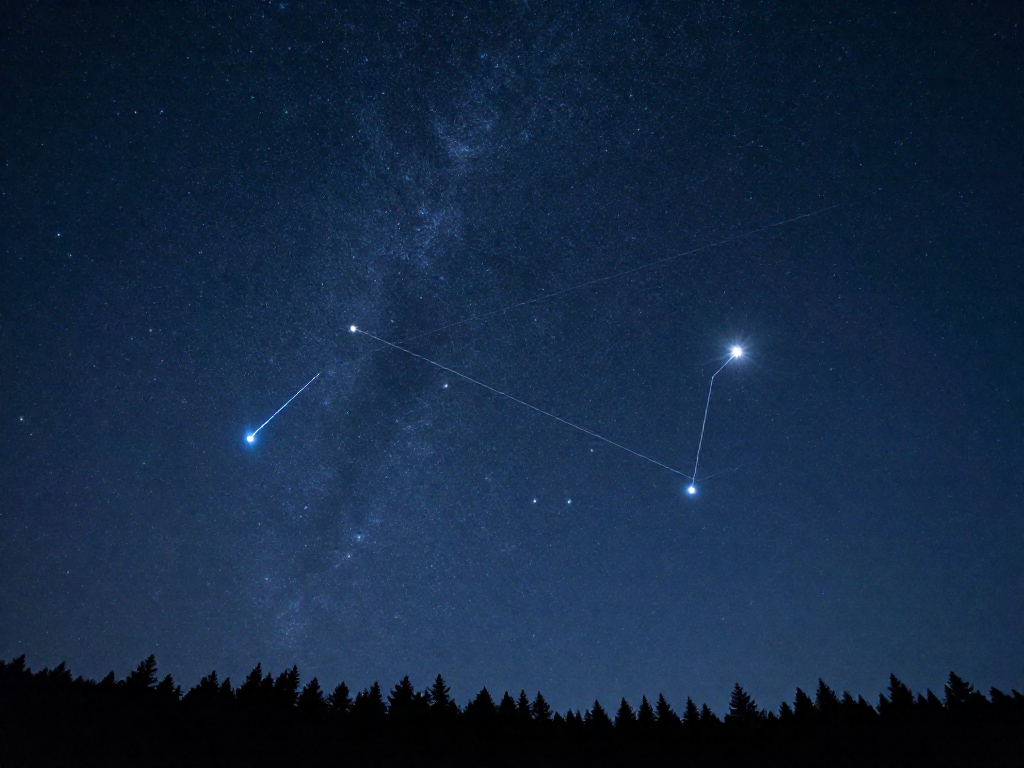
What Is the North Star, Really?
Before you go hunting for it, let's clear up the single biggest myth: the North Star, properly called Polaris, is not the brightest star in the sky. It's only moderately bright—comfortably visible, but easy to walk right past if you're expecting a dazzling beacon. (The brightest nighttime star is actually Sirius.)
So why does Polaris get all the attention? Because of where it sits. It hangs almost directly above Earth's North Pole, at a spot astronomers call the north celestial pole—basically the point in the sky that lines up with the top of our planet's spin axis. Picture Earth as a giant spinning top: every other star appears to wheel slowly around that one fixed point through the night, while Polaris barely moves at all. That steadiness is what made it a trusted guide for travelers for thousands of years.
One catch: because it marks the north pole, Polaris is only visible from the Northern Hemisphere.
Quick takeaway: Polaris isn't the brightest star—it's the steadiest, sitting almost straight above the North Pole.
Source: NASA.
Step-by-Step: Find the North Star Using the Big Dipper
Once you can spot one famous star pattern, finding Polaris (the North Star) becomes easy. The trick is "star-hopping"—using stars you already recognize as signposts to find ones you don't. Here's the method, step by step.
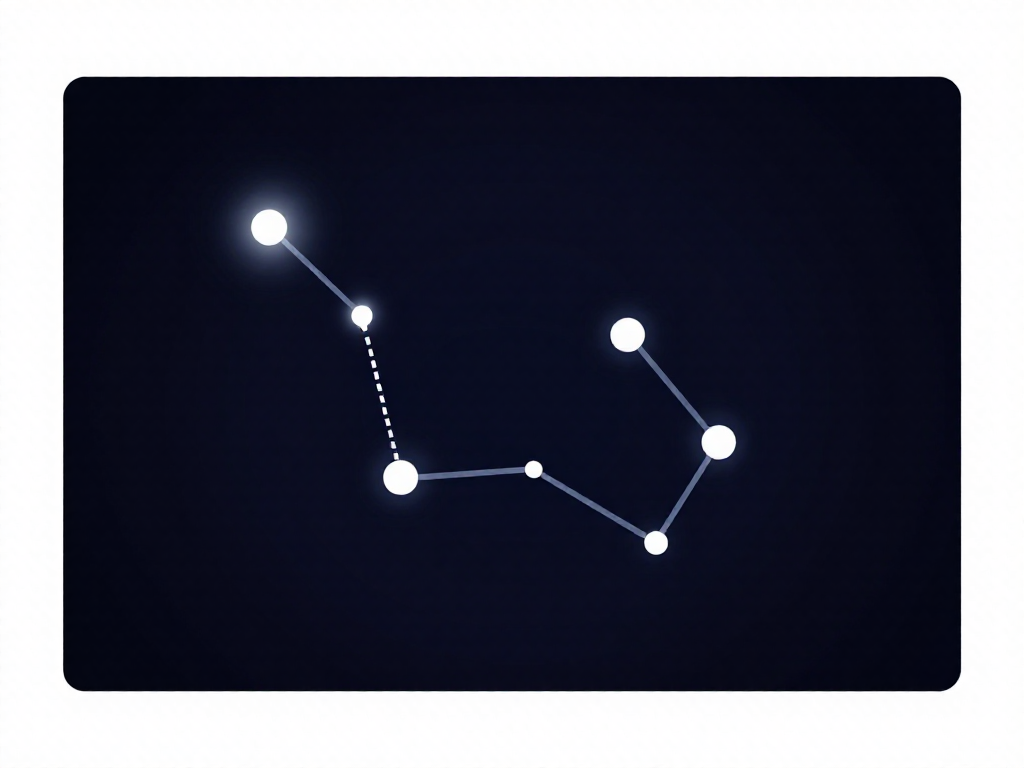
1. Find the Big Dipper. Look toward the northern part of the sky for seven bright stars shaped like a ladle or saucepan—four stars forming a bowl, and three forming a curved handle. This is the Big Dipper, one of the easiest shapes to recognize. (If you're in the Southern Hemisphere or far north, the Dipper may sit low or out of view—don't worry, that's normal.)
2. Spot the two "pointer stars." Look at the outer edge of the Dipper's bowl—the side farthest from the handle. The two stars there are named Dubhe and Merak. Astronomers nicknamed them the "pointer stars" because they do exactly that: point the way.
3. Draw an imaginary line. Picture a straight line running from the bottom pointer star (Merak) up through the top one (Dubhe), then continuing on past them into open sky.
4. Stretch the line about five times. Measure the gap between Dubhe and Merak with your eye, then extend your imaginary line roughly five times that distance in the same direction. No math needed—just eyeball it.
5. You've found Polaris. The line lands on a lone, medium-bright star sitting by itself away from the Dipper. That's Polaris, the North Star. It isn't the brightest star in the sky (a common myth)—it's its position that makes it special.
Double-check it: Polaris is also the very last star in the handle of the Little Dipper, a fainter ladle shape nearby. If you can trace that smaller pattern, you've confirmed it.
Quick takeaway: Find the Big Dipper, follow the two pointer stars five "gaps" upward, and you'll land on Polaris—which always marks true north, your reliable compass in the sky (NASA).
What If You Can't See the Big Dipper?
Don't panic—the Big Dipper isn't always where you left it. Because it slowly wheels around the sky over the course of a night and across the seasons, it can sit low on the horizon or hide behind trees, hills, or buildings.
When that happens, look for its backup partner: Cassiopeia. This constellation looks like a giant letter "W" (or "M," depending on the time of night) and sits on the opposite side of Polaris, the North Star. So if the Dipper is missing, find the W instead. The center point of Cassiopeia roughly points toward Polaris—the two formations act like bookends with the North Star in the middle.
Still unsure? A free stargazing app can confirm which way you're looking by matching the sky on your screen to the real thing.
Quick takeaway: No Dipper? Find the "W" of Cassiopeia on the other side of Polaris. For the best view, pick a clear night under dark skies away from city lights.
Why Finding the North Star Matters
So you've found Polaris (the North Star)—now what? Turns out, this modest little star is one of the most useful points in the entire night sky.
It's a built-in compass. Polaris sits almost exactly above Earth's North Pole, so it reliably marks true north—the actual direction of the pole, not the slightly off "magnetic north" your phone compass follows. Face the North Star, and your back is to the south, your right hand points east, and your left points west. No batteries required.
It guided people for centuries. Long before GPS, travelers, desert caravans, and sailors crossing open oceans steered by Polaris to keep their course. It was one of humanity's most trusted navigation tools.
It reveals how the sky works. Watch the stars over a few hours and they all appear to circle around Polaris. That's not the stars moving—it's you, spinning along with the rotating Earth. The North Star is your front-row seat to that motion.
It's your anchor star. Once you can find Polaris, you have a fixed reference point for hopping to other constellations like Cassiopeia and Cepheus.
Fun fact: Polaris won't always be the North Star. Earth wobbles slowly on its axis—like a spinning top losing balance—over roughly 26,000 years, a motion astronomers call precession. Thousands of years from now, a different star will take the title (NASA).
Quick takeaway: The North Star is a free, ancient, always-on compass—and your gateway to exploring the rest of the night sky.
FAQ
Is the North Star the brightest star in the sky?
No—this is one of the most common myths about the North Star. Polaris (the North Star) is only about the 48th brightest star in the night sky. The brightest is actually Sirius. What makes Polaris special isn't its brightness but its position: it sits almost directly above Earth's North Pole, so it barely moves while every other star appears to circle around it. Think of it as the still hub at the center of a slowly spinning wheel. (Source: NASA)
Can you see the North Star from the Southern Hemisphere?
Generally, no. Because Polaris sits almost directly above Earth's North Pole, it stays hidden below the horizon for most of the Southern Hemisphere. As you travel south of the equator, it drops out of view entirely. The Southern Hemisphere has no equally useful 'south star,' but stargazers there use the Southern Cross (Crux) constellation to find south instead.
What is the difference between Polaris and the North Star?
There's no difference—they're two names for the same star. 'Polaris' is its formal astronomical name, while 'North Star' is the everyday nickname it earned because it marks the direction of true north. You may also see it called the 'Pole Star.' All three terms point to the same star sitting near the sky's northern pivot point.
How do I find north without the Big Dipper?
If the Big Dipper is hidden, use the constellation Cassiopeia instead—it looks like a wide 'W' or 'M' and sits on the opposite side of Polaris from the Big Dipper. The center point of the W roughly points toward Polaris. A handy trick: the Big Dipper and Cassiopeia rotate around the North Star like hands on a clock, so when one is low on the horizon, the other is usually high and easy to spot. Once you locate Polaris, the direction you face to see it is true north.
Does the North Star ever move?
Barely—at least within a human lifetime. Polaris stays nearly fixed in our sky because it lines up almost perfectly with Earth's axis (the imaginary line Earth spins around). Over thousands of years, though, Earth's axis slowly wobbles like a spinning top, a motion astronomers call precession. Because of this, the title of 'North Star' actually changes over time: roughly 12,000 years from now, the bright star Vega will take Polaris's place. This is well-established science, not speculation. (Source: NASA)
See also
- How to Find the Big Dipper
- Beginner's Guide to Constellations
- How to Stargaze Without a Telescope
- Understanding Earth's Rotation and the Night Sky
Related articles
How to Photograph the Night Sky With Just a Phone
Yes, you can take stunning night sky photos with just a phone. Learn beginner-friendly settings, gear, and tricks to capture stars, the Moon, and the Milky Way.
Jun 29, 2026 · 11 min read
What Causes the Northern Lights, and Can Beginners See Them?
Curious about the Northern Lights? Learn what causes auroras in plain language, where and when to see them, and realistic tips for total beginners.
Jun 29, 2026 · 8 min read

A Beginner's Sky-Watching Calendar: Events Worth Looking Up For
A simple year-round sky-watching calendar for beginners. Discover meteor showers, eclipses, and planet sightings worth looking up for—no telescope needed.
Jun 29, 2026 · 5 min read