What Is a Light-Year? Why Looking Up Means Looking Back in Time
What is a light-year and how does it let us see the past?
On this page
A Light-Year Measures Distance, Not Time
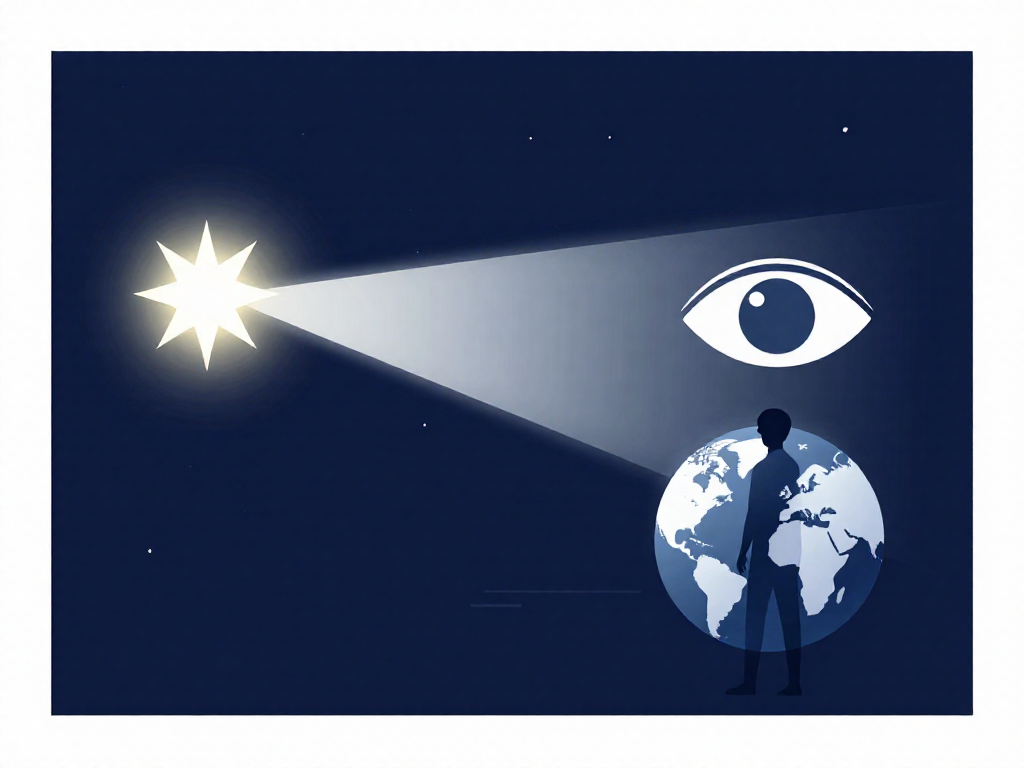
Here's the first thing to clear up, because almost everyone trips over it: a light-year is not a measure of time. Despite that "year" hiding in the name, it measures distance — how far something is, not how long something takes.
So what distance, exactly? A light-year is simply how far light travels in one year. Light is the fastest thing in the universe, racing along at about 186,000 miles (300,000 kilometers) every single second. Let it run for a full year, and it covers roughly 6 trillion miles (about 9.5 trillion kilometers), according to NASA. That enormous stretch of space is one light-year.
Why not just stick with miles or kilometers? Because the universe is so mind-bendingly vast that those everyday units become useless. Writing out the distance to even a nearby star in miles would mean a number trailing dozens of zeros — clumsy and impossible to picture. A light-year shrinks that monster into something tidy. Instead of saying a star is 25,000,000,000,000 miles away, we can say it's about 4 light-years away. Much friendlier.
And don't worry — there's no math to do here. You don't need to calculate anything to grasp the idea. Just hold onto one mental image: a light-year is a ruler, an incredibly long one, that astronomers use to measure the gaps between stars.
Quick takeaway: A light-year is a distance — the distance light travels in a year — not an amount of time.
How Far Is a Light-Year, Really?
Light is the fastest thing in the universe. It zips along at about 186,000 miles per second (300,000 km/s). To put that in perspective, a beam of light could circle the entire Earth roughly 7.5 times in a single second — before you finished blinking.
Now stretch that speed across a whole year. A light-year — the distance light travels in one year — works out to about 5.88 trillion miles (9.46 trillion km), according to NASA. That's a 5 followed by so many zeros that the number stops meaning anything to our brains.
So let's make it feel real:
- Trips to the Moon: The Moon is about 239,000 miles away. One light-year is like making that round trip more than 12 million times.
- Laps around Earth: Remember light circling Earth 7.5 times per second? Keep that up nonstop for a year, and you've traveled one light-year.
- A car ride: Driving at highway speed, reaching just our nearest star (about 4 light-years away) would take over 50 million years.
These comparisons matter because numbers in the trillions are simply too big to picture on their own. We need everyday yardsticks — Moons, laps, road trips — to turn a cold figure into genuine awe.
Quick takeaway: A light-year is a distance, not a time — roughly 5.88 trillion miles, the span light covers in one year.
Why Looking Up Means Looking Back in Time

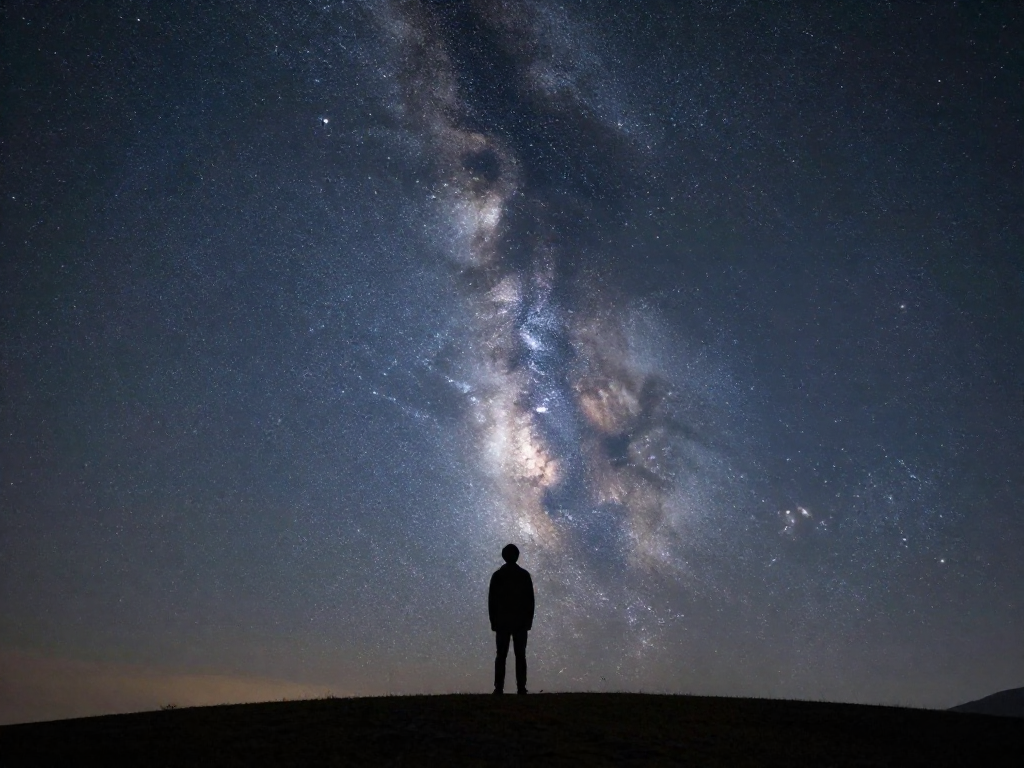
Here's the mind-bending part: light is fast, but it isn't instant. It travels at about 186,000 miles per second, yet space is so vast that even at that blistering speed, light needs time to reach your eyes. So whenever you look at something in the sky, you're not seeing it as it is right now—you're seeing the light that left it moments, years, or even eons ago. Astronomers call this lookback time: the deeper into space you peer, the further back in time you're actually looking.
Let's start close to home:
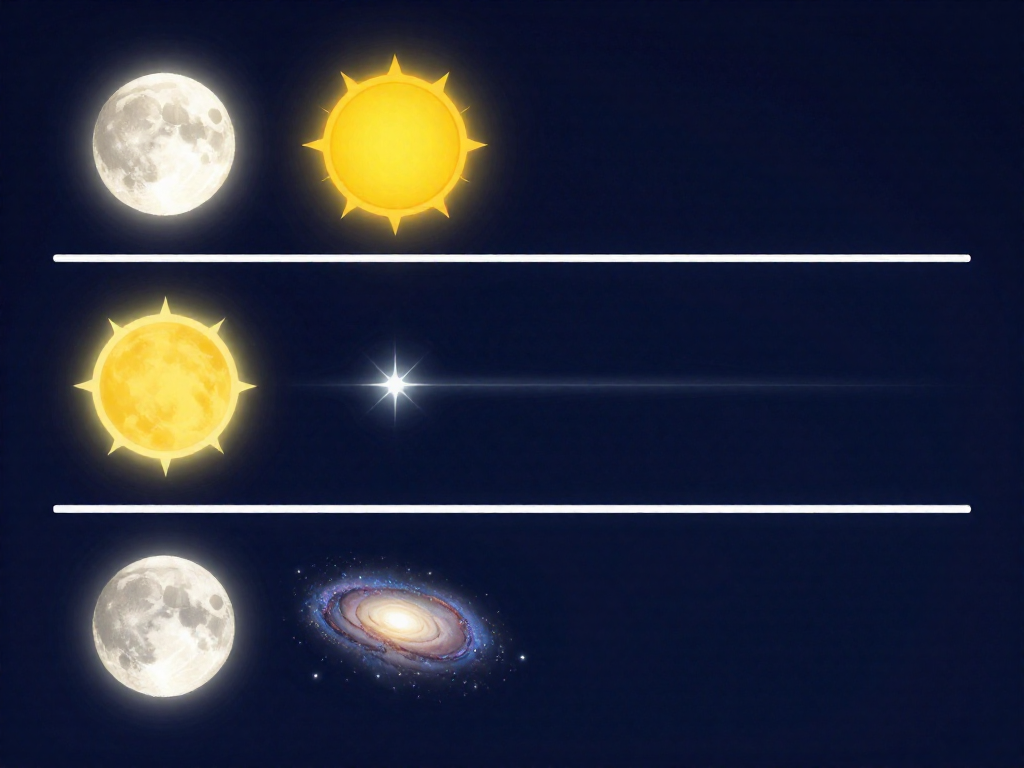
- The Moon — Its light reaches you in about 1.3 seconds. You're seeing the Moon as it was just over a second ago.
- The Sun — Sunlight takes roughly 8 minutes and 20 seconds to arrive (NASA). The sunrise you admire actually happened more than eight minutes earlier.
- Nearby stars — Light from our closest stellar neighbors travels for years to reach us. When you spot one, you're glimpsing it as it looked years or even decades ago.
- Distant galaxies — Their light has been traveling for millions, sometimes billions, of years. You're seeing them as they existed long before Earth's first humans—or in some cases, before Earth itself.
This leads to a genuinely strange truth: a distant star could have collapsed or exploded long ago, and we'd still see it shining peacefully in our night sky. Its final light is simply still on its way to us. This isn't science fiction or speculation—it's well-established physics confirmed by observatories worldwide.
Quick takeaway: Looking up is a form of time travel for your eyes. The farther away something is, the older the view you're seeing.
A Tour of the Sky by Age of Light
Every time you look up, you're seeing things not as they are now, but as they were when their light left them. Here's a tour of the sky, sorted by how old that light is by the time it reaches your eyes.
-
The Sun — about 8 minutes ago. Even our closest star isn't "live." Sunlight takes roughly 8 minutes to cross the gap to Earth, so you always see the Sun as it looked 8 minutes in the past (NASA).
-
Proxima Centauri — about 4.2 years ago. The nearest star beyond the Sun. Its light has been traveling since around four years ago, meaning you're seeing it as it was before some of today's news happened (ESA).
-
Betelgeuse and other bright stars — centuries ago. The reddish shoulder star of Orion sits roughly 600 light-years away, so its glow left before the telescope was even invented.
-
The Andromeda Galaxy — about 2.5 million years ago. This is the farthest thing you can see with just your eyes on a dark night. The faint smudge you spot is light that began its journey before modern humans existed (NASA).
-
Deep-field galaxies — billions of years ago. Powerful telescopes capture light from galaxies near the dawn of the universe, showing them as newborns more than 10 billion years back in time.
Quick takeaway: The deeper into space you look, the further back in time you see.
How Telescopes Become Time Machines
Here's the magical part: because light takes time to travel, every telescope is also a time machine. The farther away something is, the longer its light has been traveling to reach us—so the deeper we peer into space, the further back in time we see.
The James Webb Space Telescope (JWST), a NASA, ESA, and Canadian Space Agency observatory, takes this to an extreme. It's designed to catch faint, ancient light from galaxies that formed when the universe was just a few hundred million years old—a cosmic newborn compared to its 13.8-billion-year age today. According to NASA, Webb is helping us glimpse some of the earliest galaxies ever observed.
Why chase such old light? Studying the distant past lets astronomers piece together cosmic history, like reading the universe's baby pictures to understand how it grew up.
So when you look through any telescope, you're not just stargazing—you're watching the universe's home movies, replaying scenes from millions or billions of years ago.
Quick takeaway: Distant light is old light, so telescopes like JWST let us watch the universe's earliest chapters unfold.
Light-Years vs. Other Space Distance Terms
Space is huge, so astronomers use different "rulers" depending on what they're measuring. Here's how the main ones compare:
- Astronomical unit (AU): The average distance between Earth and the Sun, about 93 million miles (150 million km). It's handy for distances within our solar system, like saying Jupiter sits about 5 AU from the Sun.
- Light-year: The distance light travels in one year, roughly 6 trillion miles (9.5 trillion km). This is the go-to unit for stars and nearby galaxies, where AUs would mean unimaginably large numbers.
- Parsec: A professional favorite equal to about 3.26 light-years. You don't need the math behind it—just know that when scientists say "parsec," they mean a big-distance unit like the light-year.
Quick takeaway: AU for the solar system, light-years for the stars, and parsecs when the pros are talking shop.
Source: NASA.
See also
- How Far Away Is the Nearest Star to Earth?
- The Andromeda Galaxy: A Beginner's Guide to Our Cosmic Neighbor
- What Is the James Webb Space Telescope and Why It Matters
- How Big Is the Universe? A Simple Look at Cosmic Scale
- What Is the Speed of Light and Why It Matters in Space
Related articles
Neutron Stars: The Densest Things in the Universe
What is a neutron star? Discover how a teaspoon can weigh a billion tons, how these cosmic objects form, and why they're the densest things we know of.
Jun 29, 2026 · 8 min read
Will the Universe Ever End? Possible Cosmic Futures
Will the universe ever end? Explore the Big Freeze, Big Rip, Big Crunch, and other possible cosmic fates explained simply for beginners—no equations needed.
Jun 29, 2026 · 9 min read
The Colors of Stars: What Red, Blue, and White Tell Us
Why are stars different colors? Discover how red, blue, and white reveal a star's temperature—explained in plain, jargon-free language for beginners.
Jun 29, 2026 · 6 min read