Neutron Stars: The Densest Things in the Universe
What is a neutron star?
On this page
What Is a Neutron Star, Really?

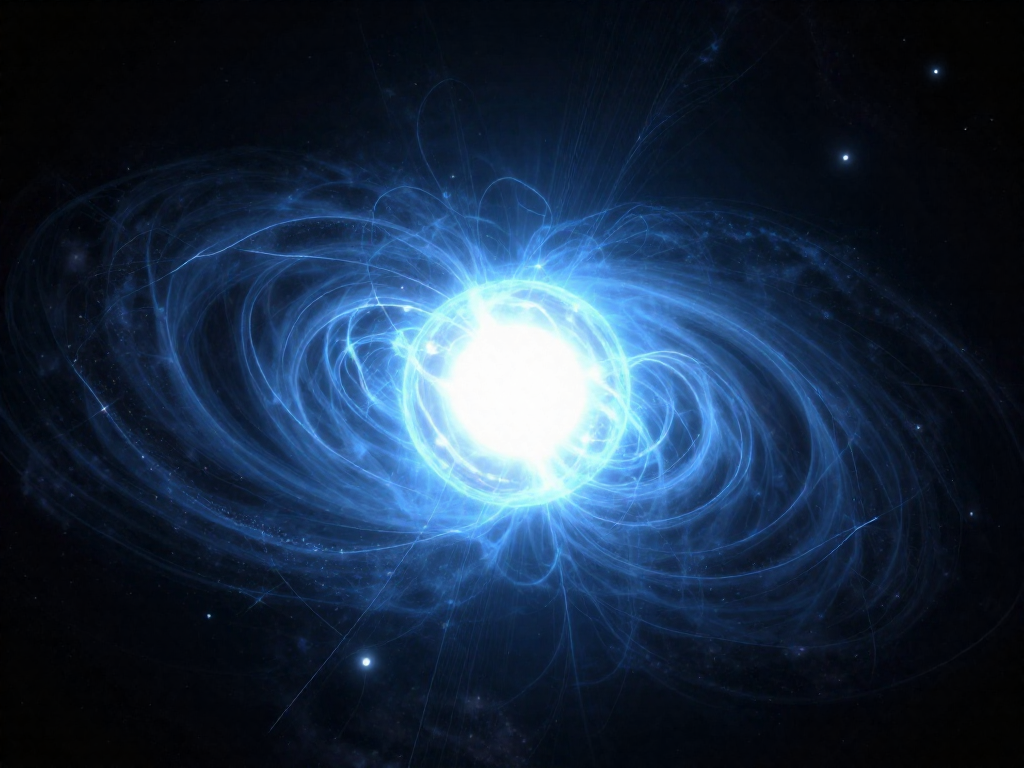
Picture this: you take something heavier than our entire Sun and crush it down until it's the size of a city. That's a neutron star — one of the strangest leftovers in the universe.
When a massive star runs out of fuel, it can no longer hold itself up against its own gravity. The outer layers blast away in a spectacular explosion called a supernova, but the very center collapses inward. What remains is a neutron star: the ultra-compressed core of a dead star, packed almost unimaginably tight.
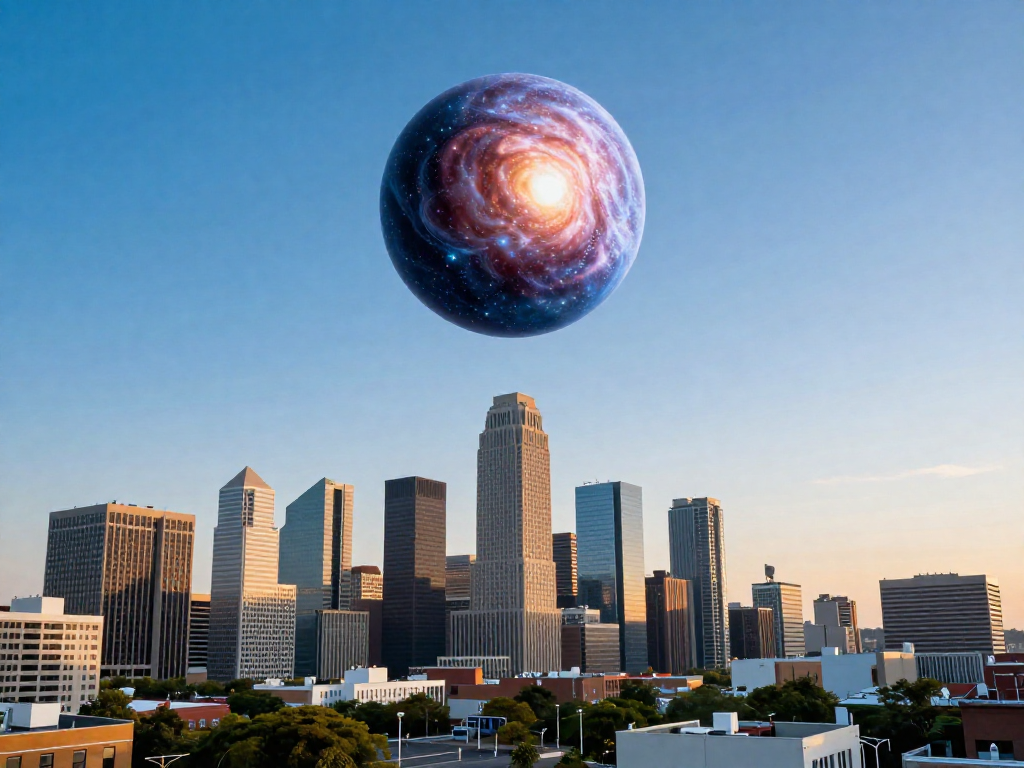
Here's the part that breaks people's brains. A typical neutron star is only about 12 miles (20 kilometers) across — small enough to fit inside a city like Los Angeles. Yet it can contain more material than the entire Sun, which is roughly 865,000 miles wide. Imagine squeezing the Sun down to the size of a town, and you start to get the idea (NASA).
So why "neutron"? Normally, atoms are made of protons, neutrons, and electrons with lots of empty space between them. Under the crushing gravity of the collapse, that space disappears. Protons and electrons get smashed together so hard they merge into neutrons — tiny, neutral particles. The whole object becomes one dense ball of them, which is exactly where the name comes from.
That's the short answer. Over the next few sections, we'll build up the why step by step — how a star reaches this point, and what makes these objects so wonderfully extreme.
How a Neutron Star Is Born: The Death of a Giant Star
To understand why a neutron star is so absurdly dense, it helps to watch one being made. The story begins with a giant — a star at least eight times heavier than our Sun. Smaller stars like the Sun never make it this far; they fade away quietly. Only the true heavyweights have the gravity needed to set off the chain of events that follows.
For most of its life, a giant star survives because of a constant tug-of-war. Nuclear fusion — the process of squeezing lightweight atoms together to make heavier ones, releasing huge amounts of energy — pushes outward like the heat from a bonfire. Meanwhile, the star's own gravity pulls inward. As long as the fire burns, the two forces stay balanced.
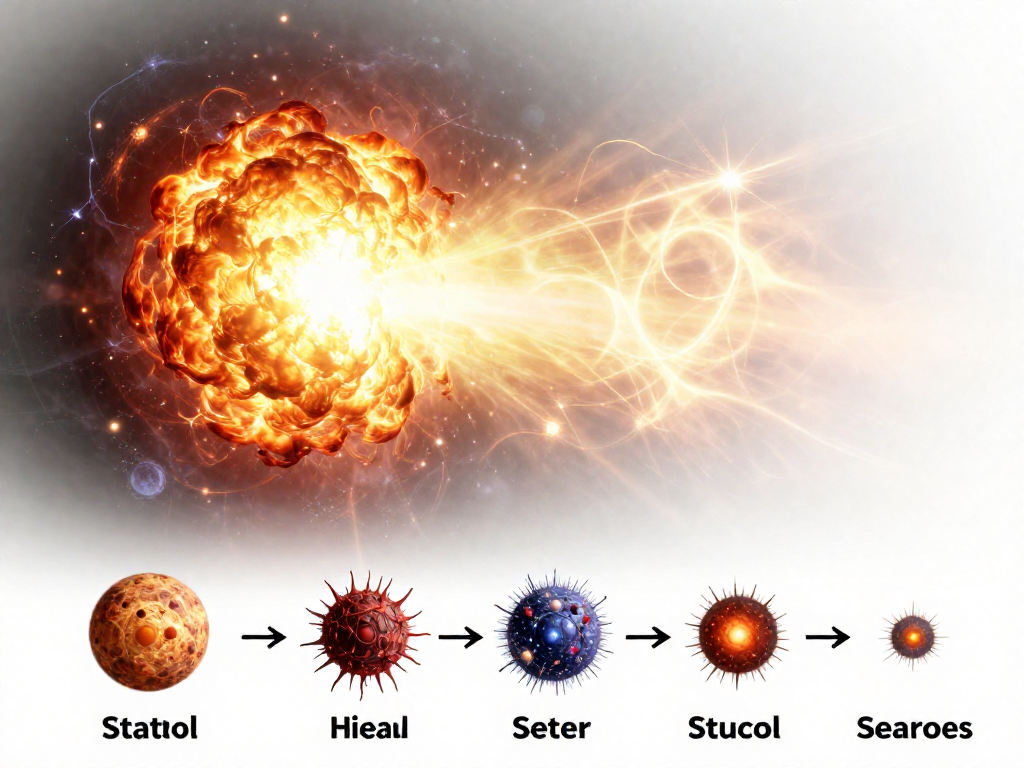
But the fuel runs out. When the core can no longer fuse atoms, the outward push vanishes almost instantly. With nothing holding it up, the core collapses in less than a second, falling inward faster than you can blink. Material rushing toward the center slams into the now-rigid core and rebounds violently.
The result is a supernova — one of the most powerful explosions in the universe. The star's outer layers are blasted into space, briefly shining brighter than entire galaxies of billions of stars (NASA).
What's left behind
While the outer layers fly outward, the core keeps getting crushed. Gravity packs protons and electrons together so tightly that they merge into neutrons — the dense, neutral particles that give the neutron star its name. These neutrons finally push back hard enough to resist further squeezing, and the collapse stops.
What remains is a city-sized ball so dense that a sugar-cube-sized piece would weigh about as much as all of humanity combined (NASA).
Quick takeaway: A massive star runs out of fuel, its core collapses in a heartbeat, a supernova blows off the rest, and gravity crushes what's left into neutrons. For the very biggest stars, even neutrons can't hold on — and a black hole forms instead.
Just How Dense Are We Talking? (The Comparisons)
Here's where neutron stars stop sounding like science and start sounding like magic. The numbers are so extreme that your brain almost refuses to believe them—so let's make them feel real.
The famous teaspoon. If you could scoop up a single teaspoon of neutron star material, it would weigh about a billion tons (NASA). That's not a typo. One teaspoon weighs as much as a mountain—roughly the entire mass of Mount Everest, crushed down into something you could balance on your finger (if it didn't instantly destroy your finger, your house, and probably your city).
Squeezing humanity into a sugar cube. Try this one: imagine every human being on Earth—all 8 billion of us. Now picture all that combined matter compressed so tightly it fits inside a single sugar cube. That's the kind of density we're talking about. Whole crowds, cities, and continents of "stuff" packed into something smaller than a dice.
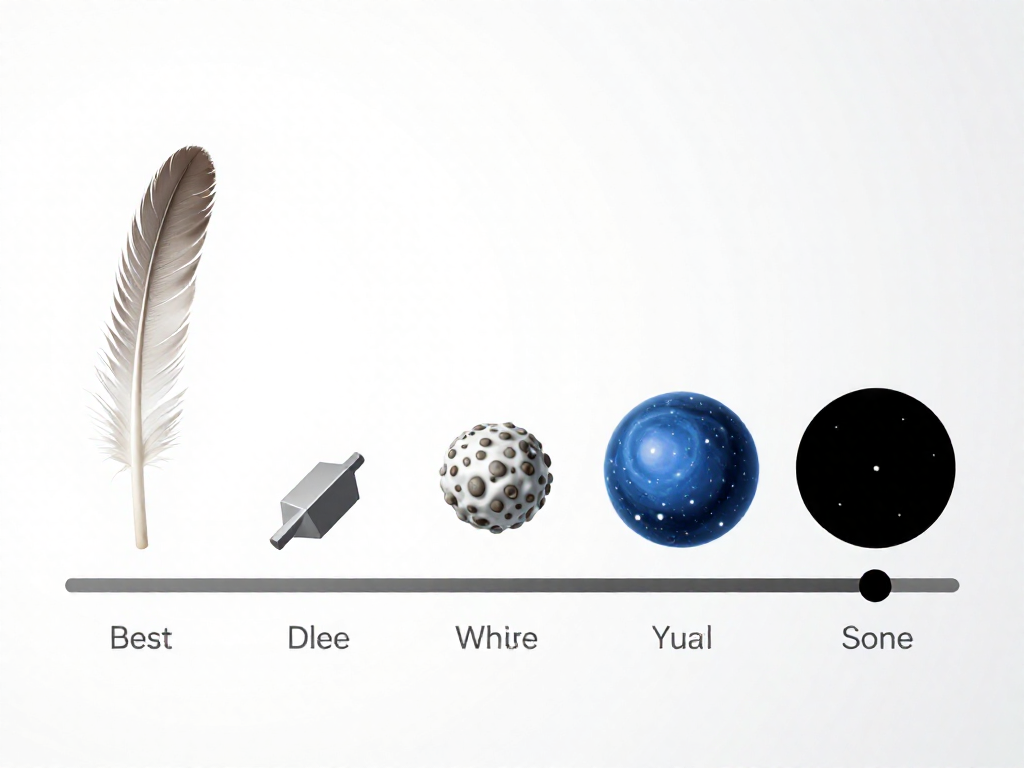
Where it sits on the density scale. To put it in everyday terms, here's how dense things compare, from ordinary to mind-bending:
- Water – the baseline. Light and familiar.
- Lead – about 11 times denser than water. Heavy enough to feel surprising.
- The Sun (average) – a bit denser than water overall, surprisingly.
- White dwarf – a teaspoon weighs a few tons. Extreme, but knowable.
- Neutron star – a teaspoon weighs a billion tons. Off the charts.
Why does this happen? Atoms "collapse." Normally, atoms are mostly empty space—imagine a tiny marble (the nucleus) floating in the middle of a stadium, with electrons whizzing around the far edges. There's a huge gap in between. In a neutron star, gravity squeezes so hard that this empty space gets crushed out. The particles slam together until there's almost nothing but solid nuclear matter left. Remove the emptiness from atoms, and you get the densest object science has ever confirmed.
Quick takeaway: A teaspoon of neutron star weighs about a billion tons because gravity crushes the empty space out of atoms—packing mountain-sized mass into spoon-sized space.
Spinning, Magnetic Monsters: Pulsars and Magnetars
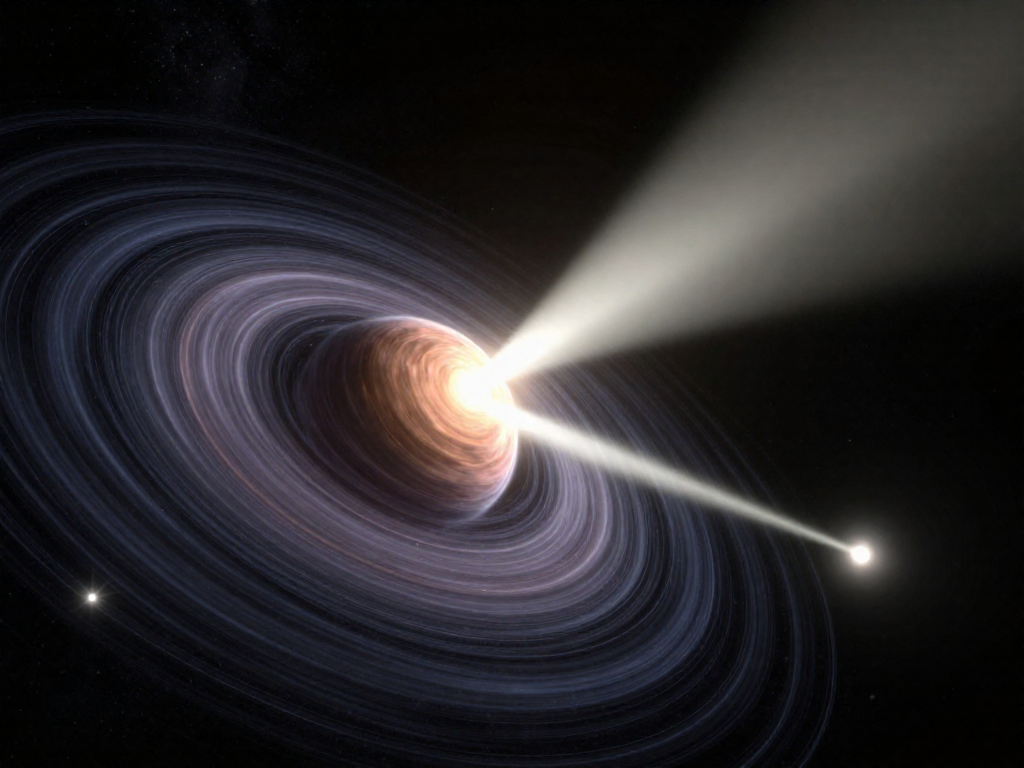
Neutron stars don't just sit there being dense—some of them put on a cosmic light show. When a giant star collapses, it spins faster and faster, the same way a figure skater speeds up by pulling their arms in. The result is mind-bending: some neutron stars rotate hundreds of times every second. Picture an object heavier than the Sun, squeezed into the size of a city, whirling around faster than a kitchen blender.
Pulsars: cosmic lighthouses
Some neutron stars beam out radio waves (a kind of invisible light) from their magnetic poles. As the star spins, those beams sweep across space like a lighthouse. Each time a beam points at Earth, we see a flash. We call these stars pulsars, short for "pulsating stars," because they appear to blink with astonishing regularity—sometimes more reliably than an atomic clock.
In 1967, astronomer Jocelyn Bell Burnell spotted one of these steady, repeating signals and didn't yet know what it was. The pulses were so precise that, half-jokingly, the source was nicknamed "LGM-1"—for "Little Green Men," as if it might be an alien beacon. It turned out to be the first pulsar ever found (NASA).
Magnetars: the strongest magnets in existence
Then there are magnetars, neutron stars with magnetic fields so powerful they're considered the strongest magnets in the known universe—trillions of times stronger than a fridge magnet. Get close enough and that magnetism would scramble the atoms in your body.
Quick takeaway: Pulsars flash like lighthouses as they spin; magnetars wield unimaginable magnetic power. Their clockwork signals act as natural beacons, helping astronomers map distances, test gravity, and study matter at extremes we can never recreate on Earth.
Gravity So Strong It Bends Light and Time
Here's where neutron stars stop feeling like objects and start feeling like cosmic magic tricks. The gravity at their surface is so intense it can be billions of times stronger than Earth's (NASA). That number is almost impossible to picture, so let's make it personal.
Imagine dropping a marshmallow from just one meter above a neutron star's surface. By the time it hit, it would be falling at a speed of roughly a few million miles per hour and release energy comparable to a powerful explosion. There's nothing "soft" about a landing here—gravity simply doesn't allow it.
That same gravity does something even stranger: it bends light. Picture a flashlight beam being curved like a stream of water arcing from a hose. Near a neutron star, light follows curved paths so dramatically that you could actually see a little way around the far side of the star—as if peeking around the back of someone's head while staring at their face.
This light-and-spacetime bending isn't just a visual oddity. It's a preview of one of the universe's grandest events: when two neutron stars collide, they send ripples through spacetime itself—gravitational waves—which we'll explore next.
Quick takeaway: Neutron star gravity is so extreme it would crush anything that fell in and literally bends the light around it.
Why Neutron Stars Matter to Us
Neutron stars might sound like distant curiosities, but they're surprisingly personal. When two of them spiral together and collide—an event astronomers call a kilonova—the crash is so violent it forges the universe's heaviest elements, including gold, platinum, and uranium. NASA confirmed this in 2017, when scientists detected gravitational waves (ripples in space itself) and light from one such collision 130 million light-years away.
Here's the awe-inspiring part: the gold in a wedding ring or a phone's circuitry was almost certainly created in cosmic collisions like these, long before Earth existed. That jewelry is, quite literally, stardust from one of the most extreme events in nature.
Quick takeaway: Neutron star collisions are cosmic forges that scattered precious metals across the galaxy—some of which ended up here.
And yet, a huge mystery remains. Scientists still don't fully understand what lies at a neutron star's core. The pressure there is so extreme that matter may behave in ways no laboratory on Earth can reproduce. Some researchers think the core could contain exotic forms of matter we've never directly observed—but this is still a hypothesis, not settled science.
That blend of the known and the unknown is exactly why neutron stars are worth marveling at. If you'd like to explore further, NASA's astrophysics pages and ESA's mission archives are wonderful, jargon-light places to keep wondering.
See also
- What Is a Supernova? How Stars Explode
- Black Holes Explained for Beginners
- The Life Cycle of a Star
- White Dwarfs vs. Neutron Stars
- Gravitational Waves Made Simple
- Where Do the Elements Come From?
Related articles
Will the Universe Ever End? Possible Cosmic Futures
Will the universe ever end? Explore the Big Freeze, Big Rip, Big Crunch, and other possible cosmic fates explained simply for beginners—no equations needed.
Jun 29, 2026 · 9 min read
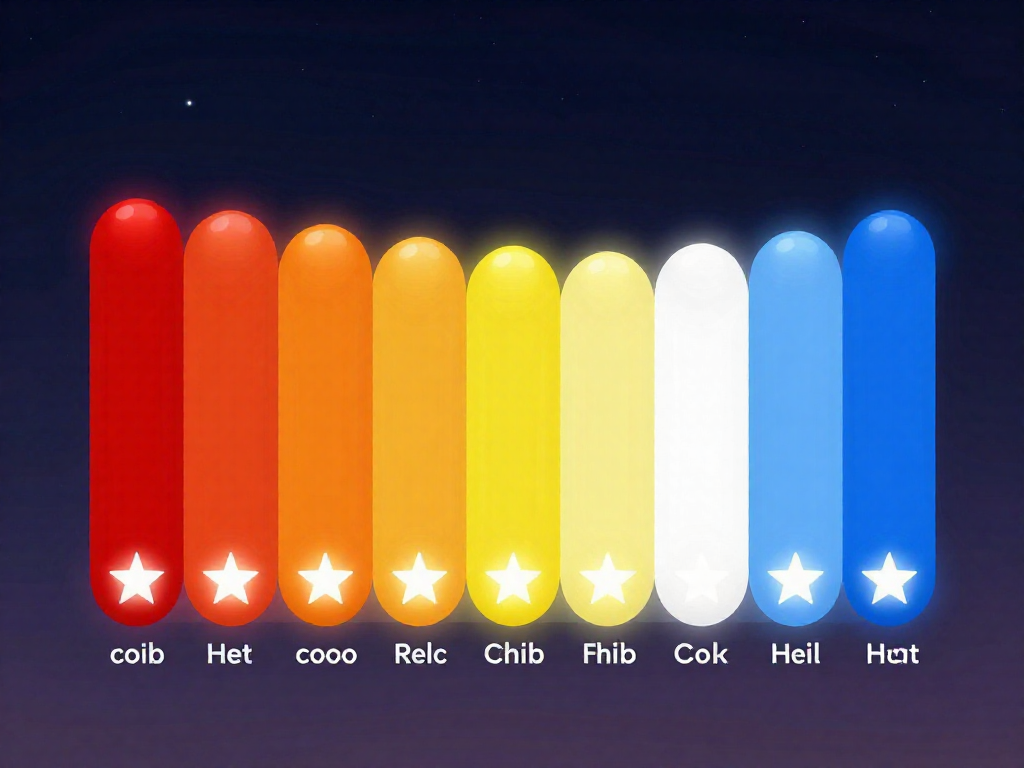
The Colors of Stars: What Red, Blue, and White Tell Us
Why are stars different colors? Discover how red, blue, and white reveal a star's temperature—explained in plain, jargon-free language for beginners.
Jun 29, 2026 · 6 min read
Why Do Stars Twinkle but Planets Don't?
Stars twinkle and planets don't—here's the simple reason why, explained without the jargon. It all comes down to our atmosphere and how light reaches your eyes.
Jun 29, 2026 · 5 min read