Why Do Stars Twinkle but Planets Don't?
What makes stars twinkle?
On this page
The Quick Answer
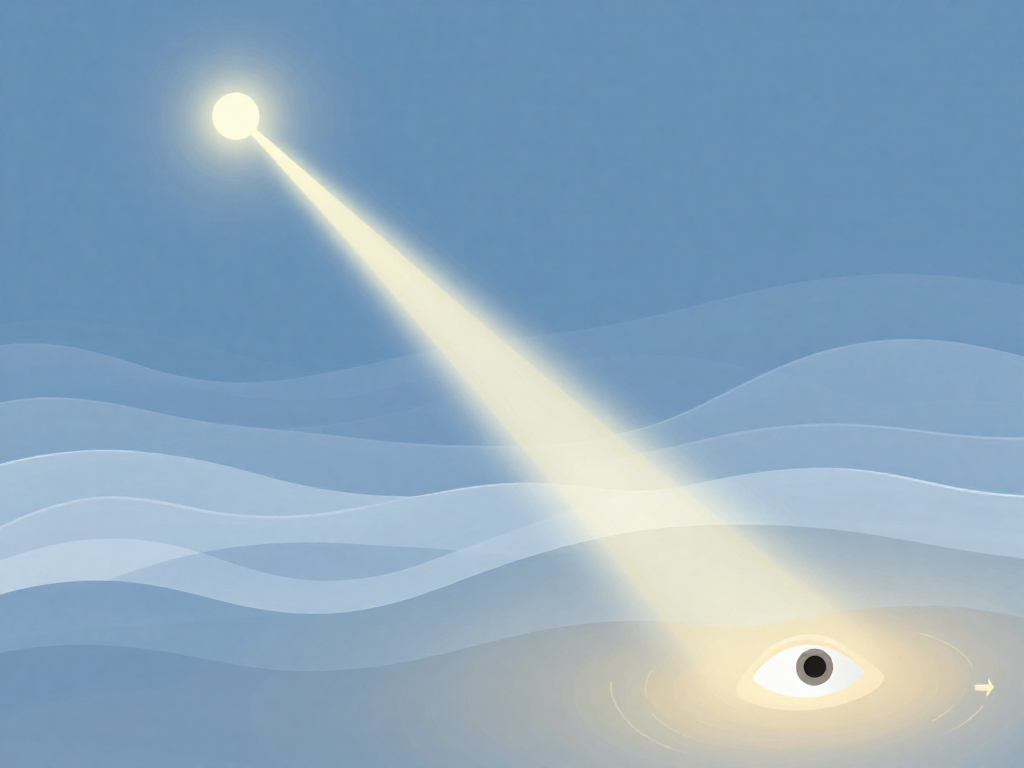
Stars twinkle, but planets shine with a steady glow — and the secret isn't the stars or planets at all. It's our own air.
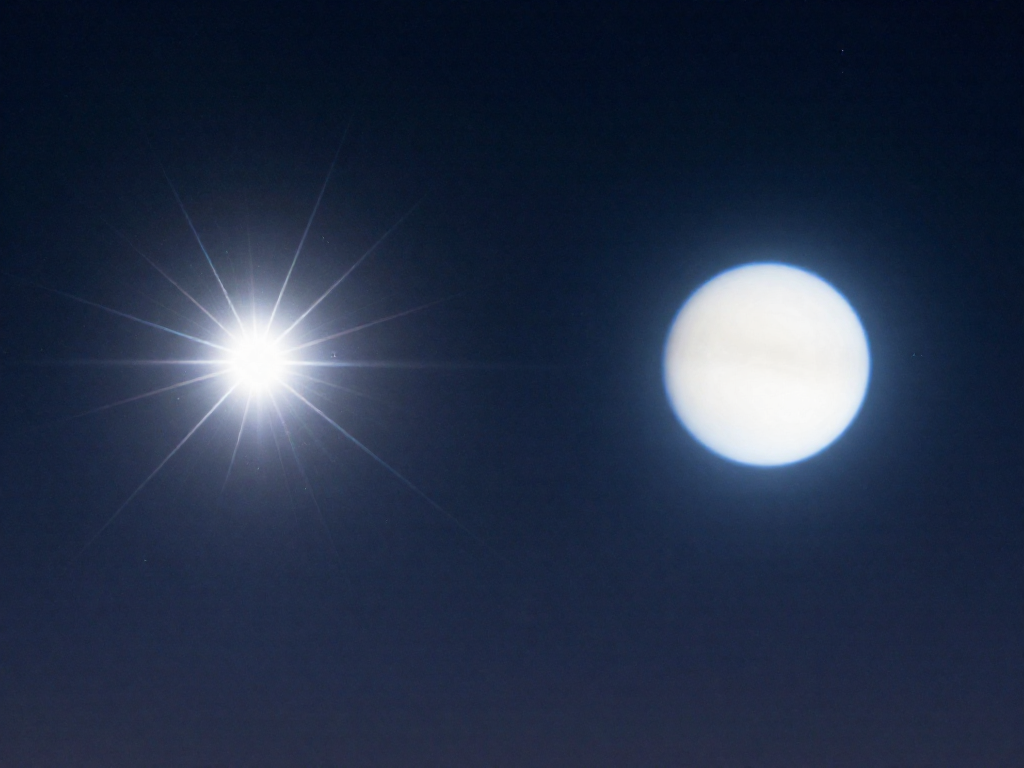
Stars are so unimaginably far away that, even through a telescope, each one shows up as a single tiny point of light. As that pinpoint travels down through Earth's atmosphere — the restless, ever-moving blanket of air around our planet — pockets of warm and cool air bend the light slightly in different directions, making it flicker. That dancing flicker is what we call twinkling.
Planets are much closer, so they appear as tiny disks rather than single points. The atmosphere still jostles their light, but the wobbles average out across the disk, so planets hold steady.
Quick takeaway: Stars twinkle because their pinpoint light gets jostled by our wobbly atmosphere — planets don't, because they show up as tiny disks that smooth the flicker out.
Why the Atmosphere Makes Stars Shimmer

Here's the secret: stars don't actually twinkle. The shimmer happens much closer to home—in the thin blanket of air wrapped around our planet.
Think of Earth's atmosphere as a restless ocean of air. It's never still. It's packed with invisible pockets of gas, some warm, some cool, some thicker, some thinner, all swirling and jostling against each other. By the time a star's light reaches your eye, it has just plowed through dozens of miles of this churning air.
So what does that air do to the light? It bends it. As starlight crosses from one pocket to the next, each pocket nudges the beam slightly off course—a little left, a little right. Scientists call this bending refraction, but you can picture it as the light getting gently knocked around. Because the pockets are always moving, the nudging never stops. The result is that the point of light seems to dance, flicker, and shift in brightness from one instant to the next.
You've seen this same effect in everyday life. Picture the wobbly, watery shimmer rising off a hot road on a summer day, or the way a coin looks like it's quivering at the bottom of a swimming pool. That's air or water bending light right in front of you—exactly what's happening to a star, just on a cosmic scale.
The technical name for this twinkle is astronomical scintillation. Now that you've met it, we can simply call it the twinkle.
Quick takeaway: Stars look like they twinkle because their light gets bent and jostled by moving pockets of air in our atmosphere—like heat shimmer over a hot road.
Point of Light vs. Tiny Disk: The Real Difference
Here's the clever part that most people never hear: the reason planets stay calm while stars dance comes down to size in the sky—not their actual size, but how big they look from where you're standing.
Stars are mind-bendingly far away. Even the closest ones are trillions of miles off, so no matter how huge they really are, they shrink down to a single, lonely point of light. And a single point is fragile. As that one thin beam travels through our restless atmosphere—pockets of warm and cool air constantly shifting—it gets bent and nudged around. Bend that lone beam even slightly and the whole star appears to flicker. That shimmer is what we call twinkling (astronomers use the fancier word scintillation).
Planets play by a different rule. They're our neighbors—close enough that they don't shrink to a single dot. Instead, each one shows up as a tiny disk: a small circle made of many points of light packed together. As the air jostles those beams, some get bent one way and some another. The flickers cancel each other out, averaging into a smooth, steady glow.
Picture it this way: a single candle flame seen far across a field seems to dance and waver. But a whole cluster of candles, viewed from the same distance, blends into one calm, glowing patch. Stars are the lone flame. Planets are the cluster.
Quick takeaway: A point of light twinkles easily; a tiny disk made of many points smooths the shimmer away.
How to Tell Stars and Planets Apart at Night
Once you know what to look for, you can spot the difference tonight—no telescope required. Here's a simple field guide.
-
Watch for the flicker. If a light is twinkling, flashing, or even flickering through tiny color changes (white to blue to red), it's almost certainly a star. Stars are so far away they appear as single pinpoints of light, and our shifting atmosphere—the blanket of air above us—bends that thin beam every which way, making it dance.
-
Look for a steady glow. A light that shines calmly without shimmering is usually a planet, such as Venus, Jupiter, or Mars. Planets are close enough to appear as a tiny disk rather than a single point, so the wobbling air can't disrupt all of their light at once.
-
Use brightness as a clue. Planets often look noticeably brighter than nearby stars and hold that brightness steadily. Venus, in particular, can outshine everything except the Moon.
-
Mind the horizon. Twinkling is strongest low on the horizon, where starlight passes through the most air to reach you. Looking high overhead means less atmosphere—and steadier light—so that's the easiest place to judge.
Quick takeaway: Steady = planet. Twinkly = star. Look up tonight and try it.
When Even Stars Stop Twinkling (and Other Surprises)
Once you understand that twinkling comes from Earth's restless air, a few surprises start to make sense.
- In space, stars don't twinkle at all. Above the atmosphere there's no churning air to bend the light, so stars shine steadily. That's a big reason observatories like NASA's Hubble Space Telescope orbit Earth—to escape the blur our air creates.
- Planets can twinkle too—sometimes. When a planet sits very low on the horizon, its light passes through a thicker slice of atmosphere, enough to make even that little disk shimmer slightly.
- Bad nights make it worse. On windy evenings, or when the weather is shifting, the air is extra turbulent and stars dance more noticeably.
- Astronomers don't find it charming. To them, twinkling (they call it "seeing") smears fine detail. It's a nuisance to fight, not a feature to enjoy.
Quick takeaway: Twinkling is an Earth-air effect—remove the air, and it vanishes.
The Big Picture
So the whole mystery comes down to two things: our restless atmosphere, and the fact that stars arrive as pinpoints of light while planets show up as tiny disks. Air currents bend a star's single point, making it dance—but a planet's wider glow averages out to a steady shine.
Here's the wonder in it: that twinkle is light that crossed years of space, only to wobble in the last few miles of air above your head.
Quick takeaway: Atmosphere + point-versus-disk explains it all. Step outside tonight and see for yourself.
See also
- A beginner's guide to identifying planets in the night sky
- What is the closest star to Earth?
- How far away are the stars we see at night?
- Best stargazing tips for total beginners
- Why is the sky blue? (atmosphere explainer)
Related articles
Neutron Stars: The Densest Things in the Universe
What is a neutron star? Discover how a teaspoon can weigh a billion tons, how these cosmic objects form, and why they're the densest things we know of.
Jun 29, 2026 · 8 min read
Will the Universe Ever End? Possible Cosmic Futures
Will the universe ever end? Explore the Big Freeze, Big Rip, Big Crunch, and other possible cosmic fates explained simply for beginners—no equations needed.
Jun 29, 2026 · 9 min read
The Colors of Stars: What Red, Blue, and White Tell Us
Why are stars different colors? Discover how red, blue, and white reveal a star's temperature—explained in plain, jargon-free language for beginners.
Jun 29, 2026 · 6 min read