The Moon's Phases Explained Without the Confusion
Why does the Moon change shape through the month?
On this page
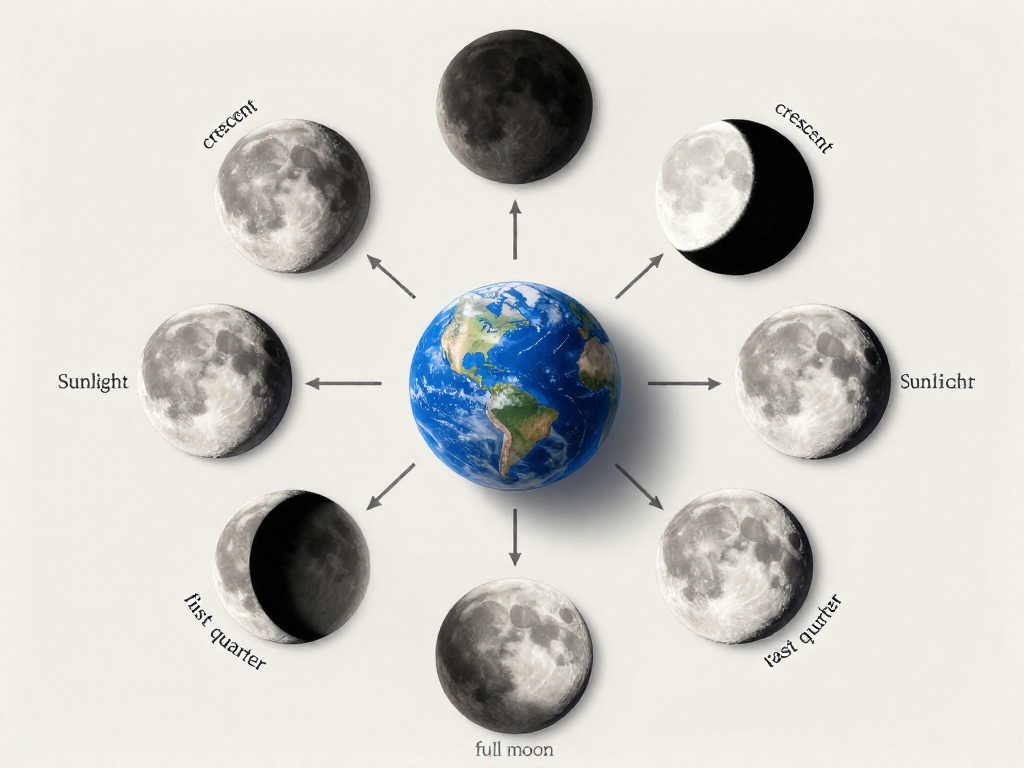
Open by busting the #1 myth (Earth's shadow does NOT cause the phases), then promise a single mental model—where the Sun is, what half of the Moon is lit, and which slice we can see from Earth—that makes the whole cycle click in one read.
The One Idea That Makes Moon Phases Click
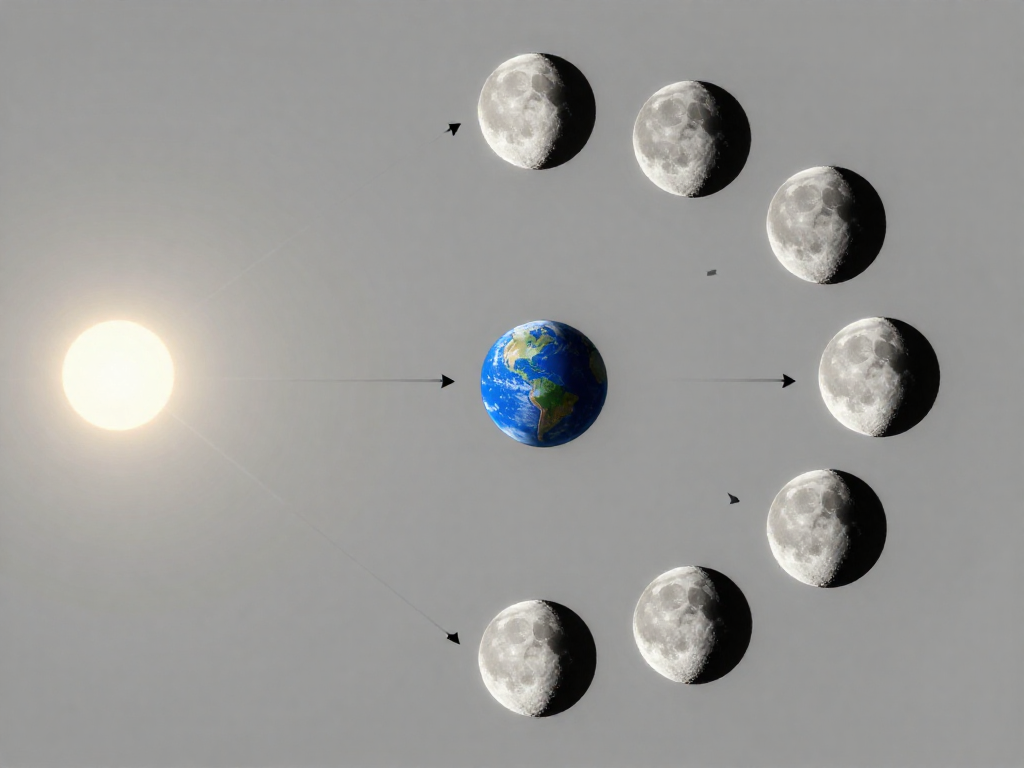
Here's the secret that makes everything else fall into place: the Sun always lights up exactly half of the Moon. Always. Just like the Sun lights half of Earth at any moment (the half we call daytime), it lights half of the Moon too. The Moon is never "half dark" because something is covering it — it's a ball floating in sunlight, and a ball in sunlight is always half-lit.
So if the lit half never changes, why does the Moon seem to grow and shrink through the month?
Because of where we're standing. As the Moon orbits Earth (a full loop takes about 29.5 days, according to NASA), our viewing angle keeps changing. Sometimes we look at the Moon's fully lit side. Sometimes we catch its dark side facing us. Most of the time, we see a mix — a sliver, a half, a fat curve — depending on how the Moon is angled relative to us and the Sun.
That's it. That's the whole idea:
- The Sun lights half the Moon at all times.
- A "phase" is simply how much of that lit half is turned toward Earth.
- It's about our line of sight as the Moon circles us — not about a shadow, and not about anything blocking the Moon.
Quick takeaway: Phases aren't the Moon changing. They're us getting a different view of the same sunlit ball. Hold onto this, and every phase name in the next section will feel obvious instead of memorized.
The Biggest Myth: It's Not Earth's Shadow
Here's the idea almost everyone gets wrong: the Moon's phases are not caused by Earth's shadow falling on it. It's the single most common mix-up in all of stargazing—and once you let it go, everything else clicks.
Earth's shadow does touch the Moon sometimes. We call that a lunar eclipse (when our planet slips directly between the Sun and the Moon, briefly blocking the sunlight). But eclipses are rare events, happening only a couple of times a year—not the smooth, dependable change you see night after night.
So if a shadow only shows up occasionally, why does the Moon shift shape every single month? Because we're watching the angle of sunlight on it change as the Moon orbits us. The Sun always lights up one half of the Moon; we just see different amounts of that lit half from down here.
Quick takeaway: Think "angle of sunlight," not "shadow." (NASA, Moon in Motion.)
Walking Through the 8 Phases (In Plain Language)
Here's the secret that ties everything together: the Moon is always half-lit by the Sun, just like a ball held under a single lamp. What changes through the month is how much of that lit half we can see from Earth. As the Moon orbits us, our viewing angle shifts, and the sunlit portion seems to grow and shrink. Let's walk through all eight phases in order.
-
New Moon — The Moon sits roughly between us and the Sun, so its lit side faces away from Earth. We're looking at the shadowed half, which makes the Moon nearly invisible in the sky.
-
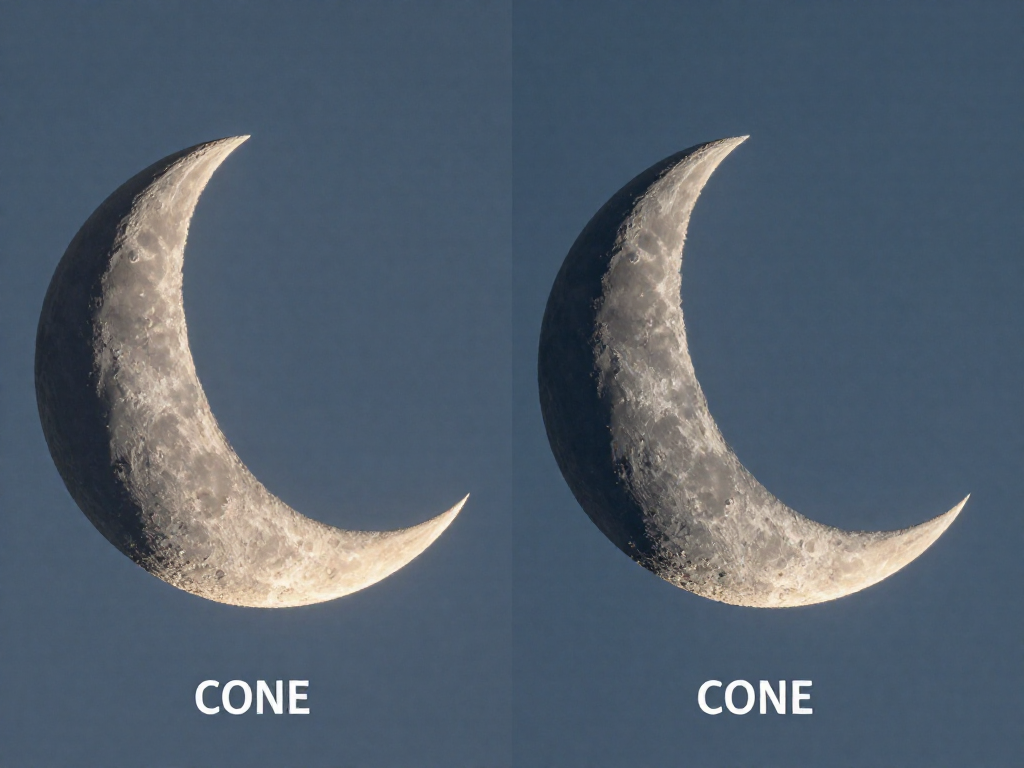
Waxing Crescent — A thin sliver of light appears on the right side. ("Waxing" simply means growing.) Each night that sliver gets a little fatter.
-
First Quarter — Now exactly half the face we see is lit, on the right. Despite the name, it looks like a half-Moon. It's called "first quarter" because the Moon is one-quarter of the way through its cycle.
-
Waxing Gibbous — "Gibbous" just means more than half but not yet full. The bright area keeps swelling night after night.
-
Full Moon — The Moon is now on the opposite side of Earth from the Sun, so the entire face turned toward us is lit. This is the bright, round Moon everyone pictures.
-
Waning Gibbous — "Waning" means shrinking. The light now begins fading, this time from the left side.
-
Last Quarter — Half-lit again, but the opposite half from First Quarter; the left side glows.
-
Waning Crescent — A shrinking sliver on the left, dimming each night until we return to a New Moon and start over.
The whole journey, from one New Moon to the next, takes about 29.5 days (NASA), which is why we get a fresh cycle roughly once a month.
Quick takeaway: The Moon doesn't change shape — our view of its always-half-lit surface changes. Light grows on the right (waxing), peaks at Full, then fades on the left (waning).
Waxing vs. Waning: How to Tell at a Glance
Ever glanced up at a half-lit Moon and wondered whether it's on its way to full or fading toward dark? There's a simple trick, and once you know it, you'll never guess again.
First, two words worth knowing. Waxing means growing—the bright part is getting bigger night after night, heading toward a full Moon. Waning means shrinking—the lit portion is shrinking back toward a new (invisible) Moon.
Now the shortcut. If you're in the Northern Hemisphere, just check which side is glowing:
- Lit on the right → the Moon is waxing (growing).
- Lit on the left → the Moon is waning (shrinking).
An easy way to remember it: "right is bright and rising" toward full.
One important note: this is flipped in the Southern Hemisphere, where a right-lit Moon is actually waning. So a friend in Australia would read the same Moon in mirror image.
Quick takeaway: Up north, right side bright = growing; left side bright = shrinking. South of the equator, swap the two.
Why the Same Side Always Faces Us
Here's a neat trick the Moon pulls off: it spins exactly once for every trip it makes around Earth. Astronomers call this tidal locking—imagine swinging a friend around by the hands; they're always facing you even though they're technically turning. That perfect match is why we only ever see one face of the Moon from here on Earth.
This is not the same thing as the phases. The side facing us never changes, but the sunlight falling on it does, which is what makes the Moon appear to grow and shrink.
One last myth to bust: the side we can't see is the far side, not the "dark side." It gets just as much sunlight as the side we know—we simply never get to watch (NASA).
Quick takeaway: Same face, always; the lighting is what shifts.
See It For Yourself: A 5-Minute Backyard Demo
Reading about Moon phases is one thing—watching them happen in your own hands is where it finally clicks. Here's a quick demo you can do tonight.
You'll need three things:
- A lamp or bright flashlight = the Sun
- A ball, orange, or apple = the Moon
- Your own head = the Earth (you're standing on it, after all)
Try this:
- Put the lamp on one side of the room and turn off the other lights.
- Hold the ball out at arm's length, slightly above your head.
- Slowly spin in a full circle, keeping your eyes on the ball.
Watch what happens: the lit part of the ball that you can see grows and shrinks as you turn—even though the lamp never moves. That changing slice of light is exactly what we call the Moon's phases. Nothing is covering the Moon; you're just seeing its sunlit side from different angles.
Quick takeaway: The Moon doesn't change shape—your viewing angle does.
Want to make it real? Glance at the actual Moon each clear night for a month and sketch what you see. By the end, you'll recognize the full cycle on sight.
See also
- What Causes a Lunar Eclipse, Explained Simply
- Why the Moon Looks Bigger on the Horizon
- Solar vs. Lunar Eclipse: The Easy Difference
- A Beginner's Guide to Watching the Night Sky
Related articles
Why Does Uranus Spin on Its Side?
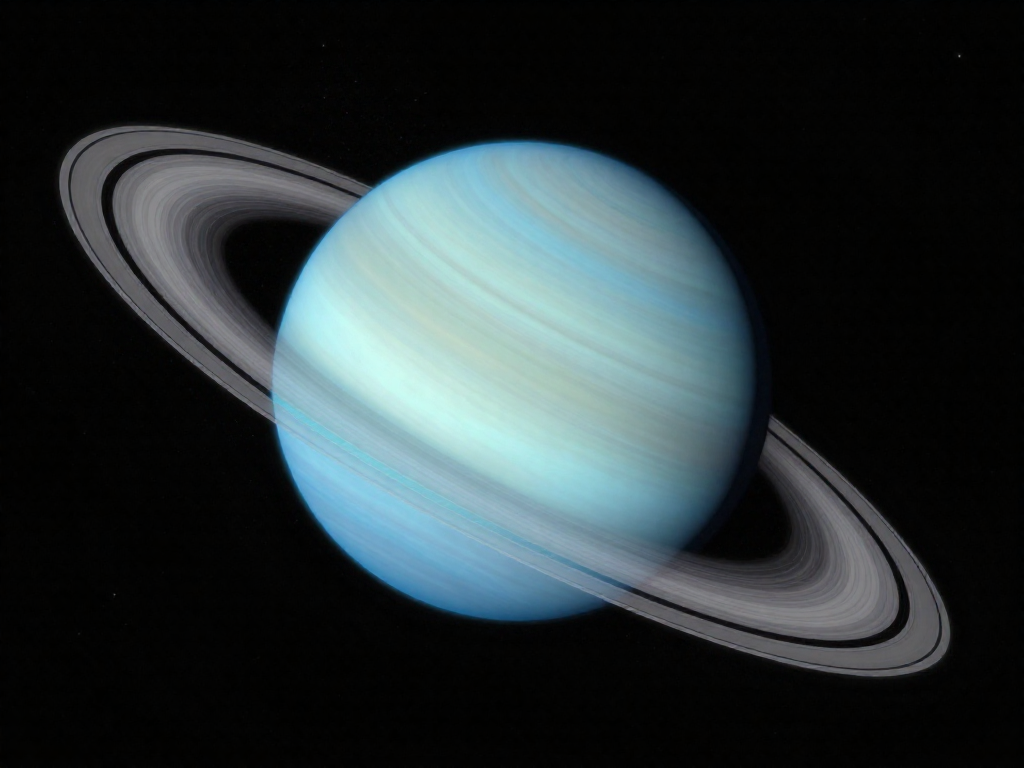
Uranus is tilted a wild 98 degrees, rolling around the Sun like a ball. Discover the ancient collision that likely knocked it onto its side.
Jun 29, 2026 · 6 min read
Quick Facts About Every Planet, at a Glance
Key stats for all 8 planets in one scannable place: size, distance from the Sun, day length, moons, and what makes each world weird.
Jun 29, 2026 · 6 min read
How Big Is the Solar System Really? A Sense of Scale
The distances between planets are mind-bending. Use simple shrink-it-down analogies to finally grasp how vast our solar system truly is.
Jun 29, 2026 · 7 min read