Dark Matter vs. Dark Energy: What's the Difference?
How do dark matter and dark energy differ?
On this page
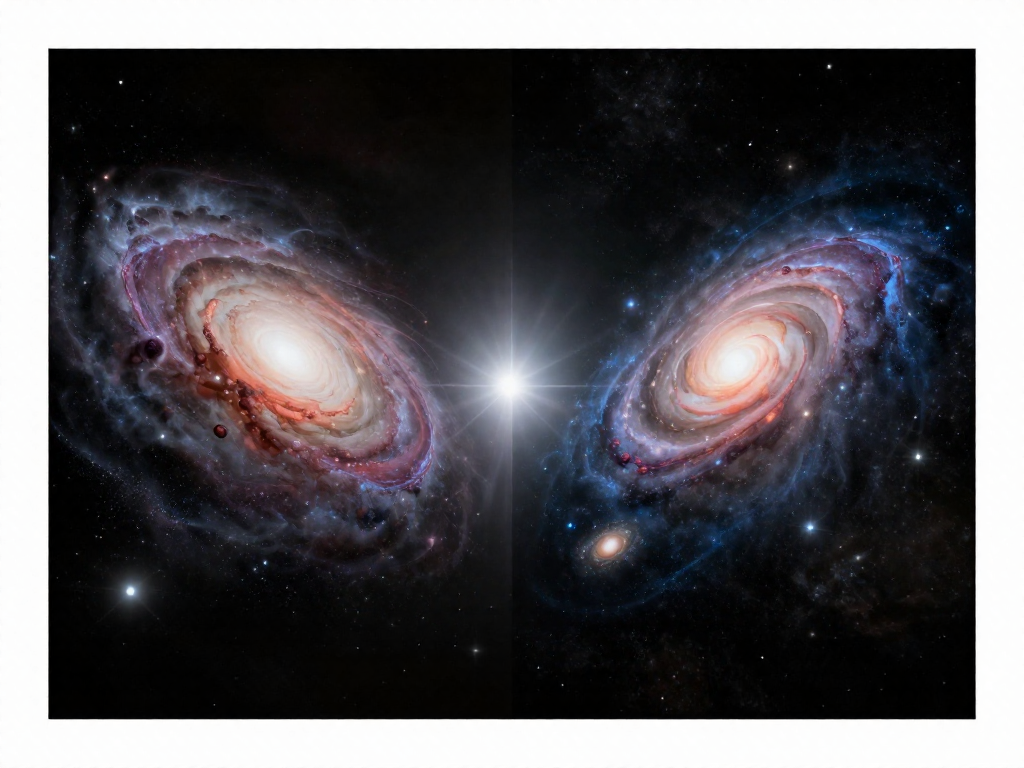
The 5% Universe: Why "Dark" Stuff Even Exists
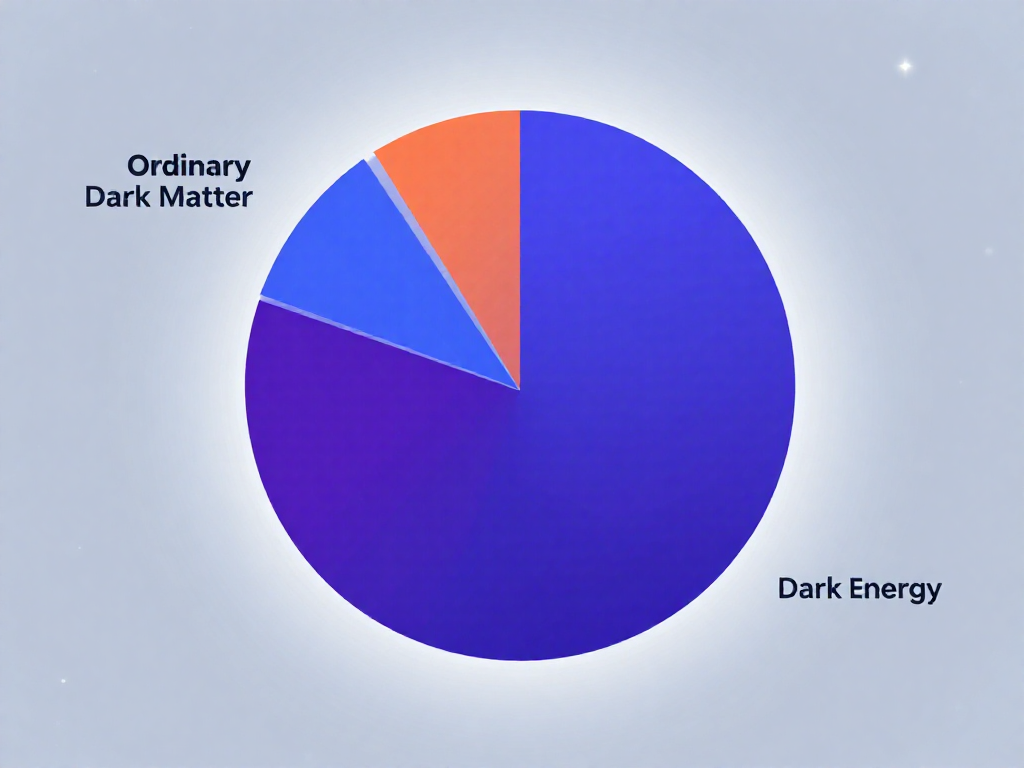
Here's a fact that humbles even the experts: everything you've ever seen—every star, planet, galaxy, and the atoms in your own body—adds up to only about 5% of the universe. The other 95% is invisible, unidentified, and waiting to be understood.
Scientists split that mysterious majority into two parts:
- Dark matter (~27%) — an unseen something that has gravity and helps hold galaxies together.
- Dark energy (~68%) — an unseen something that seems to be pushing the universe to expand faster and faster.
So what does "dark" actually mean? It's not a cosmic villain or anything sinister. "Dark" simply means we can't see it or detect it directly yet. It doesn't glow, reflect light, or show up on any telescope. The word is basically a scientist's honest way of saying, "we know it's there, but we can't point a camera at it."
That raises a fair question: if nobody can see this stuff, how do we even know it exists? The answer is that we discovered both through their effects, not by spotting them directly—a bit like knowing the wind is real because you watch the trees bend. Galaxies spin in ways that only make sense if extra invisible mass is present, and the whole cosmos is stretching apart in a way ordinary matter can't explain.
Quick takeaway: The visible universe is just 5% of the whole. The rest is dark matter (gravity we can't see) and dark energy (a push we can't explain)—both real, both invisible, both detected only by what they do.
(Figures based on measurements from NASA and the ESA Planck mission.)
What Is Dark Matter? The Invisible Glue
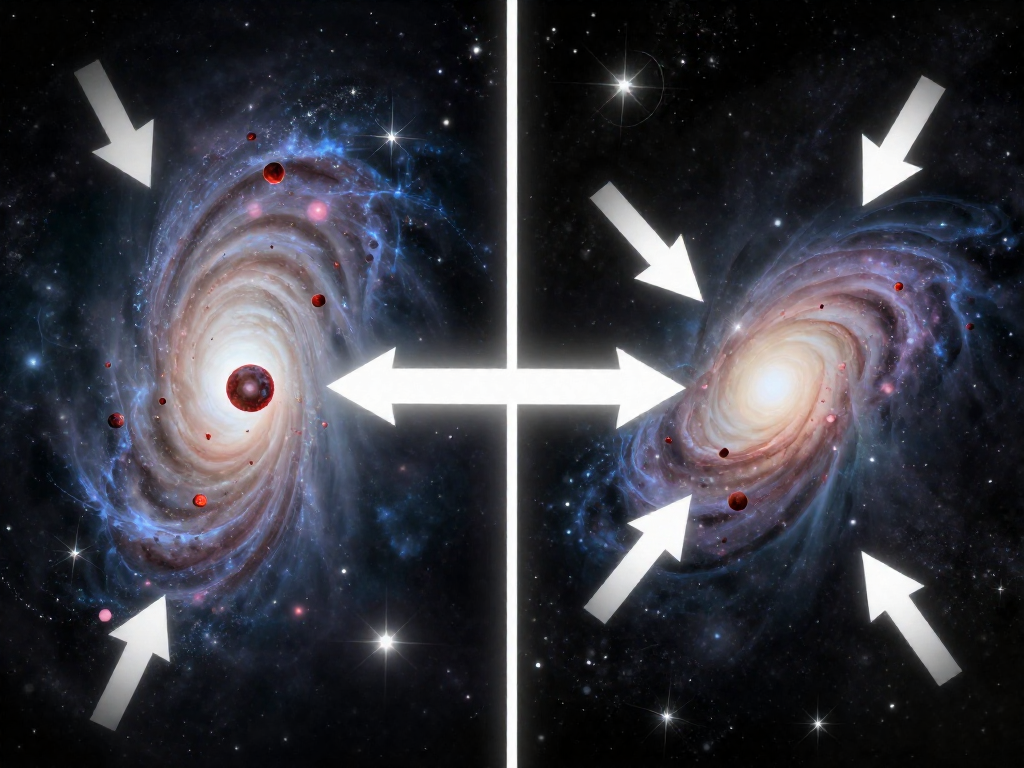
Imagine a spinning carousel turning so fast that the riders should be flung off into the grass. Somehow, they stay put. That's the puzzle astronomers see when they watch galaxies spin. The outer stars whirl around so quickly that the gravity from all the visible stars, gas, and dust simply isn't enough to hold them in place. By every calculation, these galaxies should tear themselves apart. Yet they don't. Something unseen is acting like extra gravity, quietly holding everything together.
Scientists call that something dark matter — "dark" not because it's sinister, but because it gives off no light at all. We can't see it through any telescope, no matter how powerful. We only know it's there because of how its gravity pulls on the things we can see.
The most striking proof comes from a trick called gravitational lensing. When light from a distant galaxy travels toward us, it can pass through a region packed with dark matter. The dark matter's gravity bends that light, like a glass lens warping the view behind it. By measuring how much the light bends, astronomers can map out clumps of invisible matter — essentially weighing something they can't touch (NASA, ESA).
A helpful way to picture dark matter is as cosmic scaffolding, or invisible glue. It forms a vast, unseen framework that galaxies are built upon and clustered around.
Quick takeaway: Dark matter is invisible material whose gravity holds galaxies together. We can't see it directly, but we watch its gravity bend light and keep spinning galaxies intact.
What Is Dark Energy? The Cosmic Accelerator
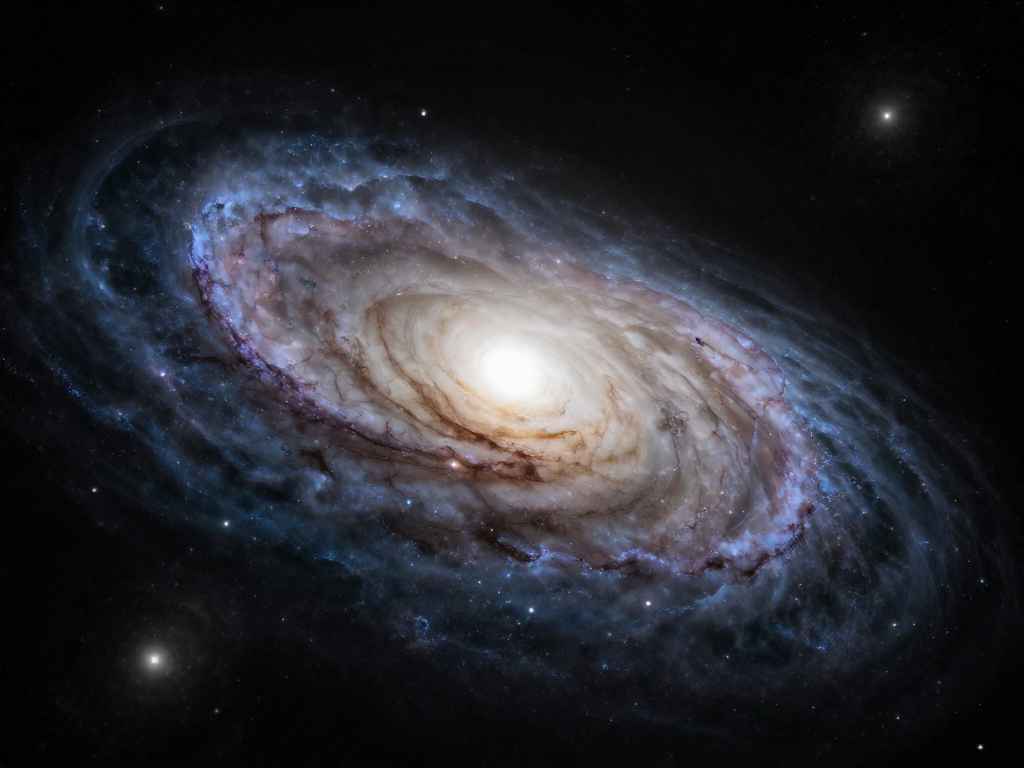
If dark matter is the invisible glue holding galaxies together, dark energy is its opposite: a mysterious push that drives the entire universe apart. It's the single biggest ingredient in the cosmos, making up roughly 68% of everything that exists, according to NASA—yet we still can't see it, touch it, or fully explain it.
Here's the surprise that revealed it. For most of the 20th century, astronomers assumed the universe was expanding but slowing down, like a ball tossed in the air losing speed to gravity. Then, in 1998, two teams studying distant exploding stars (supernovae) found the opposite: galaxies aren't slowing as they fly apart—they're speeding up. The discovery was so unexpected it earned the 2011 Nobel Prize in Physics.
Something must be pushing. Scientists named that "something" dark energy—a repulsive force that seems to fill even completely empty space. Think of it as a faint pressure baked into the vacuum itself, gently shoving everything outward everywhere, all at once.
The strangest part? The more the universe expands, the more dark energy there appears to be. Stretch out empty space and you don't dilute it—you seem to create more of this outward push, which makes the expansion accelerate even faster over time. It's a runaway effect with no obvious brake.
Be careful here: scientists know dark energy's effect (accelerating expansion) far better than its cause. What it actually is remains one of the biggest open questions in physics.
Quick takeaway: Dark energy is the unknown force speeding up the universe's expansion—the cosmic gas pedal, not the brake.
Side-by-Side: Dark Matter vs. Dark Energy at a Glance
By now you've met both mystery ingredients. So how do they actually differ? Here's the whole rivalry in one quick look.
| Dark Matter | Dark Energy | |
|---|---|---|
| What it does | Pulls things together with gravity | Pushes things apart |
| Its job in the cosmos | The invisible glue that holds galaxies together | The accelerator that stretches the universe wider |
| Where it hangs out | Clumps in and around galaxies | Fills all the empty space, everywhere |
| Share of the universe | About 27% | About 68% |
The easiest way to remember it: dark matter is the brake, dark energy is the gas pedal. One says "stay close," the other says "spread out." Astonishingly, dark energy is winning—the universe is expanding faster and faster, not slowing down.
And notice those percentages. Together that's roughly 95% of everything (NASA, Science Mission Directorate). The ordinary stuff you can see—stars, planets, you—is just the leftover 5%.
Quick takeaway: Dark matter holds the cosmos together; dark energy drives it apart. We can measure what they do, but what they actually are remains one of science's biggest open questions—a genuine mystery, not settled fact.
Why Easily Confused (and How to Keep Them Straight)
If you keep mixing up dark matter and dark energy, you're in good company. The names sound almost identical, and that's the root of nearly all the confusion. But the two could hardly be more different—in fact, they do opposite jobs.
Here's a simple memory trick:
- Dark matter = Magnet. Both start with "M." Like a magnet, dark matter pulls things together, acting as invisible glue that holds galaxies in place.
- Dark energy = Expansion. Both start with "E." Dark energy pushes things apart, stretching the universe and making it expand faster.
So they aren't two flavors of the same mystery. One tugs inward; the other shoves outward.
Quick takeaway: Matter pulls together, energy pushes apart.
One last thing worth being honest about: both names are really just placeholders. Scientists know something is causing these effects, but they haven't fully identified what that "something" is yet (NASA Science, "Dark Energy, Dark Matter").
What Scientists Still Don't Know
Here's the humbling truth: dark matter and dark energy together make up about 95% of the universe, yet we can't fully explain either one. And honestly? That's part of what makes them so exciting.
- Dark matter is still a ghost. Scientists are confident it's there because of how galaxies spin and hold together, but no experiment has ever caught a single dark matter particle directly. Detectors buried deep underground are still listening (NASA).
- Dark energy is an even bigger puzzle. We know something is pushing the universe to expand faster and faster, but its true nature is considered one of the biggest open questions in all of physics (ESA).
- Help is on the way. New observatories like the Vera C. Rubin Observatory and ESA's Euclid space telescope are mapping the cosmos to hunt for clues about both.
Quick takeaway: These aren't settled facts—they're genuine mysteries. And standing at the edge of what humanity knows is exactly where the awe lives.
See also
- What Is Gravity? A Beginner's Guide
- How Galaxies Form and Hold Together
- The Expanding Universe Explained
- What Are Black Holes, Really?
- Is the Universe Infinite?
Related articles
Neutron Stars: The Densest Things in the Universe
What is a neutron star? Discover how a teaspoon can weigh a billion tons, how these cosmic objects form, and why they're the densest things we know of.
Jun 29, 2026 · 8 min read
Will the Universe Ever End? Possible Cosmic Futures
Will the universe ever end? Explore the Big Freeze, Big Rip, Big Crunch, and other possible cosmic fates explained simply for beginners—no equations needed.
Jun 29, 2026 · 9 min read

The Colors of Stars: What Red, Blue, and White Tell Us
Why are stars different colors? Discover how red, blue, and white reveal a star's temperature—explained in plain, jargon-free language for beginners.
Jun 29, 2026 · 6 min read