Black Holes for Beginners: What They Are and Aren't
What is a black hole, really?
On this page
What Is a Black Hole, Really?
Let's start with the simplest possible answer: a black hole is a region of space where gravity is so strong that nothing can escape it—not even light. That last part is the key. Light is the fastest thing in the universe, and if gravity can trap light, it can certainly trap everything else.
So how does a place get that powerful? The trick is cramming an enormous amount of stuff into an incredibly tiny space. Gravity gets stronger the closer you are to a mass and the more tightly that mass is packed. Picture taking our entire Sun—a ball over a million times wider than Earth—and squeezing it down until it would fit inside a city a few miles across. Squeeze it tight enough, and its gravity becomes so intense that the region around it turns into a black hole. (Don't worry: our Sun can't actually do this. It isn't big enough, a point we'll come back to later.)
Why does it look black? You see objects because light bounces off them and travels back to your eyes. A black hole gives nothing back. Any light that crosses its boundary is pulled in and never returns, so there's simply nothing to see. It appears as a perfectly dark patch against the glowing universe behind it—which is exactly what scientists captured in the first-ever image of a black hole's shadow, released by the Event Horizon Telescope team in 2019.
One last thing to hold onto before we bust some myths: a black hole is a place, not a solid object, and despite the name it is not a tunnel or a drain you fall "through" to somewhere else. The word "hole" is misleading. Think of it instead as a one-way region of space.
Quick takeaway: A black hole is a patch of space where gravity is too strong for anything—even light—to escape, created by squeezing a huge amount of matter into a tiny volume.
The Big Myth: Black Holes Are NOT Cosmic Vacuum Cleaners
Picture the classic movie scene: a black hole appears, and suddenly everything in sight—planets, ships, stray asteroids—gets yanked toward it like dust into a vacuum cleaner. It's dramatic. It's also wrong.
Black holes don't roam the galaxy "sucking in" everything around them. A black hole's gravity behaves exactly like the gravity of any other object with the same mass. Mass is just the amount of "stuff" something is made of, and gravity is the pull that mass creates. Swap one for another of equal mass, and from a distance, nothing changes.
A thought experiment to prove it
Imagine our Sun was magically squished down into a black hole tomorrow (it can't actually do this—it isn't massive enough—but play along). What would happen to Earth?
Almost nothing, gravitationally speaking. Earth would keep orbiting on the same path, at the same speed, as if nothing had changed. We'd lose light and warmth, which would be a very bad day—but we would not get dragged in. The Sun-turned-black-hole would have the exact same mass, so it would pull on us with the exact same strength.
So why the "no escape" reputation? Because gravity gets dramatically stronger the closer you get to any object's center. With a black hole, all that mass is crammed into an incredibly tiny space, so you can get extremely close. Cross the boundary called the event horizon—the point of no return, where you'd have to travel faster than light to escape—and that's it. But that boundary is small. Stay outside it, and a black hole is just another massive neighbor minding its own business.
Quick takeaway: Black holes don't chase or vacuum up anything. Their gravity matches their mass, just like any star. You only get trapped if you cross the event horizon up close.
(Source: NASA, "What Is a Black Hole?")
The Parts of a Black Hole (Without the Math)
A black hole isn't one single "thing"—it's made of a few distinct parts, each with a name you'll bump into again and again. Here's a plain-English tour.
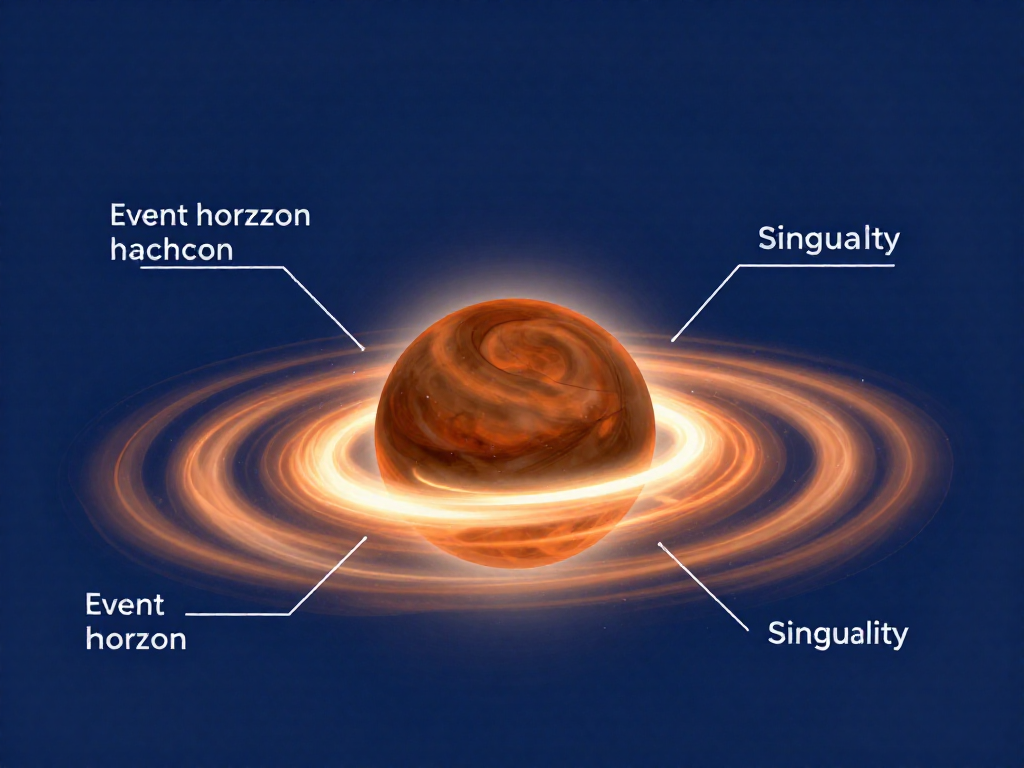
1. The event horizon: the point of no return. Picture a waterfall. There's a spot upstream where, if your canoe drifts past it, the current is simply too strong to paddle back. The event horizon is that spot for a black hole. Cross it, and nothing—not even light, the fastest thing in the universe—can escape. It's not a solid surface or a wall; it's an invisible boundary marking "past here, there's no coming back."
2. The singularity: where our understanding breaks down. At the very center sits the singularity, where all the matter is thought to be crushed into an unimaginably tiny point. And here's the honest part: scientists don't fully know what happens there. Our best theories of gravity and the quantum world stop agreeing, so the singularity is one of the biggest open questions in physics—not settled fact.
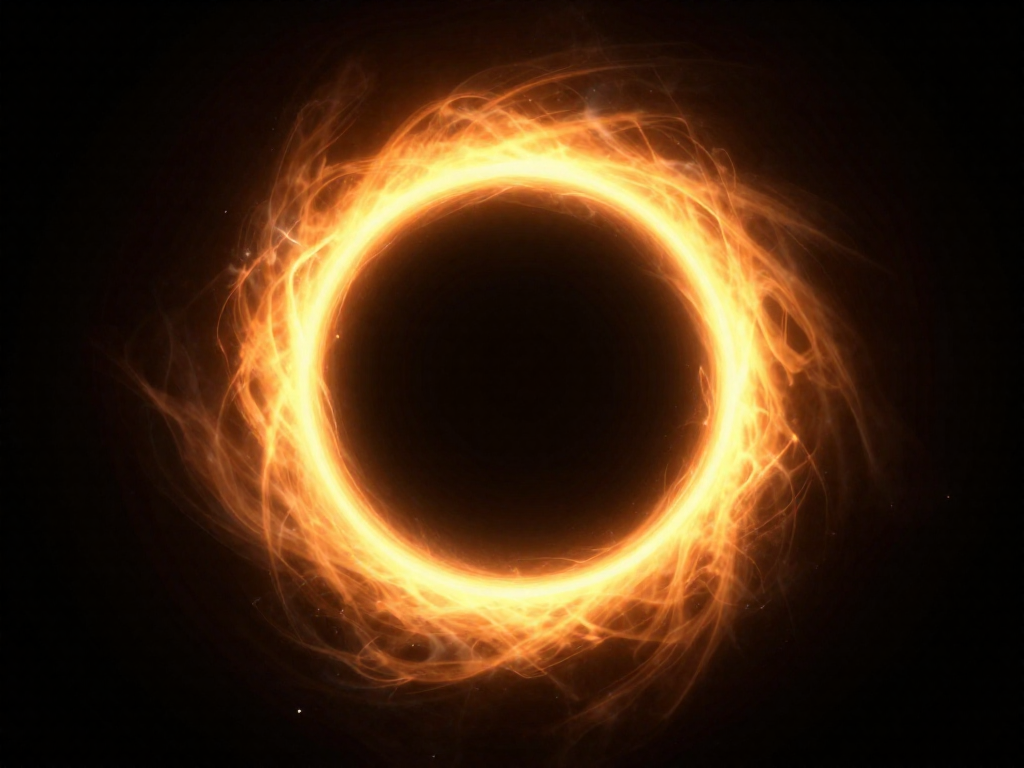
3. The accretion disk: the glowing swirl we actually see. Gas, dust, and shredded stars don't fall straight in. They spiral around the black hole first, like water circling a drain, speeding up and heating to millions of degrees until they blaze with light. This bright, swirling ring—the accretion disk—is usually what telescopes detect, since the black hole itself gives off nothing.
4. Why the famous "photo" is a ring, not a hole. In 2019, the Event Horizon Telescope team released the first image of a black hole's surroundings (NASA/ESA). The glowing ring is light from hot material bent around the black hole's gravity. The dark center—the "shadow"—is the black hole. We didn't photograph the hole; we photographed the light framing it.
Quick takeaway: Event horizon = the point of no return. Singularity = the mysterious center we don't fully understand. Accretion disk = the glowing material we actually see. The famous "photo" shows light bending around the hole, not the hole itself.
How Black Holes Form
So where do these cosmic giants actually come from? It turns out there isn't just one recipe. The two kinds we understand best form in very different ways.
1. Stellar black holes (born from dying stars)
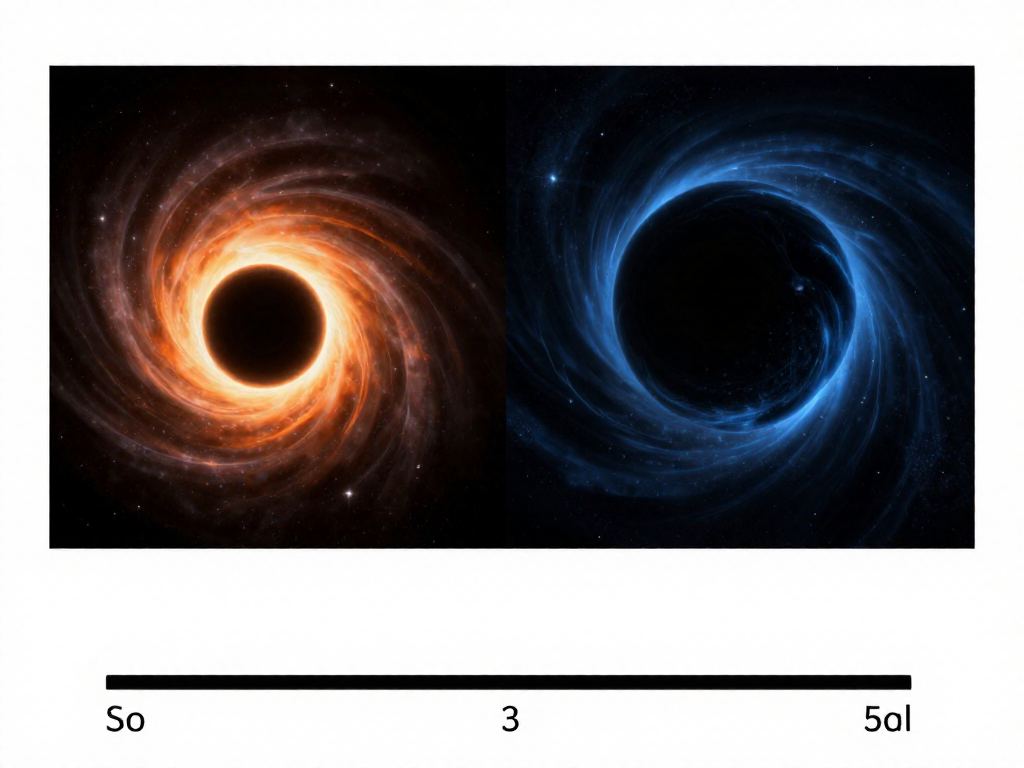
When a star far more massive than our Sun runs out of fuel, it can no longer hold itself up against its own gravity. The core collapses inward, and the outer layers blast off in a brilliant explosion called a supernova — one of the most violent events in the universe. What's left behind is so dense that not even light can escape: a black hole. These are the "small" ones, often around 5 to 20 times the mass of our Sun, according to NASA.
2. Supermassive black holes (the galaxy anchors)
At the heart of almost every large galaxy — including our own Milky Way — sits a giant known as a supermassive black hole. Ours, called Sagittarius A*, weighs about 4 million times the mass of the Sun (NASA). Astronomers are still working out exactly how these monsters grew so big, so part of that story is still an open question rather than settled science.
Will our Sun become one? No. Our Sun simply isn't heavy enough. When it dies, it will gently puff off its outer layers and shrink into a small, dense ember called a white dwarf — no black hole required.
Quick takeaway: Big stars die and leave behind small ("stellar") black holes. Far larger ("supermassive") ones lurk in galaxy centers. Stars like our Sun never become black holes at all.
What Would Happen If You Fell In?
Let's get this out of the way: falling into a black hole would be a one-way trip. But the way it unfolds is one of the strangest stories in all of science—and far more fascinating than frightening.
First, the stretch. As you fall feet-first toward a black hole, gravity pulls your feet much harder than your head, because they're closer to the center. The difference is so extreme that you'd be stretched out like a piece of taffy. Astronomers actually call this spaghettification (yes, that's the real term). You wouldn't be crushed so much as pulled into a long, thin strand.
Now the truly mind-bending part: time dilation, which simply means time runs at different speeds depending on gravity. To a friend watching from a safe distance, you would appear to fall slower and slower as you approached the edge—until you seemed to freeze in place forever, your image fading away. But from your point of view, time would feel completely normal as you crossed the boundary.
And then? Honestly, nobody knows. The center of a black hole is hidden from us, and our current physics breaks down there. Anything written about what's "inside" is educated speculation, not established fact.
Quick takeaway: Fall in and you'd be stretched thin (spaghettified), appear frozen in time to outsiders, and cross into a region science still can't explain. More wondrous than terrifying.
(Concepts drawn from NASA black hole resources.)
Things That Are True (and False) About Black Holes
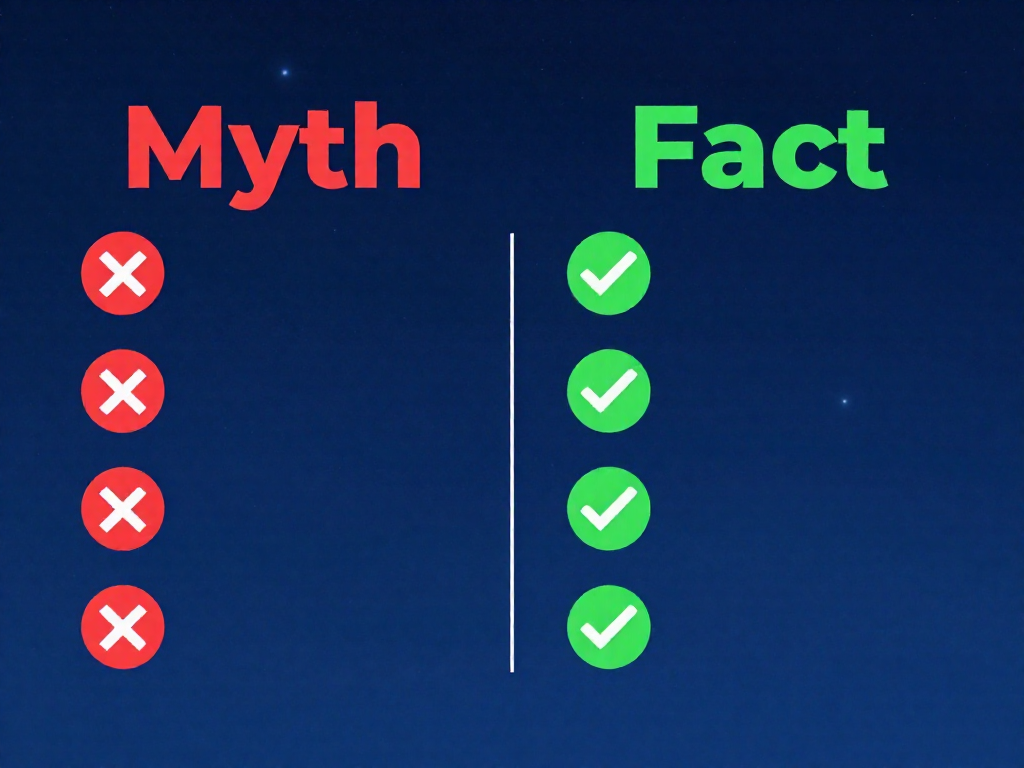
Here's a quick myth-vs-fact recap you can screenshot and come back to anytime.
❌ Myth: Black holes suck in everything around them. They're not cosmic vacuum cleaners. Their gravity only pulls in things that wander very close. If our Sun were swapped for a black hole of the same mass, Earth would keep orbiting exactly as it does now (NASA).
❌ Myth: There's a black hole near Earth about to swallow us. The closest known one, Gaia BH1, sits roughly 1,560 light-years away—so far that its light takes over 1,500 years just to reach us. It's no threat at all.
✅ Fact: Light can't escape past the event horizon. The event horizon is the "point of no return"—a boundary where gravity is so strong that not even light, the fastest thing in the universe, can get back out. That's why black holes look black.
✅ Fact: They can slowly "evaporate" over mind-bending timescales. Physicist Stephen Hawking predicted black holes leak tiny bits of energy and shrink over time—a process called Hawking radiation. It's unimaginably slow, taking far longer than the current age of the universe.
✅ Fact: There's a giant one at the heart of our galaxy. A supermassive black hole called Sagittarius A* sits at the center of the Milky Way—about 4 million times the mass of our Sun (ESA).
Quick takeaway: Black holes are powerful, but distant and predictable—more wondrous than scary.
Why Black Holes Are Worth Being Amazed By
Here's the wonderful twist: the real story of black holes is stranger—and more beautiful—than any myth about cosmic vacuum cleaners. They aren't holes that suck, but places where gravity (the force that keeps your feet on the ground) becomes so extreme that even light can't leave.
That extremity makes them the universe's ultimate laboratory. By studying black holes, scientists test how gravity behaves, watch time itself stretch and slow near them, and learn how galaxies grow around the giant ones at their centers. In 2019, the Event Horizon Telescope team gave us our first real image of one—proof that something this mind-bending is genuinely out there.
Quick takeaway: Black holes are real, weird, and central to understanding the cosmos.
And the best part? You don't need a degree or a single equation to feel the awe. Keep that curiosity alive—wander next into our beginner guides on how stars are born and what galaxies really are. The universe is wide open.
See also
- How Stars Are Born and Die: A Beginner's Guide
- What Is a Supernova? Explained Simply
- The Milky Way: A Beginner's Tour of Our Galaxy
- Gravity Explained for Space Beginners
- What Is the Event Horizon? Demystified
Related articles
Neutron Stars: The Densest Things in the Universe
What is a neutron star? Discover how a teaspoon can weigh a billion tons, how these cosmic objects form, and why they're the densest things we know of.
Jun 29, 2026 · 8 min read
Will the Universe Ever End? Possible Cosmic Futures
Will the universe ever end? Explore the Big Freeze, Big Rip, Big Crunch, and other possible cosmic fates explained simply for beginners—no equations needed.
Jun 29, 2026 · 9 min read
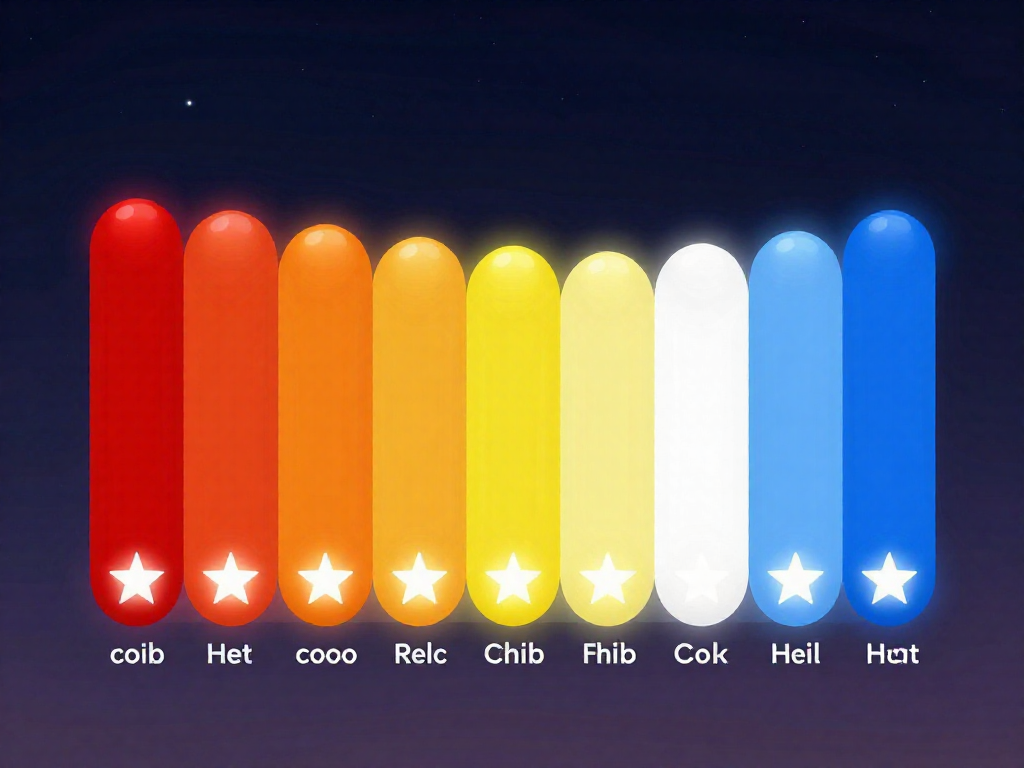
The Colors of Stars: What Red, Blue, and White Tell Us
Why are stars different colors? Discover how red, blue, and white reveal a star's temperature—explained in plain, jargon-free language for beginners.
Jun 29, 2026 · 6 min read