A Friendly Tour of All 8 Planets, From Mercury to Neptune
What are the eight planets and what makes each one special?
On this page
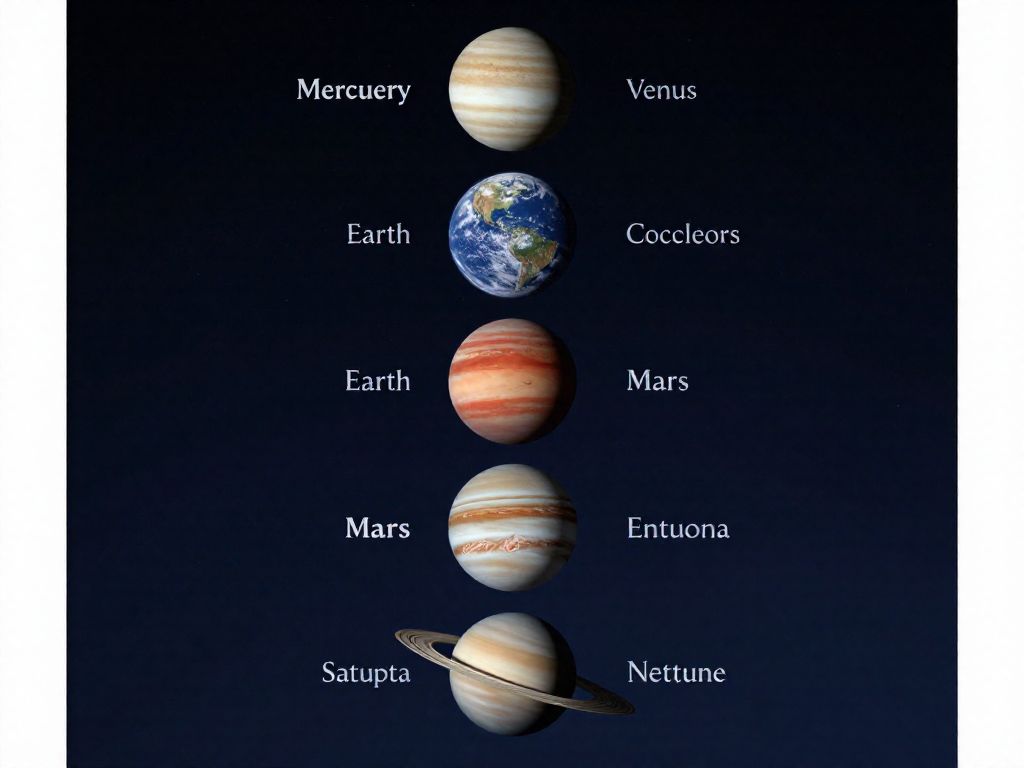
Frame the solar system as a road trip outward from the Sun, with each planet introduced like a character with its own personality. Promise a jargon-free, one-line-vibe rundown so beginners can finally tell the planets apart and remember why each is cool.
How to Picture Our Solar System Before We Start
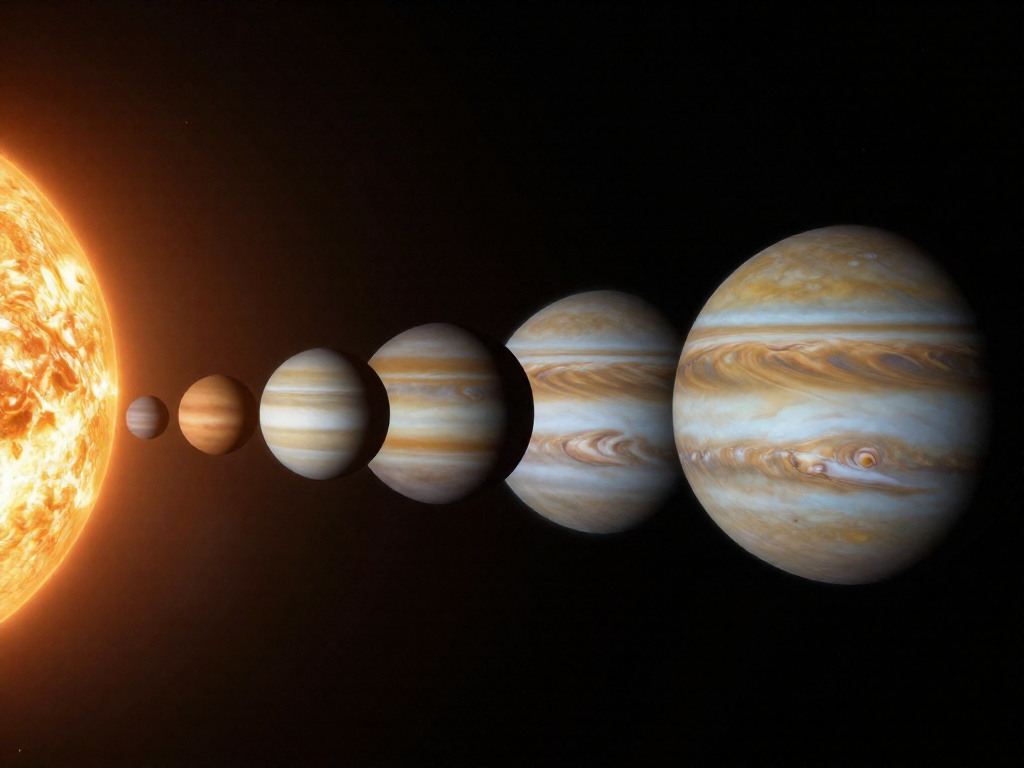
Before we meet the planets one by one, let's build a simple picture in your head. It makes the whole tour click.
Imagine the Sun sitting in the middle, like a campfire everyone gathers around. Its gravity (the same invisible pull that keeps your feet on the ground) holds all eight planets in their loops, called orbits. Here's a handy detail: those orbits lie on roughly the same flat level, like marbles rolling around on a tabletop rather than buzzing around in every direction.
Now picture two neighborhoods:
- The inner, rocky planets — Mercury, Venus, Earth, and Mars. These are small, solid worlds you could (in theory) stand on. Astronomers call them terrestrial, which just means "Earth-like."
- The outer giants — Jupiter, Saturn, Uranus, and Neptune. These are huge balls of gas and ice with no solid surface to land on.
Between the two neighborhoods sits the asteroid belt, a scattered ring of space rocks that acts like a natural fence between Mars and Jupiter.
The order from the Sun is: Mercury, Venus, Earth, Mars, Jupiter, Saturn, Uranus, Neptune.
Quick takeaway: Sun in the center, small rocky planets close in, giant planets far out. To remember the order, try: My Very Eager Mother Just Served Us Noodles.
(Source: NASA Solar System Overview, science.nasa.gov.)
Mercury: The Speedy Little Furnace-and-Freezer
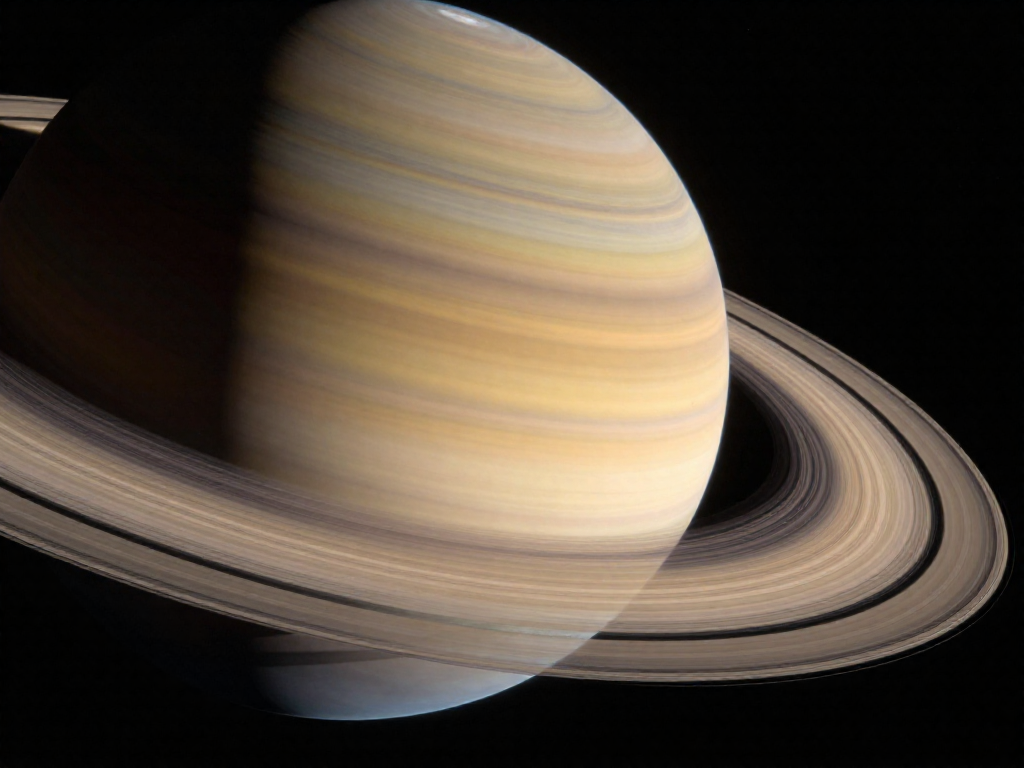
Meet the tiny daredevil of the solar system: Mercury, the smallest planet and the one hugging the Sun more closely than any other. Being so close has a perk—Mercury is the fastest racer of the bunch, whipping all the way around the Sun in just 88 Earth days (NASA).
But living next to the Sun comes with a catch. Mercury has almost no atmosphere—the thin blanket of gas that planets like Earth use to trap and spread heat. Without that blanket, the planet can't hold onto warmth or share it around. The result is wild temperature swings: the sunlit side can roast at around 430°C (800°F), while the shadowed side plunges to about –180°C (–290°F) (NASA). Imagine a single place that's both a furnace and a freezer at once.
Look closer and Mercury resembles our own Moon—a gray, rocky world pocked with craters from countless ancient impacts.
Quick takeaway: Mercury is the smallest, fastest, and most extreme planet—a cratered little world that bakes and freezes right next to the Sun.
Venus: Earth's Toxic, Overheated Twin
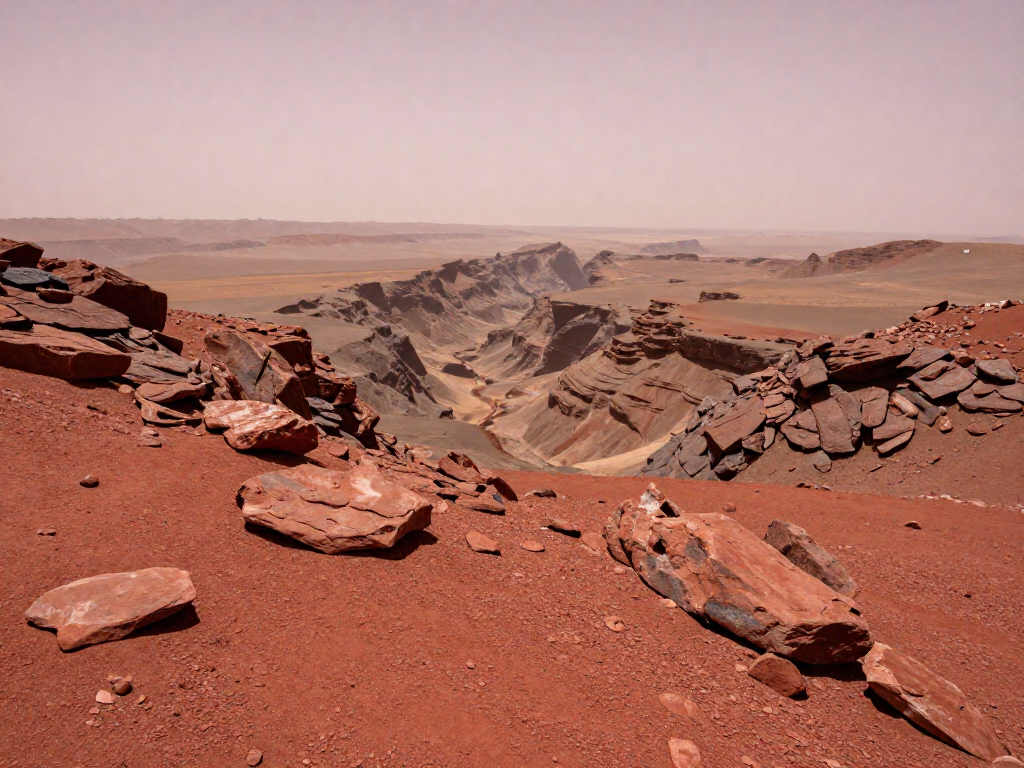
If you've ever spotted a brilliant "star" glowing at dusk, you've probably seen Venus—the famous evening star. But its beauty hides a deadly secret.
Venus is almost exactly Earth's size, which is why it's often called our twin. The resemblance ends there. Venus is wrapped in a thick, toxic atmosphere (the blanket of gases around a planet) that traps heat like a closed car on a summer day, only far worse. This runaway "greenhouse effect" makes Venus the hottest planet in the solar system—around 465°C (about 870°F), hot enough to melt lead and even hotter than Mercury, despite Mercury sitting closer to the Sun (NASA).
It's strange in other ways, too. Venus spins backwards compared to most planets, and so slowly that a single day there lasts longer than its entire year.
Quick takeaway: Venus looks like Earth's twin but is a scorching, poisonous warning of greenhouse heat gone wild.
Earth: The Blue Marble We Call Home
After the scorched extremes of Mercury and Venus, Earth feels like a miracle—and in many ways, it is. It's the only place we've ever found liquid water sitting right on the surface, and the only world we know that hosts life of any kind.
Why are we so lucky? A lot of it comes down to location. Earth orbits in what scientists playfully call the "Goldilocks zone"—the band around the Sun that isn't too hot and isn't too cold, but just right for water to stay liquid instead of boiling away or freezing solid.
We also have two invisible bodyguards:
- An atmosphere — the blanket of air that traps warmth and burns up most incoming space rocks.
- A magnetic field — an invisible force, generated deep in Earth's core, that deflects harmful particles streaming from the Sun (NASA).
Quick takeaway: Earth is the lush, lucky home base—the right distance, the right shields, and the only address in the cosmos we know holds life.
Mars: The Rusty Red Explorer's Favorite
If any planet has captured our imagination, it's Mars. We've sent rovers to roll across it, flown helicopters over it, and seriously dreamed about walking on it. So what's the fuss about?
Start with its color. Mars looks rust-red because its dust is rich in iron oxide—the very same stuff that makes an old bike chain turn orange. The whole planet is, quite literally, rusty.
It's also a land of record-breakers. Mars hosts Olympus Mons, the tallest volcano in the solar system at roughly three times the height of Mount Everest, and Valles Marineris, a canyon system so long it would stretch across the entire United States (NASA).
The most exciting part? Dried-up riverbeds and ancient lakebeds show that liquid water once flowed there billions of years ago. That makes Mars a top target in the search for past life—though it's worth being clear: we've found signs that water existed, not proof that life ever did.
Quick takeaway: Mars is the dusty frontier we keep trying to visit—rusty, record-setting, and tantalizingly once-wet.
Jupiter: The Giant Guardian With a Storm Bigger Than Earth
If the solar system had a heavyweight champion, it would be Jupiter. This gas giant—a planet made mostly of swirling gas rather than solid rock—is so enormous that you could pour all seven other planets inside it and still have room to spare (NASA).
Its most famous feature is the Great Red Spot, a colossal storm that has been spinning for at least 350 years, since humans first spotted it through early telescopes. To put its size in perspective: the whole Earth could fit inside this single storm. Imagine a hurricane so wide it swallows our entire planet, never stops, and has raged for centuries (NASA).
Jupiter also rules over a small kingdom of moons—dozens of them. One standout is Europa, which scientists believe hides a salty ocean beneath its icy crust. That ocean makes Europa one of the most exciting places to search for signs of life beyond Earth (note: possible life there is still a hypothesis, not a confirmed fact).
Quick takeaway: Jupiter is the heavyweight bodyguard of the outer system—massive, stormy, and surrounded by intriguing moons.
Saturn: The Showstopper With the Famous Rings
If the solar system held a beauty contest, Saturn would win on looks alone. Its rings are the most famous in the sky, and up close they're not solid hoops at all. They're made of countless chunks of ice and rock, ranging from grains the size of dust to boulders as big as a house, all orbiting the planet together like a glittering, frozen traffic jam (NASA).
Here's the fun part: Saturn is the lightest planet for its size. It's a giant ball of gas so puffy and low-density that, if you could find a bathtub big enough, it would actually float in water.
Saturn also keeps plenty of company. It has dozens of moons, including Titan, the only moon in the solar system with a thick atmosphere — a hazy orange blanket of air denser than Earth's own (NASA).
Quick takeaway: Saturn is the elegant ringed celebrity — light enough to float, wrapped in ice, and surrounded by a crowd of fascinating moons.
Uranus: The Tilted Ice Giant That Rolls Sideways
Meet the solar system's oddball. Uranus glows a soft blue-green, and the reason is surprisingly simple: its atmosphere holds a gas called methane, which soaks up red light and reflects the blue-green back to us, much like a tinted window.
But its strangest trait is how it sits. Most planets spin like a top standing upright. Uranus is tipped over almost completely—about 98 degrees, according to NASA—so it essentially orbits on its side, rolling around the Sun like a ball instead of spinning like a top. Scientists think a massive ancient collision knocked it over, though the exact cause is still debated.
Uranus is also an "ice giant," meaning it's built largely from cold, slushy materials like water and ammonia rather than the lighter gases of Jupiter and Saturn. That makes it colder and quieter than its bigger cousins.
Quick takeaway: Uranus is the pale, frigid oddball that spins lying down.
Neptune: The Windy Blue World at the Edge
Our tour ends at Neptune, the deep-blue planet on the far frontier of the Sun's family. It's the most distant of the eight, orbiting so far out that sunlight takes about four hours to reach it (NASA). From that distance, the Sun would look like just a very bright star.
Neptune's striking blue color comes mostly from methane gas in its air, which soaks up red light and reflects blue back to us. But don't let the calm color fool you. Neptune has the fastest winds in the entire solar system, whipping around the planet at speeds that can top 1,200 miles per hour (about 2,000 km/h) — far stronger than any hurricane on Earth (NASA).
Here's the most surprising part: Neptune was found using math before anyone ever saw it. In the 1840s, astronomers noticed that Uranus wasn't moving quite as expected, as if something unseen was tugging on it. They calculated where that hidden world should be — and there it was.
Quick takeaway: Neptune is the stormy blue outpost on the frontier, the most distant planet, home to the wildest winds we know of, and famously discovered by math first.
Quick Recap: The 8 Planets at a Glance
Here's your skimmable cheat-sheet, in order from the Sun:
- Mercury — the speedy little world that bakes and freezes.
- Venus — Earth's overheated, toxic twin.
- Earth — the blue marble we call home.
- Mars — the rusty red explorer's favorite.
- Jupiter — the giant guardian with a storm bigger than Earth.
- Saturn — the showstopper wearing famous rings.
- Uranus — the ice giant that rolls along on its side.
- Neptune — the windy blue world at the solar system's edge.
Where's Pluto? It's a dwarf planet—a small, rounded world that hasn't cleared its orbital neighborhood—so it's no longer one of the eight (NASA).
Quick takeaway: Step outside on a clear night and you can spot Venus, Mars, Jupiter, or Saturn with just your eyes—no telescope needed.
FAQ
What are the eight planets in order from the Sun?
Starting closest to the Sun and moving outward, the eight planets are: Mercury, Venus, Earth, Mars, Jupiter, Saturn, Uranus, and Neptune. A handy way to remember the order is the phrase "My Very Educated Mother Just Served Us Noodles," where each first letter matches a planet. The first four (Mercury through Mars) are small, solid worlds, while the last four (Jupiter through Neptune) are enormous and made mostly of gas and ice. (Source: NASA Solar System Exploration.)
Why isn't Pluto a planet anymore?
In 2006, the International Astronomical Union (IAU)—the global group that names and classifies objects in space—agreed on an official definition of a planet. To qualify, an object must orbit the Sun, be round due to its own gravity, and have "cleared its neighborhood," meaning it's the dominant object in its orbital path. Pluto meets the first two rules but not the third: it shares its region with many other icy bodies in the Kuiper Belt, a ring of frozen objects beyond Neptune. So Pluto was reclassified as a "dwarf planet." It didn't change or do anything wrong—our definition simply got more precise. (Source: IAU, NASA.)
Which planet is the hottest, and why isn't it Mercury?
Venus is the hottest planet, with surface temperatures around 465°C (about 870°F)—hot enough to melt lead. You might expect Mercury to win since it's closest to the Sun, but Mercury has almost no atmosphere to trap heat, so its warmth escapes into space (and its nights get bitterly cold). Venus, on the other hand, is wrapped in a thick blanket of carbon dioxide that traps heat like a greenhouse on a sunny day. This runaway "greenhouse effect" keeps Venus scorching all over, day and night, making it even hotter than Mercury despite being farther from the Sun. (Source: NASA.)
What's the difference between rocky planets and gas giants?
Rocky planets—Mercury, Venus, Earth, and Mars—are small, solid worlds with hard surfaces you could (in theory) stand on, made mostly of rock and metal. Gas giants—Jupiter and Saturn—are much larger and made mainly of hydrogen and helium, with no solid surface to land on; they're a bit like enormous spinning balls of gas thickening toward a dense core. Uranus and Neptune are sometimes called "ice giants" because, alongside gas, they hold large amounts of water, ammonia, and methane in slushy, icy form. In short: the inner four are small and solid, while the outer four are giant and gaseous. (Source: NASA, ESA.)
Which planets can I see with just my eyes?
Five planets are visible to the naked eye without a telescope: Mercury, Venus, Mars, Jupiter, and Saturn—the same ones ancient skywatchers knew. They look like bright "stars," but unlike true stars they usually shine with a steady light instead of twinkling. Venus is the easiest to spot, often dazzling in the west after sunset or the east before sunrise. Mars has a reddish tint, while Jupiter and Saturn appear as steady, bright points. Uranus and Neptune are too dim and distant to see without binoculars or a telescope. A free stargazing app can help you find which planets are visible from your location tonight. (Source: NASA.)
See also
- Why Pluto Isn't a Planet (And What It Is Instead)
- What Is the Goldilocks Zone? Habitable Worlds Explained Simply
- How to Spot Planets in the Night Sky Without a Telescope
- The Asteroid Belt: What's Really Between Mars and Jupiter
Related articles
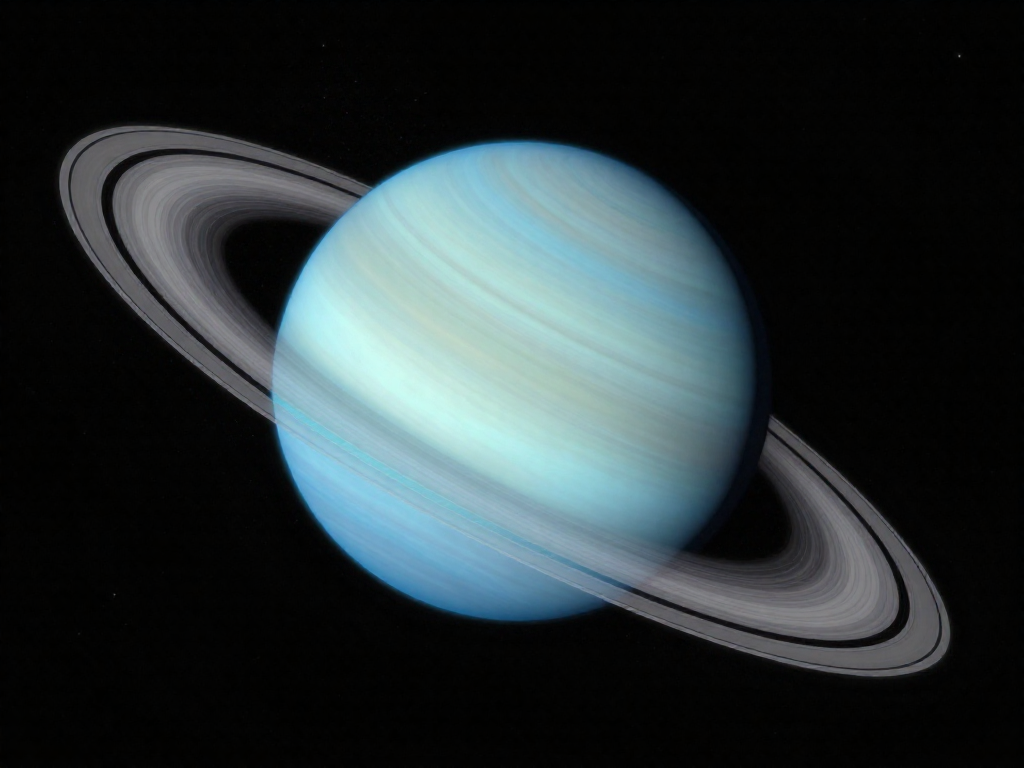
Why Does Uranus Spin on Its Side?
Uranus is tilted a wild 98 degrees, rolling around the Sun like a ball. Discover the ancient collision that likely knocked it onto its side.
Jun 29, 2026 · 6 min read
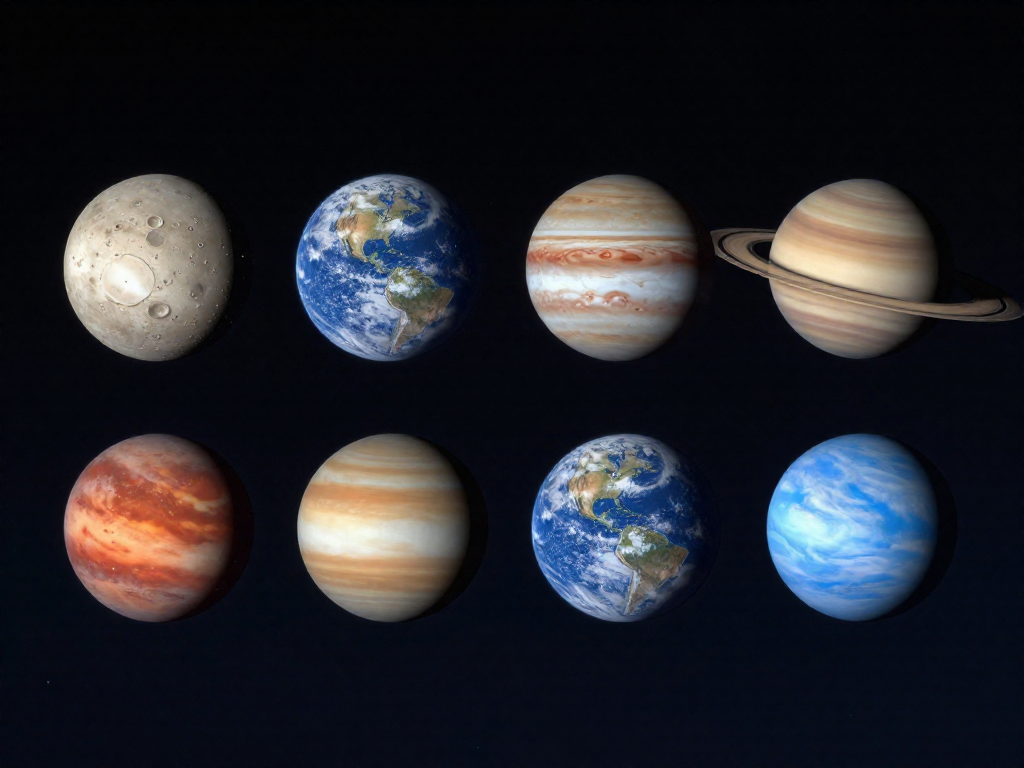
Quick Facts About Every Planet, at a Glance
Key stats for all 8 planets in one scannable place: size, distance from the Sun, day length, moons, and what makes each world weird.
Jun 29, 2026 · 6 min read
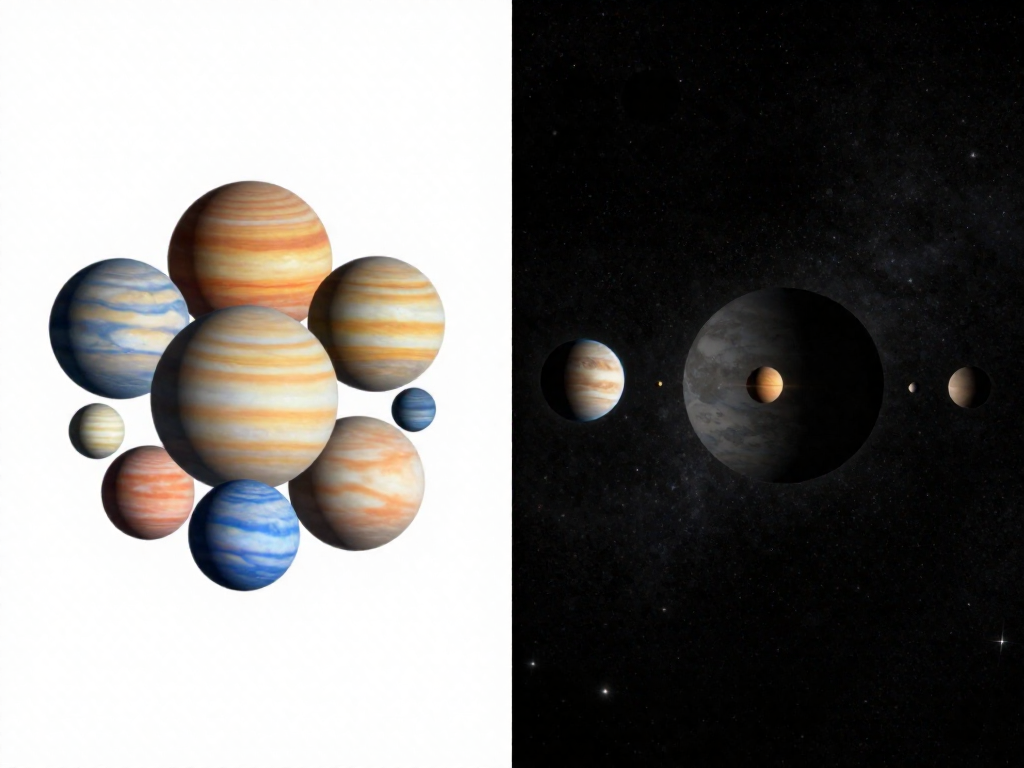
How Big Is the Solar System Really? A Sense of Scale
The distances between planets are mind-bending. Use simple shrink-it-down analogies to finally grasp how vast our solar system truly is.
Jun 29, 2026 · 7 min read