Why Is Mars Red? The Simple Reason Behind the Red Planet
Why does Mars look red?
On this page
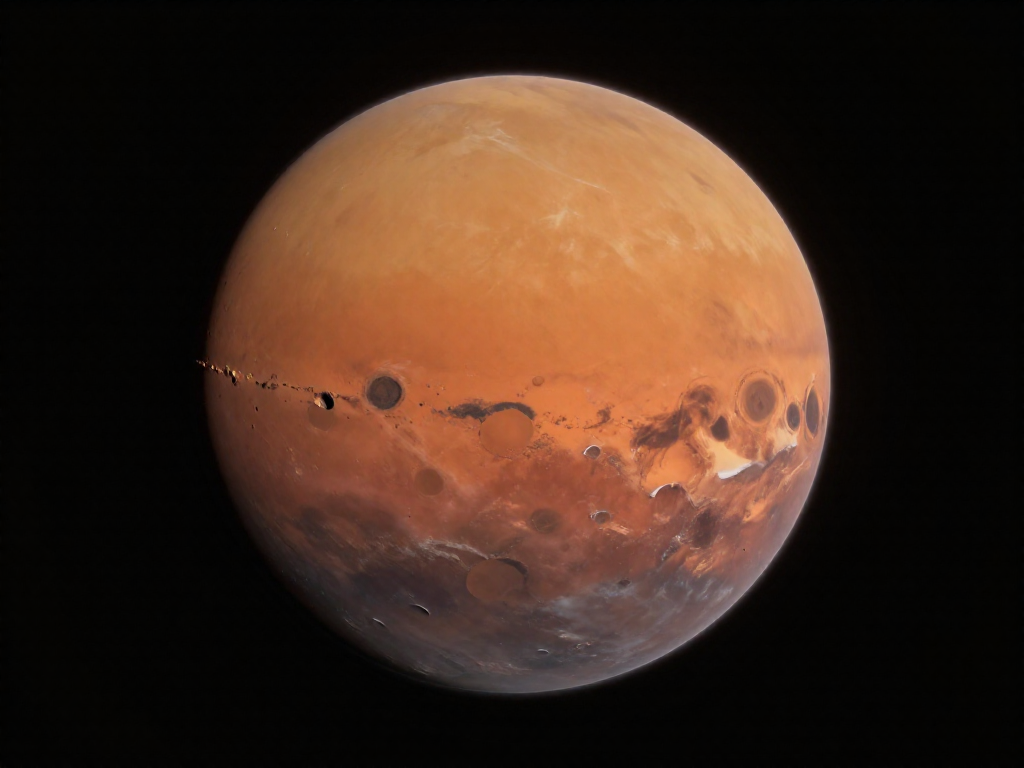
The Short Answer: Mars Is Red Because It's Rusty
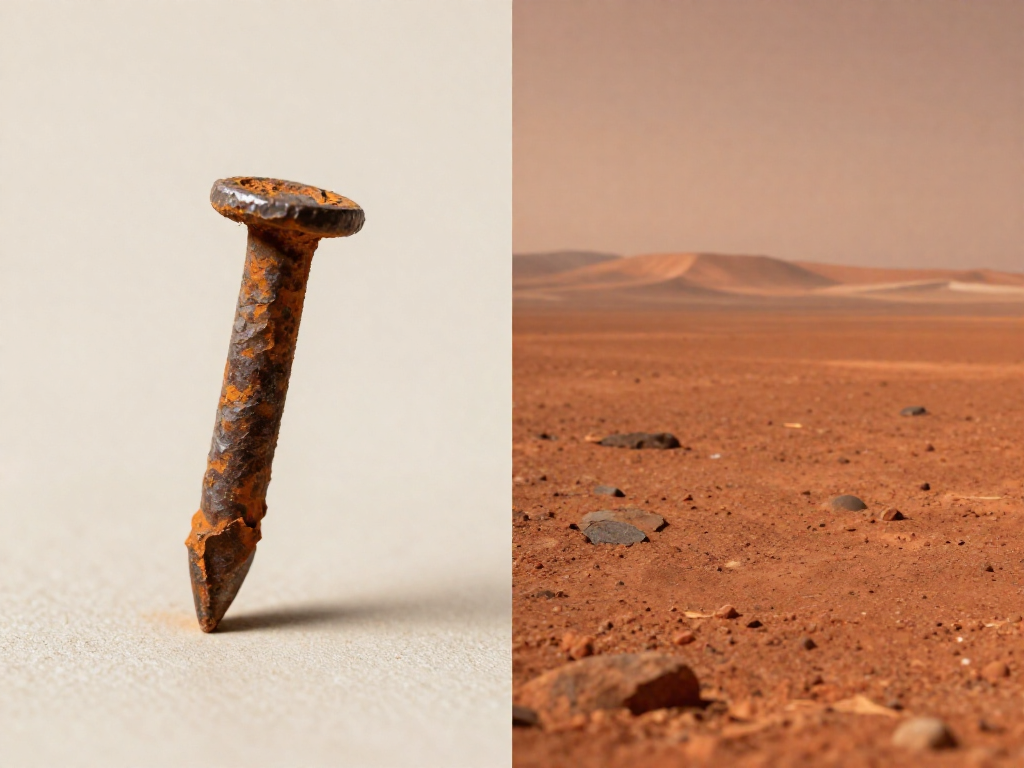
Here's the simplest way to picture it: Mars is red for the same reason an old bike left out in the rain turns orange — it's covered in rust.
The planet's surface is blanketed in fine dust packed with iron. Over billions of years, that iron reacted with oxygen, exactly the way metal does on Earth. We call this reaction oxidation, but you already know it by its everyday name: rusting. And rust has a familiar reddish-orange color.
Now imagine an entire planet coated in that reddish dust, then blown around by winds into a thin haze that even tints the sky. From hundreds of millions of miles away, all of that adds up to the warm, rusty glow we see in the night sky and in spacecraft photos.
Quick takeaway: Mars looks red because it's literally rusty — its iron-rich dust reacted with oxygen, just like rusting metal here on Earth.
What Rust Actually Is (No Chemistry Class Required)
You've seen rust your whole life. It's the flaky orange-brown stuff that creeps across an old bike left out in the rain, the crusty coating on a forgotten nail, or the rough patches on a garden tool that lived in a damp shed too long. That everyday gunk is the exact same thing that paints Mars red.
So what is rust, really? It's what happens when three ingredients come together:
- Iron — a common metal found in tools, nails, and, as it turns out, all over Mars.
- Oxygen — a gas in the air (and once present in tiny amounts on Mars long ago).
- A little time — the slow reaction that lets iron and oxygen bond together.
When iron meets oxygen, the two grab onto each other and form a new substance. Scientists call it iron oxide, but "iron oxide" is just the fancy name for plain old rust. Same stuff, lab coat optional.
And that signature orange-red color? It comes straight from the iron oxide itself. When iron and oxygen combine, the new material naturally reflects reddish light back to our eyes, which is why rust always shows up in those warm orange and rusty-red tones rather than, say, blue or green.
Quick takeaway: Rust is simply iron + oxygen + time, and its built-in reddish color is the same reason Mars glows red in the night sky.
How Mars Got So Much Iron Dust
So if rust is just iron that's reacted with oxygen, where did all that iron on Mars come from? The answer is simple: it was there from the very beginning.
Like Earth, Mars formed from the same swirling cloud of dust and rock that built our solar system billions of years ago. That mix was rich in iron. On Earth, most of our iron sank deep toward the planet's center. On Mars, a surprising amount stayed near the surface, packed into the soil and dust. Over time, tiny amounts of oxygen (from water and the thin atmosphere) reacted with that surface iron and slowly turned it rusty red.
But here's the part that makes the whole planet look red: wind.
Mars is famous for its dust storms, some big enough to wrap around the entire globe. These storms pick up the fine, rusty dust and spread it everywhere, like a giant cosmic paintbrush. The result?
- Rocks and plains get coated in a thin film of reddish dust.
- The soil itself glows orange-red in sunlight.
- The sky even takes on a butterscotch tint, because rusty dust floats high in the air.
Quick takeaway: Mars is iron-rich, that iron rusted, and planet-wide dust storms smeared the red color across every corner of the surface.
(Source: NASA Mars Exploration Program.)
Where Did the Oxygen Come From If Mars Has Almost No Air?
Here's the puzzle: rust forms when iron meets oxygen, but Mars's atmosphere is incredibly thin—less than 1% as dense as Earth's, and made mostly of carbon dioxide, not oxygen (NASA). So where did the oxygen come from to rust an entire planet?
The answer is patience. You don't need a lot of oxygen if you have an enormous amount of time. Mars has been around for roughly 4.5 billion years, and even tiny traces of oxygen, working slowly over billions of years, can rust a whole world's worth of iron dust. Think of a nail left outside: it doesn't rust in an hour, but give it years and it turns orange. Now stretch that across nearly the entire history of the solar system.
Where did those traces of oxygen come from? Scientists think much of it came from water. Water (H₂O) is made of hydrogen and oxygen. When sunlight breaks water molecules apart—a process called photodissociation, which just means "splitting by light"—it frees up oxygen that can react with iron.
That last point is a big clue, and it's worth saying clearly: the leading scientific hypothesis (an idea supported by evidence but not fully proven) is that Mars was once much wetter, with rivers and possibly oceans long ago.
Quick takeaway: A little oxygen, much of it from ancient water, plus billions of years, was enough to rust the Red Planet.
Mars Isn't Actually as Red as You Think
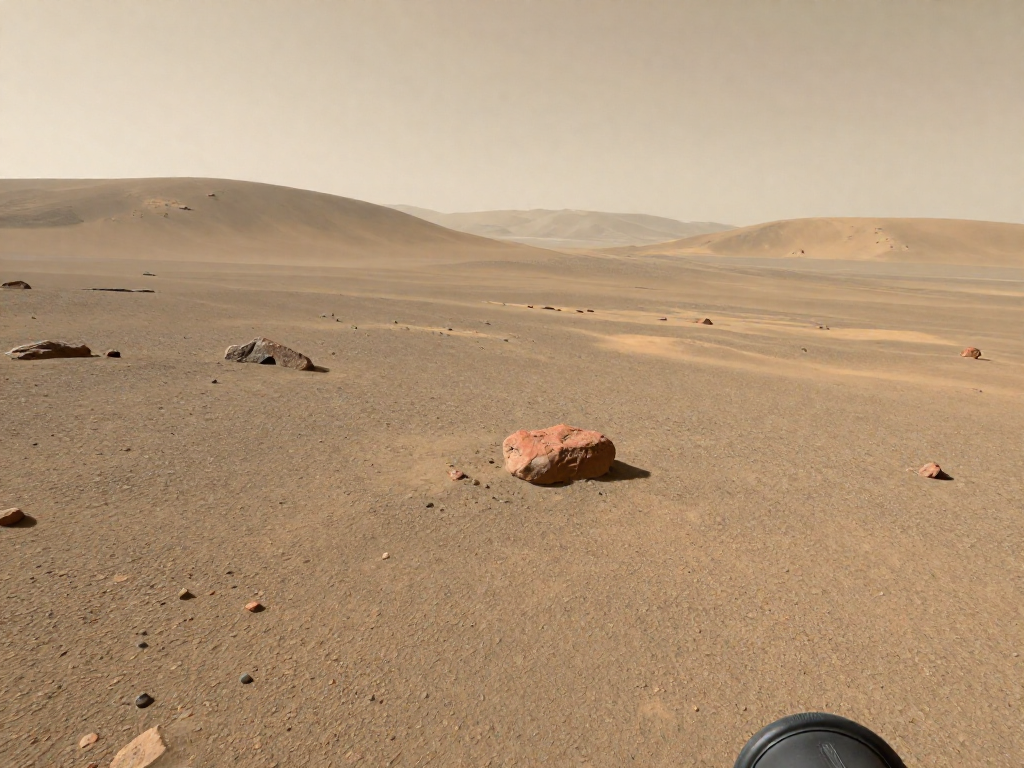
Here's the twist: if you stood on Mars, it wouldn't look like a glowing red ball at all. Up close, the surface is more of a butterscotch, tan, or dusty brown — closer to a desert at sunset than a fire engine.
So why does it look so red from here? A few reasons:
- Photos exaggerate it. The color you see in many images depends on the lighting and how the picture was processed. Some are tweaked to highlight surface details, which can crank up the red.
- The sky plays tricks. Fine rust-colored dust floating in Mars's thin air tints everything with a warm, reddish haze — a bit like how smoke from a distant wildfire turns our own sky orange.
- Distance blurs the details. From millions of miles away, all those subtle browns and tans blend into one rusty smudge.
Quick takeaway: Mars is genuinely rusty, but "red" is partly a trick of dust, distance, and camera settings. NASA's rover photos reveal a world that's more caramel than crimson.
Why the Red Planet Looks Different Through the Seasons and Telescopes
Mars doesn't always show the same face. Giant dust storms—swirling clouds of fine rusty particles that can blanket the entire planet—sometimes wash out its surface, making Mars look paler or hazier from Earth. After they settle, that bold orange returns.
Through binoculars, Mars stays a bright, peachy-orange dot—pretty, but small. A small telescope does better: on a steady night you may glimpse its tiny disk and, when conditions cooperate, a whitish polar ice cap.
The best time to look is around opposition, when Earth passes between Mars and the Sun (roughly every 26 months). Mars then sits closest, shines brightest, and glows its richest red.
Quick takeaway: Watch for Mars near opposition for the boldest color, and don't expect detail—its warm orange glow is the real reward. (Source: NASA)
Quick Recap: The Red Planet in One Breath
Here's the whole story in one breath: Mars looks red because its surface is covered in rusty iron dust—the same kind of rust that forms on an old bike left out in the rain. Up close, though, it's less fiery crimson and more of a soft, dusty amber, like butterscotch or a faded terracotta pot.
So if a little iron can paint an entire planet, what's giving the other worlds their colors? Hold onto that curiosity—because Mars is just the beginning.
See also
- Why Is the Sky Blue on Earth but Pink on Mars?
- Was There Ever Water on Mars? A Beginner's Guide
- The Planets in Order: A Simple Tour of the Solar System
- How to See Mars in the Night Sky for Beginners
- Why Is Earth the Only Blue Planet?
Related articles
Why Does Uranus Spin on Its Side?
Uranus is tilted a wild 98 degrees, rolling around the Sun like a ball. Discover the ancient collision that likely knocked it onto its side.
Jun 29, 2026 · 6 min read
Quick Facts About Every Planet, at a Glance
Key stats for all 8 planets in one scannable place: size, distance from the Sun, day length, moons, and what makes each world weird.
Jun 29, 2026 · 6 min read
How Big Is the Solar System Really? A Sense of Scale
The distances between planets are mind-bending. Use simple shrink-it-down analogies to finally grasp how vast our solar system truly is.
Jun 29, 2026 · 7 min read