Why Can't I See Any Stars? Fixing Common Stargazing Problems
Why is my night sky empty and how do I fix it?
On this page
The Short Answer: It's Probably Not You
Take a breath: a blank-looking sky almost never means your eyes are broken or that you're "bad" at stargazing. In the vast majority of cases, the culprit is one of just four everyday things—and all of them are fixable for free.
Here are the usual suspects:
- Light pollution — the glow from streetlights, homes, and cities that washes out fainter stars, a bit like trying to see a candle next to a floodlight.
- Bad timing — some seasons and hours simply show fewer stars than others.
- The Moon — a bright Moon acts like a giant night-light, drowning out dimmer points.
- Un-adjusted eyes — your eyes need around 20–30 minutes in the dark to reach full night vision.
You almost certainly don't need a telescope or special gear to fix this.
Quick self-check: Are you in a city? Is the Moon up? Did you just step outside a moment ago? If you answered yes to any of these, you've likely found your answer—and the rest of this guide walks you through each fix.
Light Pollution: The #1 Star Killer
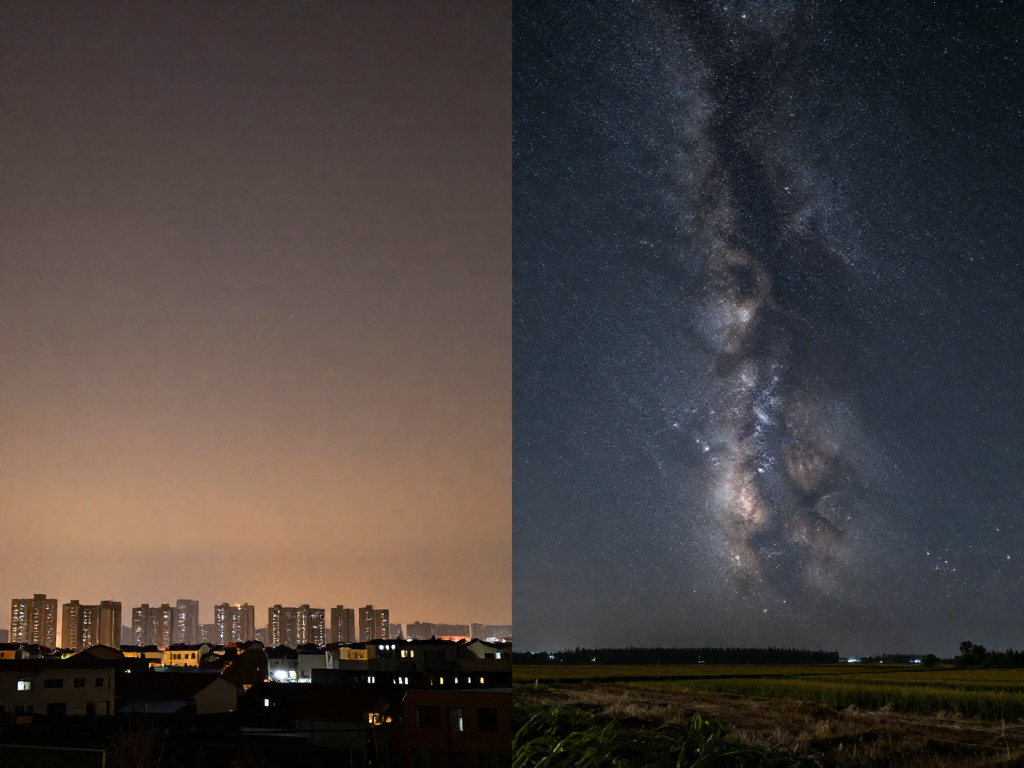
If your night sky looks nearly empty, the most likely culprit isn't your eyes or bad luck—it's light pollution. In plain terms, that's all the artificial light from streetlamps, billboards, porch bulbs, and city buildings scattering up into the air and creating a dull glow. Think of it like trying to see a candle across a room with every overhead light blazing: the candle is still there, but it's drowned out. Faint stars work the same way—they never stand a chance against a bright background.
This is why cities can be so disappointing for stargazing. From a glowing downtown, you might spot only the Moon, a planet or two, and a handful of the very brightest stars, while the thousands of dimmer ones simply vanish into the haze. It's not that the stars left—they're just outshone.
The good news: this problem has real fixes.
- Get out of direct light. Step away from streetlights and parking-lot glare. Even standing in the shadow of a building can help, because it blocks bright light from hitting your eyes.
- Turn off your own lights. A backyard gets noticeably darker once you switch off porch and house lights and let your eyes adjust for 15–20 minutes.
- Drive somewhere darker. A short trip away from town—toward parks, fields, or open countryside—can reveal far more stars.
- Use a light pollution map. Free dark-sky finder tools color-code how bright the sky is in different areas, helping you locate better spots nearby before you go.
Quick takeaway: The stars are still up there. Reduce nearby light, give your eyes time to adjust, and—when you can—travel to a darker spot.
According to NASA, light pollution is one of the most widespread obstacles to enjoying the night sky, yet it's also one of the easiest to escape.
Give Your Eyes Time to Adjust
Here's the simplest fix on this whole list, and it costs nothing: just wait.
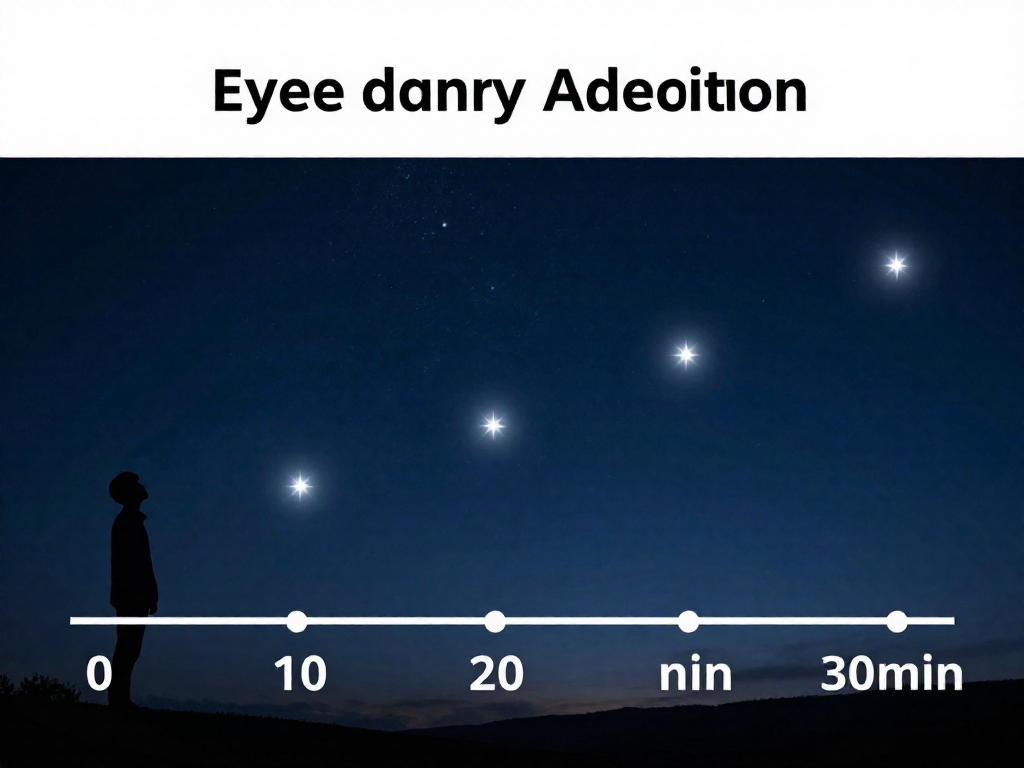
When you first step outside, your eyes are still set up for indoor brightness. They need time to switch into "night mode," a process astronomers call dark adaptation (basically, your eyes slowly cranking up their sensitivity so they can soak in faint light). It takes about 20 to 30 minutes to reach full power. So if you glance up, see three stars, and head back inside after two minutes, you've quit right before the show begins.
The magic part: stars literally appear as you wait. The sky you see at minute 25 holds far more stars than the sky you saw at minute 2 — same sky, better eyes.
There's one big catch. A single look at your phone resets the whole process almost instantly, dragging you back to square one. That bright white screen tells your eyes "it's daytime again," and you start the 20-minute clock over.
A few easy habits protect your night vision:
- Put the phone away — or switch on its red-tinted night mode if you must check it.
- Use a red flashlight instead of a white one. Red light lets you see your gear without wrecking your adaptation.
- Be patient. Find a comfy spot, look up, and let the universe slowly fade in.
Quick takeaway: Give your eyes 20–30 minutes in the dark, avoid white light, and watch the sky fill up on its own.
Timing: When You Look Matters
Even under a perfect dark sky, looking up at the wrong moment can leave you staring at an almost empty bowl of black. Two things decide how much you'll see: how dark it really is, and how bright the Moon is.
Wait for true darkness. Just because the Sun has set doesn't mean the sky is ready. There's a lingering glow called twilight—leftover sunlight scattering through the atmosphere—that washes out faint stars. The sky only reaches full darkness, what astronomers call astronomical twilight ending, roughly 1 to 2 hours after sunset. Step outside too early and you'll only catch the brightest few stars; give it that extra hour and dozens more quietly appear.
Mind the Moon. A full Moon is a natural floodlight. It's beautiful, but it brightens the whole sky and drowns out faint stars and the Milky Way—much like a streetlight hides the stars overhead. For the richest view, aim for nights near the new moon, when the Moon is barely lit and out of the way. A quick glance at a free moon phase calendar before you plan your night makes all the difference.
Remember the sky changes. Earth's orbit means different stars, constellations, and the bright band of the Milky Way are seasonal—they rise at different times throughout the year. If a favorite sight is missing, it may simply be "below the horizon" for the season rather than gone.
Quick takeaway: Go out 1–2 hours after sunset, on a night near the new moon, and check what's actually up that season.
Weather and Sky Conditions You Can't Always See
Sometimes the sky looks clear, but something invisible is still in the way. Here are the usual culprits.
- Thin clouds and haze. A sky can look open to the naked eye while a faint veil of high cloud quietly dims the stars—like looking through a lightly fogged window you didn't notice was there.
- Humidity and moisture. When the air holds a lot of water (high humidity), that moisture scatters starlight and softens the view, even with no clouds in sight.
- Smoke, dust, and pollution. Near cities, wildfire smoke, dust, and airborne pollution pile onto the haze and wash out all but the brightest stars.
The fix: don't rely on a regular weather app, which mostly cares about rain and temperature. Check a clear-sky forecast—a tool made for stargazers that predicts cloud cover, haze, and air clarity. Astronomers often use the Clear Sky Chart (cleardarksky.com).
Quick takeaway: A "clear" sky isn't always a clean sky. Check stargazing-specific conditions before you head out.
A Simple Tonight Checklist
Ready to try again tonight? Run through this quick checklist and you'll give yourself the best shot at a sky full of stars.
- Pick a dark spot away from direct lights. Even stepping into the shadow of a building, away from streetlights and porch lamps, makes a surprising difference.
- Check the moon phase and weather first. A bright full moon washes out faint stars, and clouds (or haze) hide them completely. A clear night near a new moon is ideal.
- Go out after full darkness sets in. Wait until the sky is truly black, usually an hour or so after sunset, not during that lingering blue twilight.
- Put the phone away and wait 20–30 minutes. Your eyes slowly adjust to the dark like walking into a dim movie theater. One glance at a bright screen resets the whole process.
- Look up and let your eyes wander, not stare. Faint stars often pop into view when you glance slightly to the side rather than looking straight at them.
Quick takeaway: Dark spot, clear sky, full darkness, no screens, relaxed eyes. Nail these five and the stars will show up.
FAQ
Why can I only see a few stars in the city?
The main culprit is light pollution — the glow from streetlights, buildings, and signs that brightens the night sky and washes out fainter stars. Think of trying to see a candle next to a floodlight: the candle is still there, but the brighter light overwhelms it. In a big city you might spot only a few dozen stars, while a truly dark site can reveal thousands. NASA and the International Dark-Sky Association both point to artificial light as the leading reason urban skies look nearly empty. The quickest fix is distance: even a short drive away from city lights dramatically increases how many stars you can see.
How long does it take for my eyes to adjust to the dark?
Your eyes start adapting within a few minutes, but full 'dark adaptation' takes about 20 to 30 minutes. During this time your pupils widen and your eyes ramp up their sensitivity to faint light, letting you see far more stars than when you first stepped outside. The catch: a single glance at a bright phone screen can reset much of that progress in an instant. To protect your night vision, avoid white light and use a red flashlight or your phone's red-light mode, since red light interferes the least with dark adaptation.
Does the Moon really make it harder to see stars?
Yes — a bright Moon is like nature's own light pollution. When the Moon is full or near-full, its reflected sunlight brightens the entire sky and hides all but the brightest stars. Around the new Moon, when our side of the Moon is unlit, the sky is at its darkest and stars come out in force. If you want the best view, check a Moon-phase calendar (NASA publishes one) and plan your stargazing for the days around the new Moon, or for hours when the Moon has set below the horizon.
What's the best time of night to see stars?
Aim for true darkness, which begins after astronomical twilight ends — roughly 90 minutes to two hours after sunset, once the Sun is far enough below the horizon that its glow no longer lights the sky. The hours from then until just before dawn are ideal. Many stargazers find the window after midnight especially good, since household and street lights tend to dim and the air is often steadier. Timing also matters for what you'll see: different constellations rise and set through the night and across the seasons, so the sky genuinely changes hour by hour.
Do I need a telescope to see more stars?
No — your eyes alone can see thousands of stars under a dark sky, and the single biggest upgrade isn't equipment but location. Getting away from light pollution will reveal far more than any telescope used from a bright city. That said, a simple pair of binoculars is a fantastic, affordable next step: they gather more light than your eyes and can show star clusters, the Moon's craters, and even Jupiter's moons. A telescope becomes worthwhile mainly when you want close-up detail of specific objects like planets or distant galaxies, but it's not needed just to enjoy a star-filled sky.
Why does the sky look clear but I still can't see stars?
A sky that looks clear to the eye can still hide stars for a few reasons. The most common is light pollution, which adds a faint glow you may not consciously notice but which drowns out dim stars. Another is haze, humidity, or thin high clouds — invisible at a glance but enough to scatter light and dull the view. Atmospheric turbulence (what astronomers call 'seeing') can also make stars twinkle and fade. Finally, your eyes may simply not be dark-adapted yet. Try giving them 20–30 minutes without bright light, and if the sky still seems empty, light pollution is almost certainly the main cause.
See also
- Best dark-sky spots for beginners
- How to find the Milky Way with the naked eye
- Moon phases explained for beginners
- Stargazing for absolute beginners: a starter guide
- How to read a light pollution map
Related articles
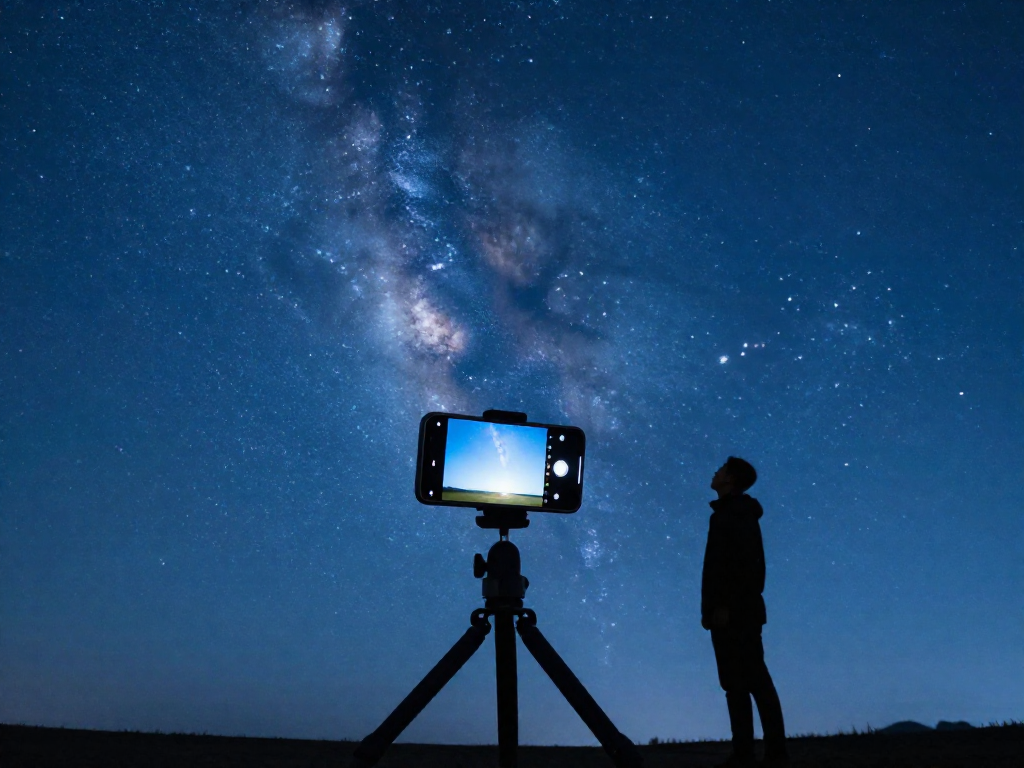
How to Photograph the Night Sky With Just a Phone
Yes, you can take stunning night sky photos with just a phone. Learn beginner-friendly settings, gear, and tricks to capture stars, the Moon, and the Milky Way.
Jun 29, 2026 · 11 min read
What Causes the Northern Lights, and Can Beginners See Them?
Curious about the Northern Lights? Learn what causes auroras in plain language, where and when to see them, and realistic tips for total beginners.
Jun 29, 2026 · 8 min read
A Beginner's Sky-Watching Calendar: Events Worth Looking Up For
A simple year-round sky-watching calendar for beginners. Discover meteor showers, eclipses, and planet sightings worth looking up for—no telescope needed.
Jun 29, 2026 · 5 min read