The 5 Easiest Constellations to Spot for Beginners
Which constellations should beginners learn first?
On this page
Open by reassuring the nervous beginner: you don't need a telescope, an app, or a science degree to read the night sky. Promise that by the end they'll recognize 5 star patterns they can find on the very next clear night, using just their eyes and a few "connect-the-dots" shortcuts.
Before You Look Up: 3 Quick Stargazing Basics
Spotting constellations is far easier once you give your eyes and your sense of direction a head start. Three quick habits make all the difference:
-
Find real darkness and wait. Step away from streetlights and porch lights, then give your eyes about 20 minutes to adjust. Your pupils slowly widen in the dark like a camera lens opening up, and suddenly dozens of faint stars appear that you couldn't see before.
-
Use a red light. Bright white screens reset that hard-won night vision in an instant. Switch your phone to red mode (or cover the flashlight with red film) so you can read a star map without blinding yourself.
-
Know which way is north. Open your phone's compass and locate north. Most beginner star directions are given relative to it, so this single step makes the rest of the article actually usable.
Quick takeaway: Dark skies, a red light, and a compass turn frustration into "there it is!" One more thing — constellations shift with the seasons and the hour, so you won't see all five in a single glance.
1. The Big Dipper (Ursa Major) — Your Sky Anchor
If you only learn one star pattern, make it this one. The Big Dipper is the easiest starting point in the entire sky, and once you find it, everything else gets simpler.
Why it's the easiest: Its seven stars are bright, the shape is big, and across most of the Northern Hemisphere it never fully sets. That means you can spot it on almost any clear night, in any season — a rare gift for a beginner.
How to spot it: Face north and look for a shape like a saucepan, ladle, or soup spoon. Four stars form the "bowl" and three trail off as the curved "handle." It's larger than most people expect, so don't hunt for something tiny — you're looking for a pattern roughly as wide as two outstretched fists held at arm's length.
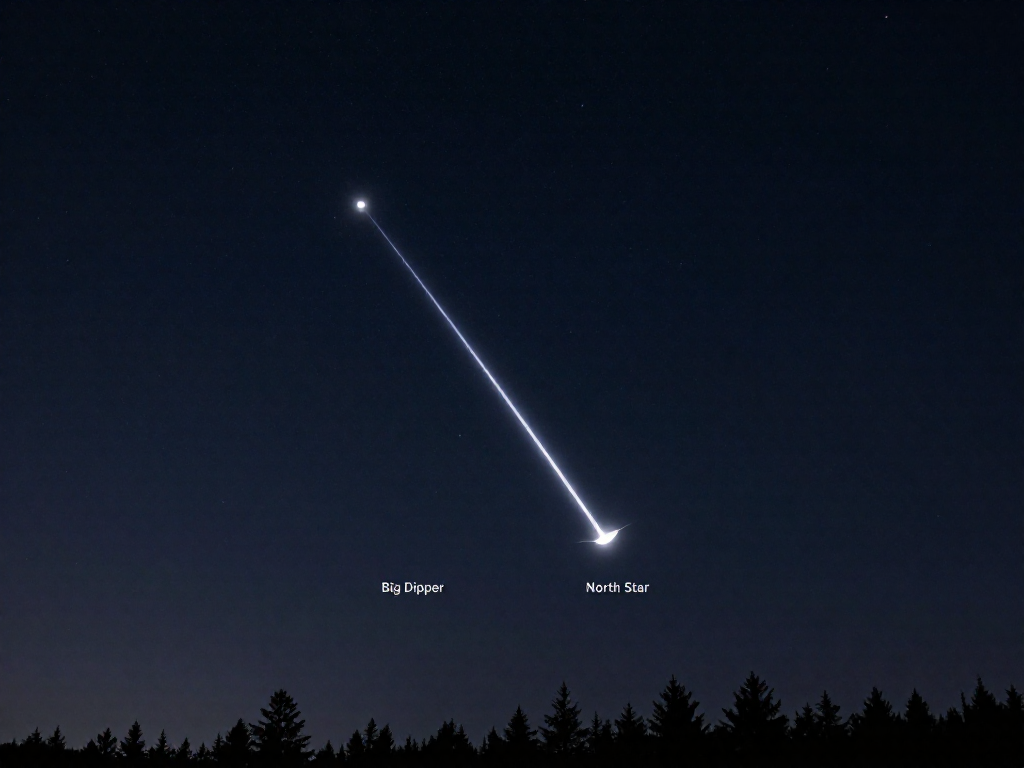
The pro trick — find the North Star: Look at the two stars on the outer edge of the bowl (the side farthest from the handle). Draw an imaginary line straight up from them, and it points almost exactly to Polaris, the North Star. Polaris marks true north, which is why sky-watchers and sailors have used this trick for centuries.
One quick note: the Big Dipper isn't technically a full constellation. It's an asterism — a smaller, easy-to-recognize pattern sitting inside a larger official constellation, in this case Ursa Major, the Great Bear.
Quick takeaway: Find the saucepan shape in the north, follow its two end stars to the North Star, and you've got your sky anchor for finding everything else.
2. Orion — The Winter Showstopper
If the Big Dipper is your sky anchor, Orion is the show-stealer. Named after a hunter from Greek mythology, this constellation lights up winter skies with some of the brightest stars you can see, and it comes with a built-in shortcut that makes it almost impossible to miss.
Why it's easy: Look for three bright stars in a short, straight, evenly spaced row. That's Orion's Belt, and there's nothing else quite like it up there. Once you spot the Belt, you've found Orion.
When to look: Orion is a winter favorite. In the United States, your best evenings run from about November through February, when it climbs high in the southern sky after dark. (Astronomers call it a "winter constellation" simply because that's the season it's most visible from the Northern Hemisphere.)
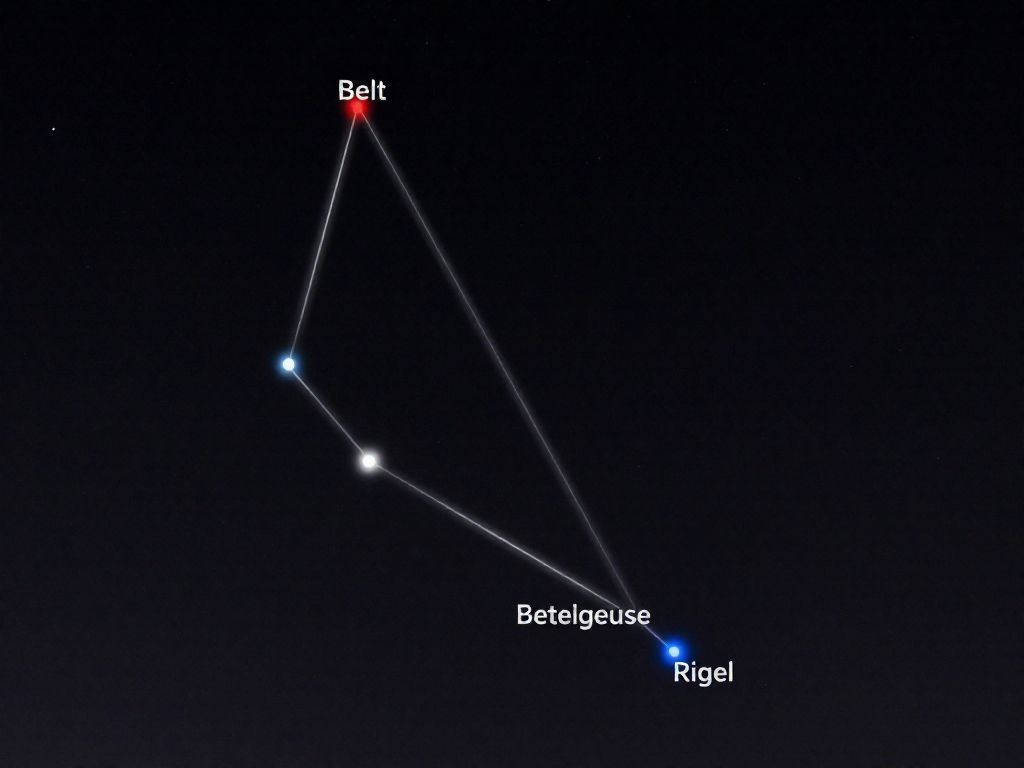
Landmarks to confirm it: Above the Belt sits Betelgeuse (say "BEETLE-juice"), a reddish star marking the hunter's shoulder. Below sits Rigel, a blue-white star at his foot. The color difference is real and easy to notice — a hint that stars come in different temperatures, like the cool red and hot blue tips of a flame.
Bonus trick: Follow the line of the Belt downward and to the left, and it points straight to Sirius, the brightest star in the entire night sky (NASA).
Quick takeaway: Find three stars in a row — that's Orion's Belt, your winter gateway to the brightest star in the sky.
3. Cassiopeia — The Sky's Big W
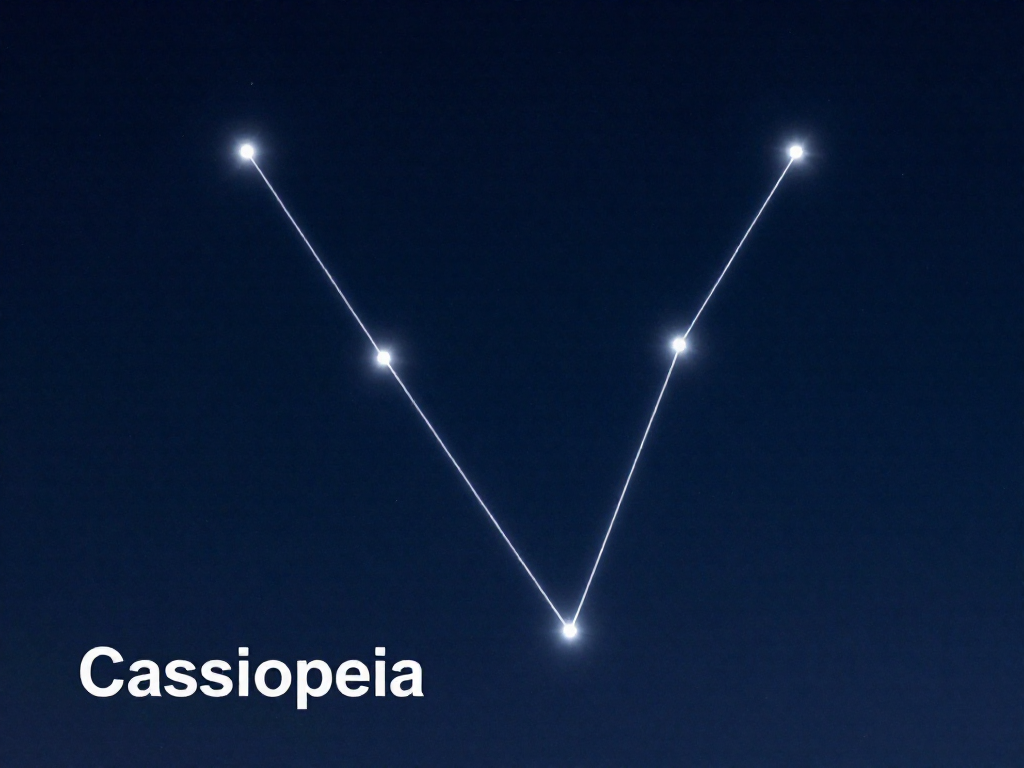
If you can spot a giant letter W in the night sky, you've already found Cassiopeia. Five bright stars form a zigzag shape that looks like a wonky W (or an M, depending on the time of night). Once you see it, you'll never miss it again.
Why it's easy: There are no faint, hard-to-see stars to connect. Just five bright points making one clean, jagged line — about as simple as constellations get.
How to find it: Face north and locate the North Star (Polaris), the bright star the whole sky appears to rotate around. The Big Dipper sits on one side of Polaris; Cassiopeia sits roughly on the opposite side. So if you've already found the Dipper, just hop across Polaris to find the W waiting on the other side.
The always-up advantage: Cassiopeia is circumpolar — a fancy word that simply means it circles the North Star without ever dipping below the horizon (for most northern viewers). Translation: it's visible every clear night, all year round.
Quick tip: Because it slowly wheels around Polaris through the night, the W will sometimes look like an M or even tip onto its side. Don't be fooled — it's the same five stars, just rotated.
Quick takeaway: Find Polaris, look opposite the Big Dipper, and spot the bright W. That's Cassiopeia — always up, always easy.
4. The Summer Triangle — Three Bright Stars, Three Constellations
On warm summer evenings, look almost straight up and you'll spot three brilliant stars forming a wide, obvious triangle. This is the Summer Triangle — not a constellation itself, but an asterism, which is just a memorable pattern made from stars that belong to different constellations. Think of it as a shortcut your eyes can use to navigate the sky.
Why it's easy
The three corners are among the brightest stars of summer, so they cut through light pollution and shine even from a backyard in the suburbs. Once you find one, the other two practically point themselves out.
Meet the three stars
- Vega — the brightest of the trio, part of the small constellation Lyra (the Harp).
- Deneb — marks the tail of Cygnus (the Swan).
- Altair — the lead star of Aquila (the Eagle).
When to look
The Summer Triangle rides high overhead on evenings from roughly June through September in the Northern Hemisphere, making it one of the easiest summer targets to find.
Your next step
Inside the triangle, near Deneb, look for a star pattern shaped like a cross — the Northern Cross. That's the heart of Cygnus, and spotting it means you've just learned a whole new constellation.
Quick takeaway: Find three bright stars overhead in summer, and you've unlocked three constellations at once.
5. Leo — The Spring Lion with a Backwards Question Mark
As winter's Orion sinks toward the horizon, spring brings a quieter star pattern that's surprisingly easy to find once you know the trick: look for a backwards question mark hanging in the evening sky.
Why it's easy to spot
The standout feature of Leo is a curve of stars called the Sickle (an old word for a curved harvesting blade). To most people, it simply looks like a question mark drawn in reverse. Once you notice that shape, you can't unsee it.
Find the anchor star
At the bottom of that backwards question mark sits Regulus, a bright bluish-white star whose name means "little king." It's the dot under the question mark, and it's bright enough to pick out even from many suburbs.
When to look
Leo is a spring constellation. In the United States, your best views come on March through May evenings, when it climbs high in the southern sky after dark.
Does it really look like a lion?
A bit, actually. The backwards question mark forms the lion's head and mane, while a triangle of stars to the left makes its hindquarters and tail — picture a cat crouching in profile.
Quick takeaway: Spot the backwards question mark, find bright Regulus at its base, and look up on spring evenings.
Putting It Together: A Season-by-Season Cheat Sheet
Ready to head outside tonight? Here's your at-a-glance plan.
| Constellation | Best Season |
|---|---|
| Big Dipper | All year* |
| Cassiopeia | All year* |
| Orion | Winter |
| Summer Triangle | Summer |
| Leo | Spring |
*From most of the Northern Hemisphere, the Big Dipper and Cassiopeia never set—they circle the North Star all night, every night. They're your two year-round wins.
Suggested order to learn them:
- Start with the Big Dipper. It's the easiest to find and your launchpad for everything else.
- Star-hop to the North Star. "Star-hopping" just means using stars you know to find ones you don't. The two stars at the end of the Dipper's bowl point straight to Polaris, the North Star.
- Hop across to Cassiopeia, the big "W" sitting on the opposite side of Polaris.
- Add the seasonal star of the moment: Orion, the Summer Triangle, or Leo.
Want a helping hand? A free app like Stellarium Mobile or SkyView Lite lets you point your phone at the sky and see the constellations labeled in real time—handy, but totally optional.
Quick takeaway: Learn the Big Dipper first, use it to find Polaris and Cassiopeia, then add whichever constellation matches your season.
See also
- How to Find the North Star (Polaris) Step by Step
- Stargazing for Beginners: A No-Telescope Starter Guide
- How Light Pollution Affects What You Can See in the Sky
- The Best Free Stargazing Apps for Beginners
- What Is the Difference Between Stars and Planets?
Related articles
How to Photograph the Night Sky With Just a Phone
Yes, you can take stunning night sky photos with just a phone. Learn beginner-friendly settings, gear, and tricks to capture stars, the Moon, and the Milky Way.
Jun 29, 2026 · 11 min read

What Causes the Northern Lights, and Can Beginners See Them?
Curious about the Northern Lights? Learn what causes auroras in plain language, where and when to see them, and realistic tips for total beginners.
Jun 29, 2026 · 8 min read

A Beginner's Sky-Watching Calendar: Events Worth Looking Up For
A simple year-round sky-watching calendar for beginners. Discover meteor showers, eclipses, and planet sightings worth looking up for—no telescope needed.
Jun 29, 2026 · 5 min read