What's a Planetary Alignment, and Can You Really See One?
What is a planetary alignment and how do I view it?
On this page
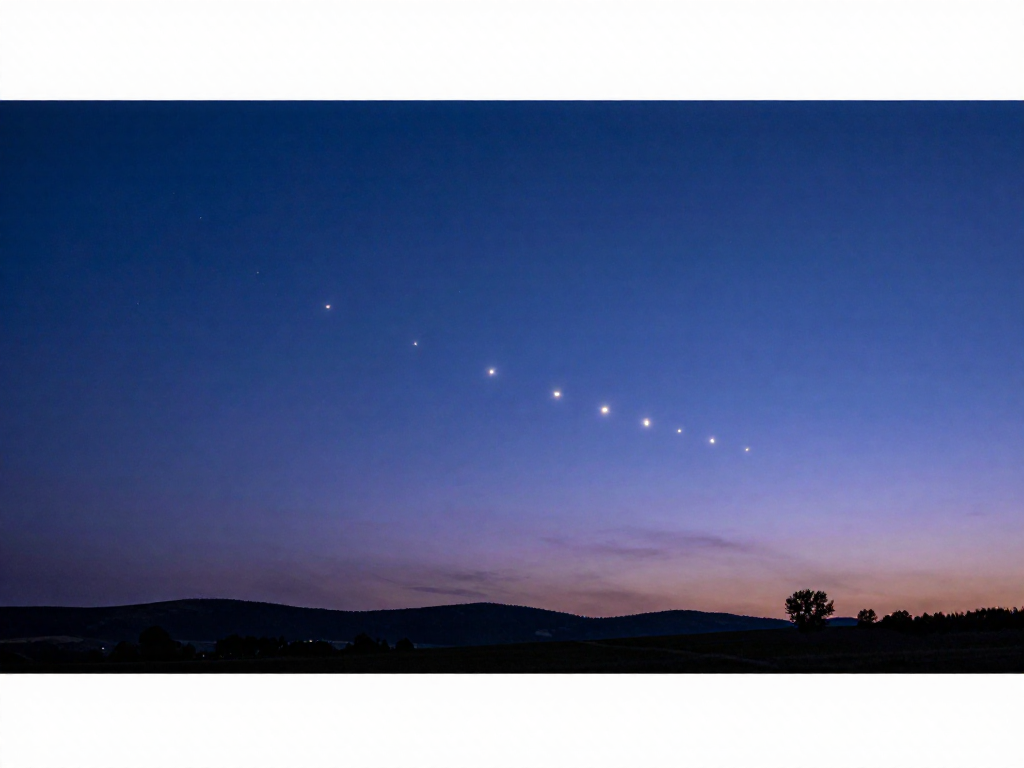
What a Planetary Alignment Actually Is
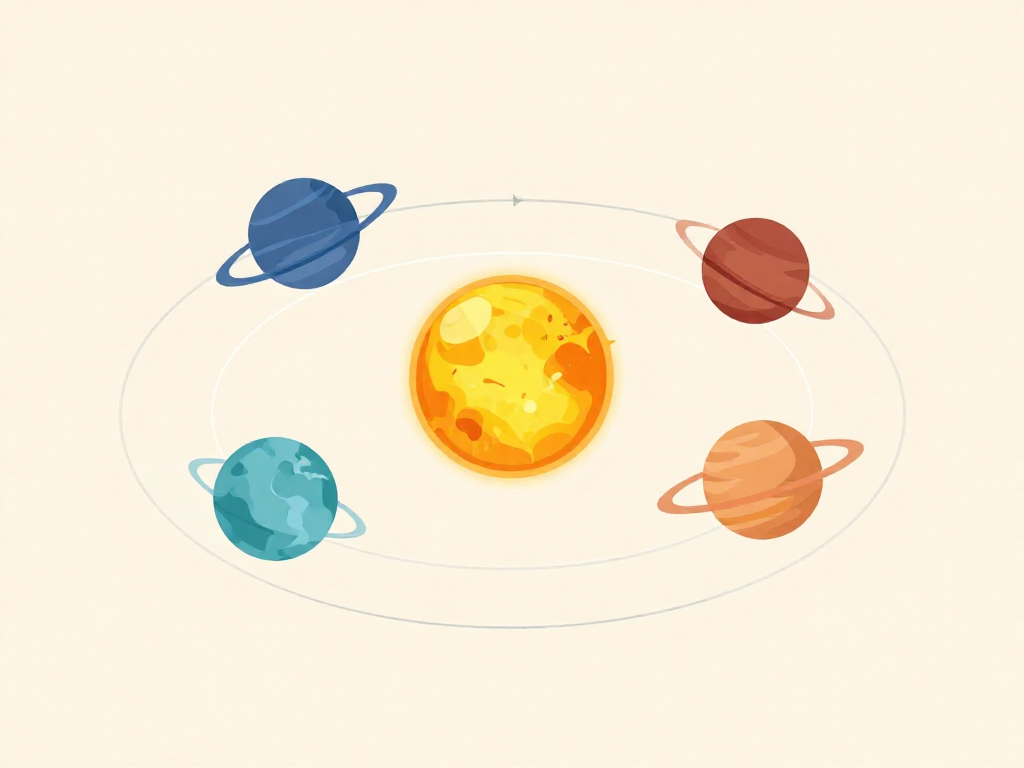
Here's the first thing to know: a "planetary alignment" almost never looks like the dramatic poster art, where planets stack up in a tidy, glowing row marching off into space. The reality is calmer, and honestly, kind of more interesting once you picture it correctly.
Start with how the solar system is built. All the planets orbit the Sun on roughly the same flat plane, like marbles rolling around on a giant tabletop rather than buzzing around it in every direction. Astronomers call that invisible tabletop the ecliptic — just think of it as the flat track the planets travel along. Because we're sitting on one of those marbles (Earth), the other planets always appear strung out along a single line across our sky. That line is there every clear night, whether one planet is up or five.
So what do people mean by an "alignment"? In everyday stargazing, it simply means several planets happen to be visible in the same stretch of sky at the same time — say, Venus, Mars, and Jupiter all hanging out after sunset. They're not lined up in space. They're just in view together from where we're standing.
This is the big misconception worth clearing up: planets that look cozy and close in the sky are still separated by tens or hundreds of millions of miles. Mars and Jupiter might appear a finger-width apart to your eye while being farther from each other than Earth is from the Sun. You're seeing a trick of perspective, like two streetlights that look stacked from down the block but are actually a mile apart.
One more term you'll bump into: a conjunction. That's a tighter version of the same idea — when two planets (or a planet and the Moon) appear especially close together in the sky. "Alignment" usually describes a bigger group; "conjunction" describes a close pairing. Both are about how things look from Earth, not how they're arranged in space.
Quick takeaway: An alignment means several planets are visible together along the sky's natural line — not stacked in a perfect row, and never actually side by side in space.
What You'll Really See (vs. the Viral Images)
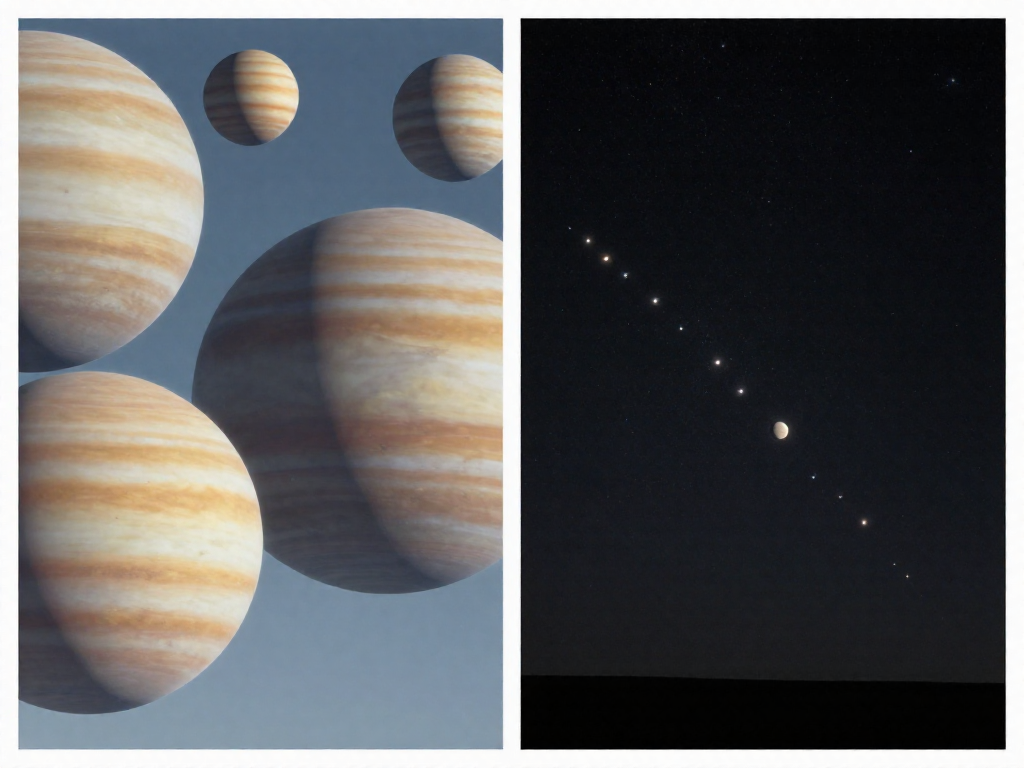
Let's set the record straight before you head outside, so the real thing thrills you instead of letting you down.
Those jaw-dropping photos of planets lined up like glowing beads on a string? Most are illustrations or wide-field composites — single images stitched together from many shots, often zoomed and brightened far beyond what your eyes can do. They're gorgeous, but they're not the view from your backyard.
Here's what you'll actually see: several bright "stars" scattered across a stretch of sky, not crammed together in a tidy row. The easiest way to spot a planet is that it shines with a steady glow, while real stars twinkle. That twinkle happens because starlight, coming from unimaginably far away, gets jostled by our atmosphere. Planets are close enough to look like tiny disks rather than pinpoints, so they hold steady.
Not every planet shows up equally:
- Venus and Jupiter are the showstoppers — brilliant enough to catch your eye even from a city.
- Saturn is dimmer but visible, with a soft golden tone.
- Mars glows a faint reddish-orange and can be harder to pick out.
- Mercury is the trickiest, usually hugging the horizon in twilight glare.
So why is it still worth bundling up for? Because once you know that each of those quiet points of light is an entire world — some larger than Earth, all millions of miles away — seeing them gathered in one glance is genuinely awe-inspiring.
Quick takeaway: Expect a handful of bright, non-twinkling dots spread across the sky — and a real sense of wonder once you know what you're looking at.
How to Tell Planets from Stars
Here's the one skill that turns a confusing night sky into a treasure map: learning to spot a planet at a glance. It's easier than you'd think.
1. Watch for the twinkle. Stars twinkle; planets shine with a steady glow. That's because stars are so far away they appear as tiny pinpoints, and our atmosphere jostles their light into a shimmer. Planets are close enough to look like tiny disks, so their light stays calm and constant. If a "star" isn't twinkling, you're probably looking at a planet.
2. Follow the invisible path. Planets always sit along the ecliptic—the same arc across the sky that the Sun and Moon travel. Picture a gentle curve stretching from where the Sun rises to where it sets. Planets line up along that lane, never scattered randomly overhead.
3. Read the colors and brightness. Each planet has a signature look:
- Venus — brilliant, dazzling white; the brightest thing up there after the Moon.
- Mars — a warm reddish-orange dot.
- Jupiter — bright and steady, second only to Venus.
- Saturn — softer and golden.
4. Let the Moon guide you. On many alignment nights, the Moon parks right next to a planet. Use it as a marker: spot the Moon, then look just beside it.
Quick takeaway: Doesn't twinkle, sits along the Sun's path, has a distinct color—that's a planet.
How and When to Watch One
The best part about catching a planetary alignment? You don't need fancy gear, just a little timing and a clear view of the sky.
Pick the right window. Most alignments are visible in the hour shortly after sunset or just before sunrise. The exact timing depends on the event, so check ahead (more on that below). These twilight windows are when the planets sit high enough to spot but the sky is still dark enough to see them.
Find a good spot. Look for a place with a clear, low horizon — somewhere you can see all the way down to where the sky meets the ground, since planets often hang low. A rooftop, hilltop, beach, or open field works well. Try to get away from bright streetlights and city glow (what astronomers call "light pollution," the brightness that washes out fainter objects).
Bring the right tools — or none at all. Your eyes are enough to see the brighter planets. Binoculars are a nice upgrade and easier to handle than a telescope. A free stargazing app (like Stellarium or SkySafari) is the real game-changer: point your phone at the sky and it labels which dot is which.
Know when to look up. Find upcoming alignments using stargazing apps, an astronomy almanac, or trusted sites like NASA's "What's Up" monthly guide or your local planetarium's calendar.
Quick takeaway: No telescope needed — just a clear horizon, dark-ish skies, a free app, and a heads-up on the date.
Common Myths and Quick Truths
It's easy to find dramatic headlines about planetary alignments online. Most of them get the science wrong. Here's what's actually true.
Myth: Alignments trigger earthquakes, giant tides, or disasters. The planets are simply too far away to tug on Earth in any meaningful way. The Moon, which is vastly closer, drives our tides—and even a lineup of every planet adds a gravitational nudge far smaller than a passing truck. NASA has repeatedly debunked these doomsday claims.
Myth: Alignments are incredibly rare. It depends on how many planets you mean. A few bright planets clustering in the sky happens fairly often, sometimes more than once a year. A true lineup of all the planets, though, is genuinely rare and spread out over many decades.
Myth: You need a telescope and a remote observatory. For most alignments, your own eyes and a clear horizon are enough.
Quick takeaway: No danger, often more common than the hype suggests, and usually visible without any gear.
See also
- How to tell planets from stars in the night sky
- Beginner's guide to stargazing without a telescope
- What is the ecliptic and why do planets follow it?
- Best free stargazing apps for beginners
- How to spot Venus, the brightest planet
Related articles
How to Photograph the Night Sky With Just a Phone
Yes, you can take stunning night sky photos with just a phone. Learn beginner-friendly settings, gear, and tricks to capture stars, the Moon, and the Milky Way.
Jun 29, 2026 · 11 min read
What Causes the Northern Lights, and Can Beginners See Them?
Curious about the Northern Lights? Learn what causes auroras in plain language, where and when to see them, and realistic tips for total beginners.
Jun 29, 2026 · 8 min read
A Beginner's Sky-Watching Calendar: Events Worth Looking Up For
A simple year-round sky-watching calendar for beginners. Discover meteor showers, eclipses, and planet sightings worth looking up for—no telescope needed.
Jun 29, 2026 · 5 min read